

The entire territory of Ontario was once covered by the Laurentide Ice Sheet of the Wisconsin Glaciation, with ice more than a kilometre thick. This event was the source of almost all the parent materials from which Toronto’s soils developed. Of course, there are exceptions, such as more recent alluvial or fluvial deposits in modern floodplains, lacustrine (lake-derived) deposits, aeolian materials like active sand dunes, and the ongoing accumulation of organic matter. Read more at toronto.name.
The glacier advanced from the north, forming numerous ice lobes that scraped soils from much of the prehistoric landscape and transported them southward to the central and northern United States. Upon its retreat, the continental glacier left behind a variety of glacial landscapes. The ice sheet retreated to the northeast over millennia, gradually uncovering parts of Southern Ontario approximately 13,000 years ago and, finally, the northernmost regions of the province about 8,500 to 6,500 years ago.
General Information About Soils in Toronto
Toronto’s soils are situated on plains of the Wisconsinan age. The slope ranges from 0 to 6 percent. They were formed in a 56 to 102 cm (22-40 inch) layer of loess or other silty material over a loamy subsoil. The average annual precipitation ranges from 737 to 1143 mm (29-45 inches), and the average annual temperature is between 7.8 and 13.9 degrees Celsius (46-57 degrees Fahrenheit). The frost-free period lasts 160-200 days, and the elevation is between 104 and 396 metres (340 to 1,300 feet) above mean sea level.
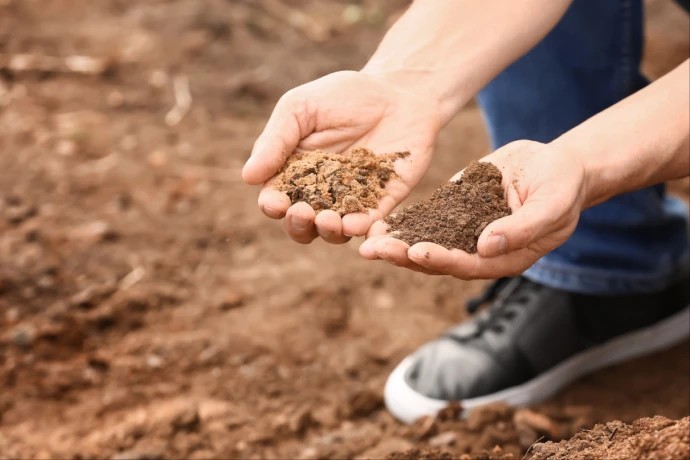
Common Soil Types in Ontario. Soil Types in Toronto
The first thing to note is that soil conditions can vary significantly, even on the very same property. One area of a site might have strong soil, while just 6 metres away, you could find very weak fill material. The soil type in Toronto differs from that in Ottawa, and the soil in London, Ontario, will be different from the soil in Hamilton, Ontario. That’s why we’ll discuss the different types of geology in Toronto. While this is typically technical information used only by geotechnical engineers, having a general understanding of soil characteristics is also interesting.
There are three main classifications of soil that specialists consider when choosing a foundation:
- Coarse-grained soils (sand and gravel).
- Fine-grained soils (clays and silts).
- Organic soils (peat).
Expanding on these classifications, there are six main types of soil found in Toronto:
- Sand – a granular substance composed of many fine rock particles.
- Silt – fine particles of clay and sand that settle at the bottom of rivers.
- Clay – a fine-grained substance that is typically hard and sticky.
- Organic soils – decomposed material. Usually moist.
- Fill soil – material moved from its original location by either humans or nature.
- Gravel – stones and rocks of various shapes and sizes.
The most common type of soil in Toronto is fill soil. The main reason helical piles are so often used in Toronto’s geology is the presence of large amounts of fill material. This means that government soil maps from past years are not reliable for a specific construction site. What might have been on a site 50 years ago has very likely been overlaid with fill soil or material from another region.
Furthermore, fill soil can be described as material that has been excavated from one location and moved to another to fill a hole or raise the grade of a site.
The three main types of fill soil are:
- Engineered Fill – a mixture of materials specified by an engineer to provide the necessary support for a project.
- Unidentified Fill – unknown soil with no known origin. There is no documentation for this type of material.
- Hydraulic Fill – material that has been moved naturally by the flow of a river or stream.
Geotechnical Investigations in Toronto
A geotechnical investigation is the most accurate and reliable method, but it is also the most expensive. It involves contacting a local geotechnical engineering firm, which consults on the soil conditions at the site and provides recommendations for the foundation type, as well as many other aspects of the project.
A drill rig is brought to the site to collect soil samples at various depths. Simultaneously, the soil is tested using a penetration device, which provides crucial information about the soil’s strength at different levels. After the investigation is complete, the client receives a detailed report that describes the soil conditions on that particular site and will be used to make important decisions regarding the foundation design. In some cases, conducting a geotechnical investigation can actually lead to cost savings.
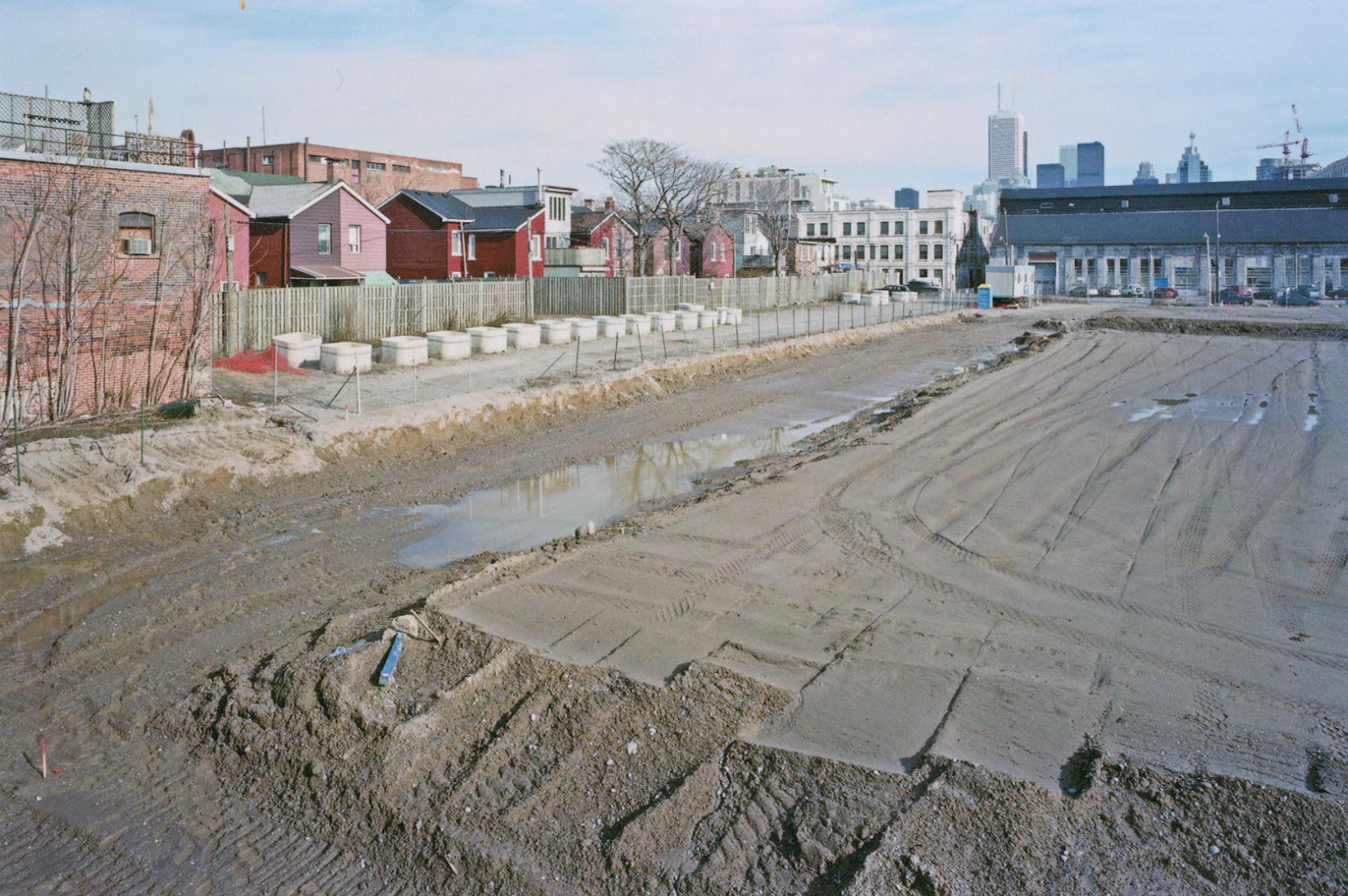
It is also worth noting that a structural engineer prefers to work with the detailed information provided by a geotechnical report, as this additional data increases the engineer’s confidence and helps to avoid over-designing (for example, creating a foundation that is larger than necessary). If detailed soil information is unavailable, the engineer may also specify the need for a field load test on the site.