

Modern megacities face a dual challenge every day: how to efficiently manage millions of tonnes of waste and where to find clean energy sources to shrink their carbon footprint. Toronto has found a revolutionary answer to both problems. Thanks to an innovative organics recycling initiative and a strategic partnership with the energy sector, the city is transforming everyday “Green Bin” waste into Renewable Natural Gas (RNG).
This project has become one of North America’s first real-world examples of a circular economy, where waste collection trucks run on fuel produced from the very scraps they just collected from residents. How does this technology work, why is it profitable, and what does it mean for a greener future? We explore these questions and more at toronto.name.
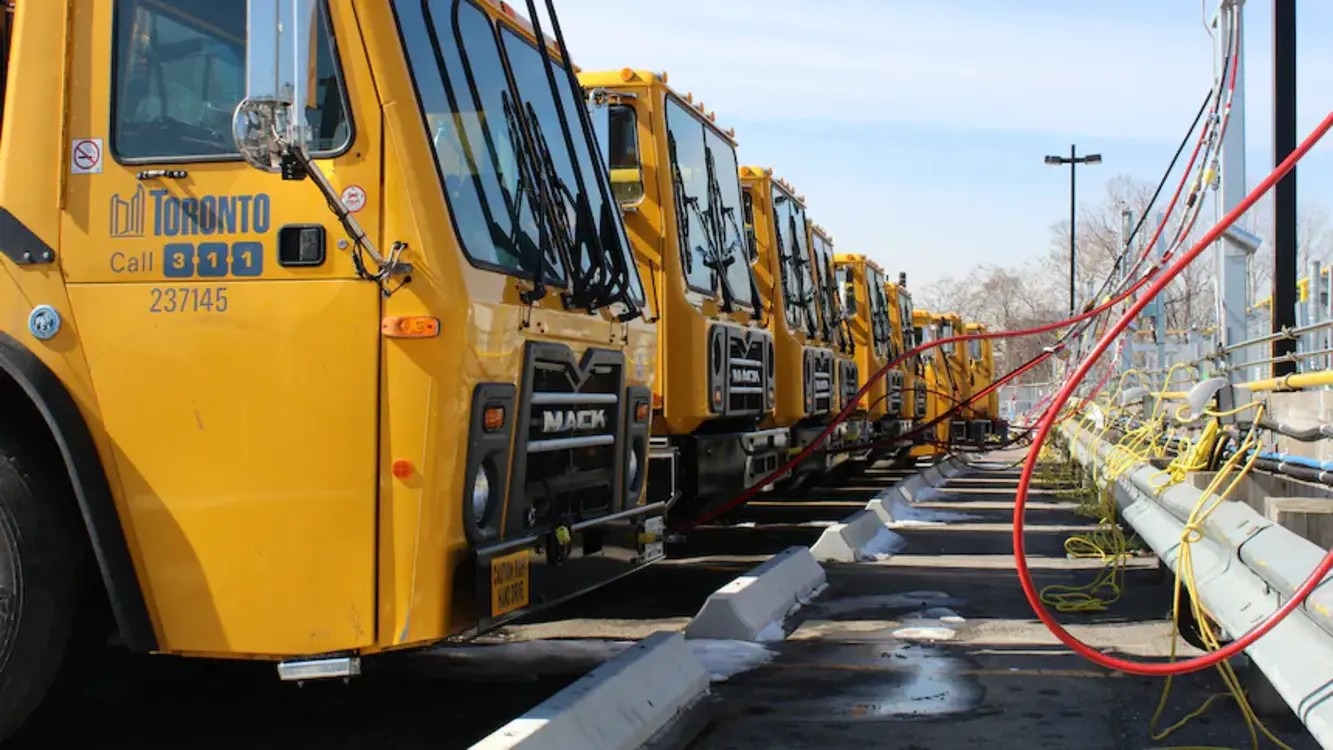
The Green Bin Program: How Toronto Sources Fuel from Scraps
The success of any waste-to-energy system relies on sorting right at the source. In Toronto, the Green Bin Organics program is operating at full capacity. The city collects organic waste from more than 460,000 single-family homes, as well as multi-residential complexes, schools, and municipal facilities.
Organics make up nearly 50% of all household waste by weight. Without proper processing, these scraps would end up in landfills. As they decompose, they release methane—a greenhouse gas dozens of times more potent and damaging to the climate than carbon dioxide.
The Secrets of Canadian-Style Waste Sorting
Toronto made participation as effortless as possible for its residents, which became the secret weapon for building a strong eco-culture:
- Standard plastic bags are welcome. Residents can toss their organics into regular plastic bags. There is no need to buy pricey biodegradable options because the high-tech equipment at processing facilities automatically strips out the plastic during the pre-cleaning stage.
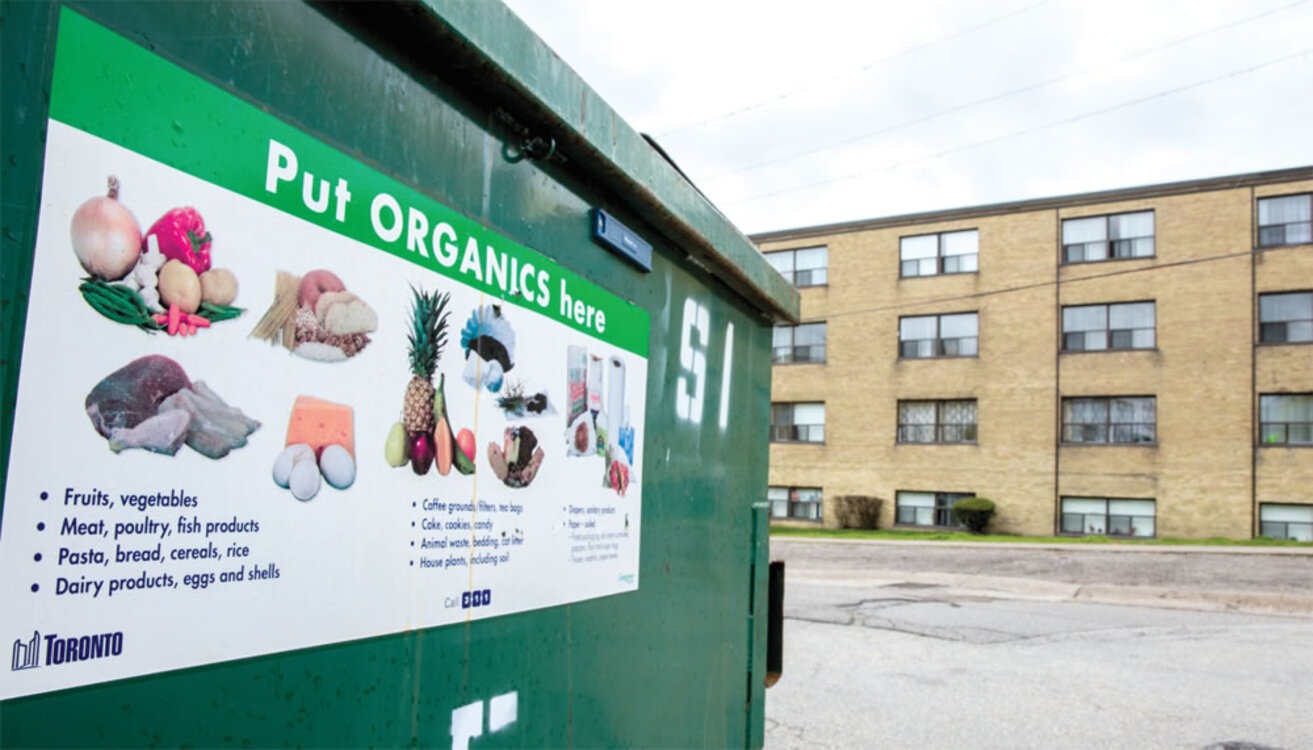
- Pet waste disposal. Dog owners can throw pet waste straight into the Green Bin (wrapped in paper or plastic bags). The same goes for diapers and sanitary products.
- A strict “no” to fake bioplastics. The city does not accept coffee pods, disposable utensils, or containers in the Green Bin—even if they are stamped “compostable” or “biodegradable.” These items often hide microplastics and should go into the regular garbage or be sent back to manufacturers.
Anaerobic Digestion: The City’s High-Tech “Stomach”
Once collection trucks gather the contents of the city’s green bins, the waste travels to specialized processing plants. The technological heart of this operation is a process called anaerobic digestion.
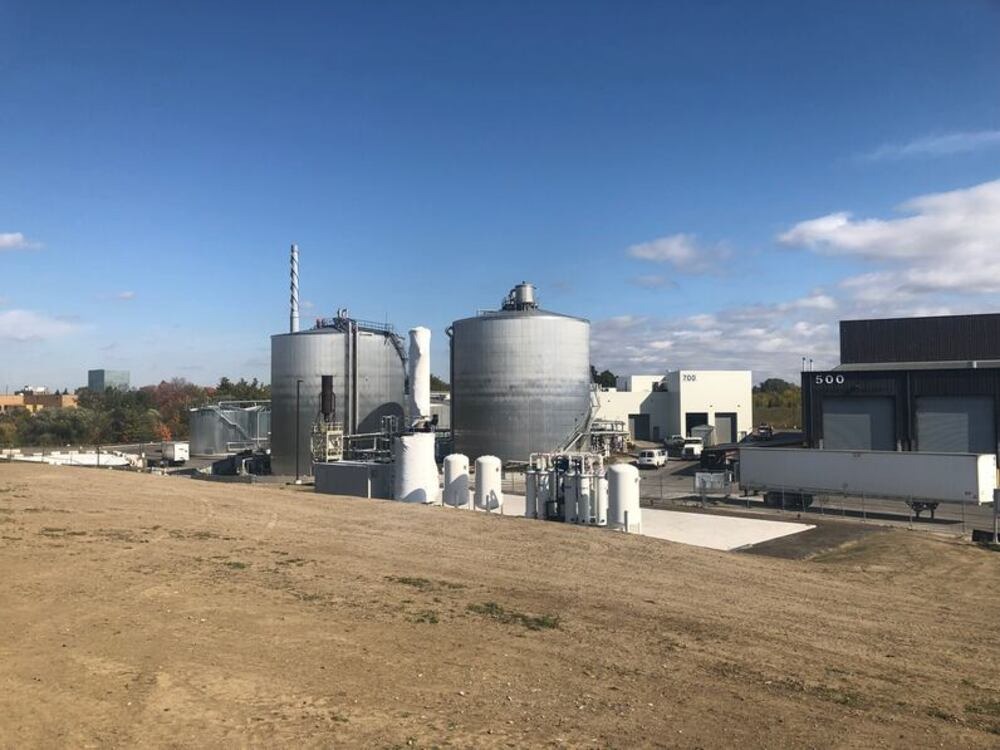
Experts at Solid Waste Management Services compare this technology to the biological processes of a living organism. The shredded organic mix is pumped into giant, sealed airtight tanks that act like an artificial stomach. In this oxygen-free environment, specialized bacteria aggressively break down the biomass. This process creates two main components: biogas and solid digestate.
This setup delivers a few game-changing benefits:
- Total odour control. Because the breakdown happens inside sealed tanks, unpleasant smells never escape into the air. This allows processing plants to operate comfortably right within the city limits.
- A double win for resources. The city walks away with two valuable products:
- Biogas (a blend of methane, carbon dioxide, and trace elements).
- Solid digestate—a nutrient-packed material that is cured into premium compost to nourish city soils and urban parks.
Turning Biogas into RNG: Partnering with Enbridge Gas
Raw biogas cannot be injected directly into natural gas pipelines due to high levels of CO2, hydrogen sulfide, and moisture. Traditionally, landfills simply burn this gas off using flares to prevent explosions and curb raw methane emissions. However, flaring is a waste of pure energy potential.
To capture this energy, Toronto teamed up with Enbridge Gas Inc., Canada’s leading natural gas utility. They built a state-of-the-art biogas upgrading facility directly at the Dufferin Solid Waste Management Facility.
How does the upgrading work?
The raw biogas passes through a multi-stage filtration system that strips out carbon dioxide, water, and other impurities. The result is a clean gas made of more than 90% pure methane. In terms of chemical and physical properties, this Renewable Natural Gas (RNG) is identical to conventional fossil natural gas.
Once processed, the RNG is injected directly into the city’s existing natural gas distribution grid.
An Eco-Triumph: Why RNG Can Outperform EVs
From an environmental perspective, Renewable Natural Gas derived from food waste is more than just carbon-neutral—it is considered carbon-negative.
Extracting fossil gas from deep underground adds brand-new carbon into our atmosphere. On the flip side, using RNG means intercepting methane that was bound to escape into the air anyway as food rotted in a landfill. Preventing those landfill emissions while displacing fossil fuels creates a massive climate victory.
Robert DiMaria, Business Development Manager at Enbridge Gas, points out that transitioning the city’s heavy municipal fleet completely to renewable gas can bring net vehicle emissions down to zero. This makes these utility vehicles just as clean as electric or hydrogen-powered options. While traditional compressed natural gas (CNG) drops emissions by about 20% compared to diesel, switching to RNG boosts that reduction by 100% to 120%.

The Project by the Numbers: Results and Milestones
- Launch and scale. The first facility at the Dufferin site began test injections into the grid in late 2021. By early 2022, the city began fully leveraging this fuel for its own municipal operations.
- Production capacity. The Dufferin facility processes roughly 55,000 tonnes of organic material every year, generating more than 3.2 million cubic metres of clean, green gas.
- Climate impact. By capturing biogas instead of flaring it, the facility keeps more than 9,000 tonnes of greenhouse gases out of the atmosphere annually.
- Fuel application. The upgraded gas blends right into the standard system, with RNG initially making up about 7% of the total gas mix. This eco-friendly blend heats municipal buildings and fuels Toronto’s waste collection fleet.
While the production cost of RNG is currently higher than drilling for traditional fossil gas, advancing technologies and rising carbon taxes make these green investments highly profitable over the long haul.
The Strategic Blueprint to Net Zero
The Dufferin facility initiative is a key piece of TransformTO, Toronto’s ambitious climate action strategy that aims to slash the city’s net greenhouse gas emissions to zero by 2040.
Altogether, Toronto’s municipal operations consume around 110 million cubic metres of gas per year. The energy potential trapped inside Toronto’s own landfills can cover a huge chunk of that demand. Experts estimate Toronto could eventually generate over 50 million cubic metres of RNG annually. This would nearly satisfy the entire energy appetite of the municipal sector, creating a self-sufficient, secure, and truly closed-loop green energy system.
Conclusion
Toronto’s success story proves that waste isn’t an annoying problem to bury underground—it’s a premium renewable resource limited only by engineering creativity. Transforming organic waste into biogas and RNG at the Dufferin and Disco Road facilities showcases how advanced biochemical and mechanical systems can power a clean, autonomous, and resilient city. Toronto has shown the world that the green energy transition can start with a simple green bin in every single kitchen.