

The province of Ontario is one of the most famous in Canada, writes toronto-name. Its importance to the country can hardly be overestimated. After all, it is home to many institutions that play a major role in the country’s industry, infrastructure, economy, and even culture. Not to mention, the province itself is an incredibly attractive place for tourists.
As for the province’s natural resources, the value is simply enormous. Because in addition to their beauty and environmental component, they are of great historical significance. Many of them were, without exaggeration, “witnesses” of the development of the region.
For this reason, the study of the past of these amazing places is extremely interesting and important.
It is fair to say that provincial reservoirs are of great value to specialists in many fields. In particular, historians, archaeologists and geologists often conduct various studies there. The area around a particular lake or river can tell us a lot about the people who lived there, their lives and their crafts.
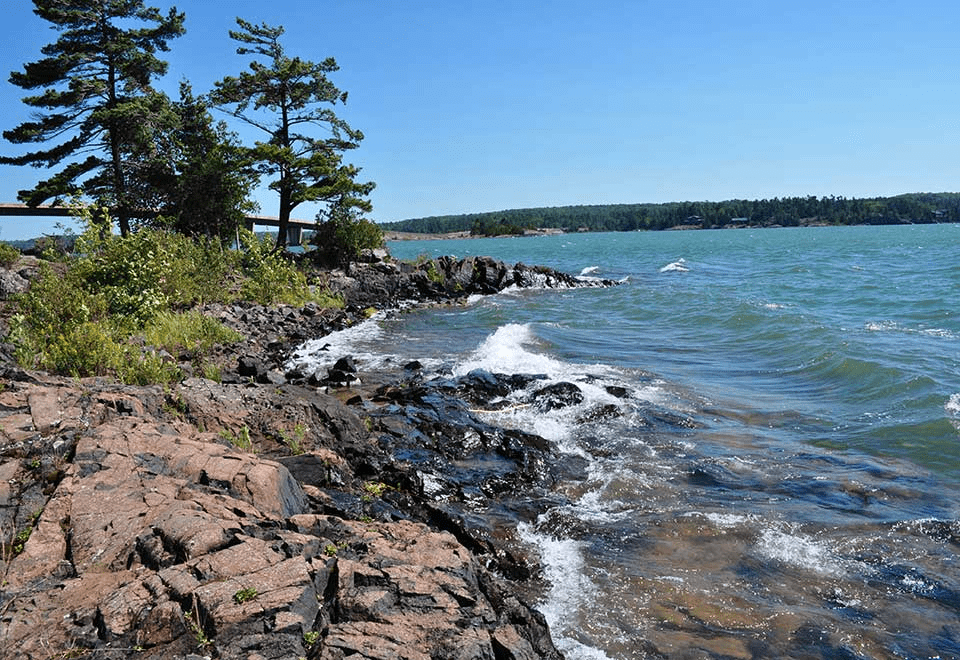
Lake St. Joseph is such a body of water. Its history contains many unique facts that help put together a “single puzzle” of the past of the entire province of Ontario. There is no doubt about its importance. This lake was extremely important for the promotion and development of trade, as well as the improvement of local infrastructure.
This reservoir is located in the northwestern part of Ontario. It is part of the James Bay watershed and is the source of the Albany River.
The significance of the lake
When the fur trade was particularly developed, the lake was part of the route used by canoes.
Proof of this is the fact that in 1786, the Osnaburg House was founded on the lake, built by the Hudson’s Bay Company. This house existed there until 1939.
Role in the fishing industry
It is worth noting that the above-mentioned reservoir is the largest freshwater fishery in the province of Ontario. You can also enjoy amazing wildlife there.
Moreover, it is important to note that fishing on the lake has been very popular since the history of this area was just beginning. Only then was this fishery freely practiced by the local population, and nowadays fishing requires a special permit. It is issued by the Ministry of Natural Resources of Ontario.
This document is a supplement to any license.
Such restrictions are a result of the presence of valuable wildlife in the area. At the same time, most people who want to fish on the lake stay in the local fishing camps. They occupy the eastern part of the lake.
As for the fish found in this reservoir, it is mainly represented by pike perch, northern pike and yellow perch.
A historical event
Returning to the history of the lake, it is worth mentioning the following fact.
In 1958, an agreement between the provinces of Ontario and Manitoba to divert water from St. Joseph officially came into effect.
This was necessary to expand the hydroelectric plant and facilitate the growth of power plants in the region. Subsequently, the signing of this agreement became very important and valuable. Besides, its practical significance cannot be overlooked. It is not necessary to be an expert to agree with the real necessity of the actions resulting from the agreement.
Therefore, this event can be considered truly historic. After all, it helped to significantly improve the local infrastructure and open a new stage of its development.
Photo: northernontario.travel, algomacountry.com