

As toronto.name notes, Toronto is the largest Canadian city.
It is interesting that the life expectancy is quite high here. It is the result of the good environmental conditions and the sufficient income level of local residents.
Toronto is rightly recognised as one of the best cities in the world. One of the factors that prove it is the city’s favourable ecology. It includes clean streets and parks as well as government programmes aimed at preserving the environment.
One of the most important aspects of Toronto’s eco-policy is recycling and waste sorting.
In our article, we will tell you how the city copes with waste and recycling, referring to toronto.ca.
A variety of bins
Of course, the main role in the city’s waste sorting belongs to the very Torontonians. After all, everybody knows that there are different containers for various types of garbage.
In particular, green containers are intended for organic waste. Blue bins are designated for waste that can be recycled. Black tanks are used for household waste.
However, these rules apply mostly to those people who live in private households.
People who live in multi-apartment buildings throw away the garbage in a much simpler way. After all, most of such buildings are equipped with basement dumpsters and residents use them for certain types of waste.
It is important that the bin, which is intended for waste that will be recycled, shouldn’t be filled with toxic, explosive, flammable and corrosive waste.
Special centres
Interestingly, in Toronto, you can throw away batteries and light bulbs in special centres. They collect waste that is not organic or that should be recycled.
Things that you can share with others
Clothes, shoes and toys aren’t recyclable in Toronto. After all, you can give them away to people in need. Therefore, you can find containers called collectors on the city streets. People bring things there that they no longer need, but which could be useful for others.
A fashion trend
It is important to note that it is simply impossible not to follow all the rules regarding garbage collection in Toronto.
After all, according to Canadian legislation, citizens who ignore waste sorting can be fined a significant amount.
In addition, Canadians like to be law-abiding.
Besides the laws, garbage sorting is actively promoted on TV screens. One of the most effective ways is social advertising. It encourages and explains all the nuances of proper garbage sorting.
Garbage trucks
Interestingly, the Toronto authorities purchased three types of garbage trucks for the transportation of organic, recyclable and mixed waste.
However, such cars don’t operate on a daily basis but only according to the schedule.
City streets
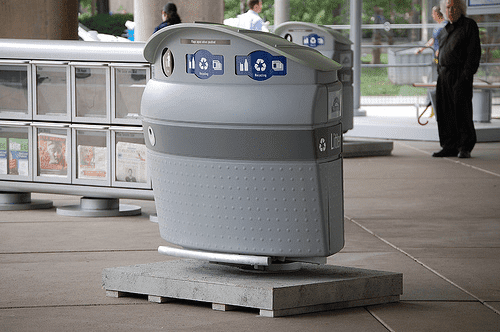
If we are talking about the collection of waste on the city streets, it should be noted that only local parks feature regular garbage bins. All other places are equipped with special containers, which passers-by can use for a specific type of garbage.
What happens next?
We have already described the ways of collecting waste in Toronto. Now, let’s talk about what happens next.
Organic waste is taken to special landfills.
The recyclable waste is sent to factories where it goes through the sorting on modern equipment. After that, the garbage gets to enterprises engaged in processing, which transform waste into materials for various products.
Batteries, accumulators, light bulbs, expired medicines, etc. can’t be processed. Therefore, they are subject to disposal in special furnaces.