

Toronto is a forest of glass and steel. Its iconic skyline is defined by thousands of mirrored facades that shimmer with the reflection of Lake Ontario by day and glow with millions of lights by night. Yet, beneath this aesthetic beauty lies a serious energy challenge. These glass towers are massive resource consumers: they overheat in the summer, demanding heavy air conditioning, and bleed heat rapidly during the winter.
For decades, these glass surfaces were considered “passive.” Today, however, researchers at the University of Toronto are developing technology capable of turning every square centimeter of urban glass into an active source of clean energy. Thanks to breakthroughs in perovskites and quantum dots, a future where skyscrapers generate their own electricity is becoming a reality, reports toronto.name.
The Silicon Ceiling and the Search for Alternatives
The current solar energy market is almost entirely dominated by crystalline silicon panels. While reliable, they come with significant limitations. First, manufacturing silicon wafers requires extreme temperatures (over 1,000°C) and massive energy consumption. Second, silicon is a rigid, heavy material that cannot be integrated into windows or the curved facades of skyscrapers without losing transparency.
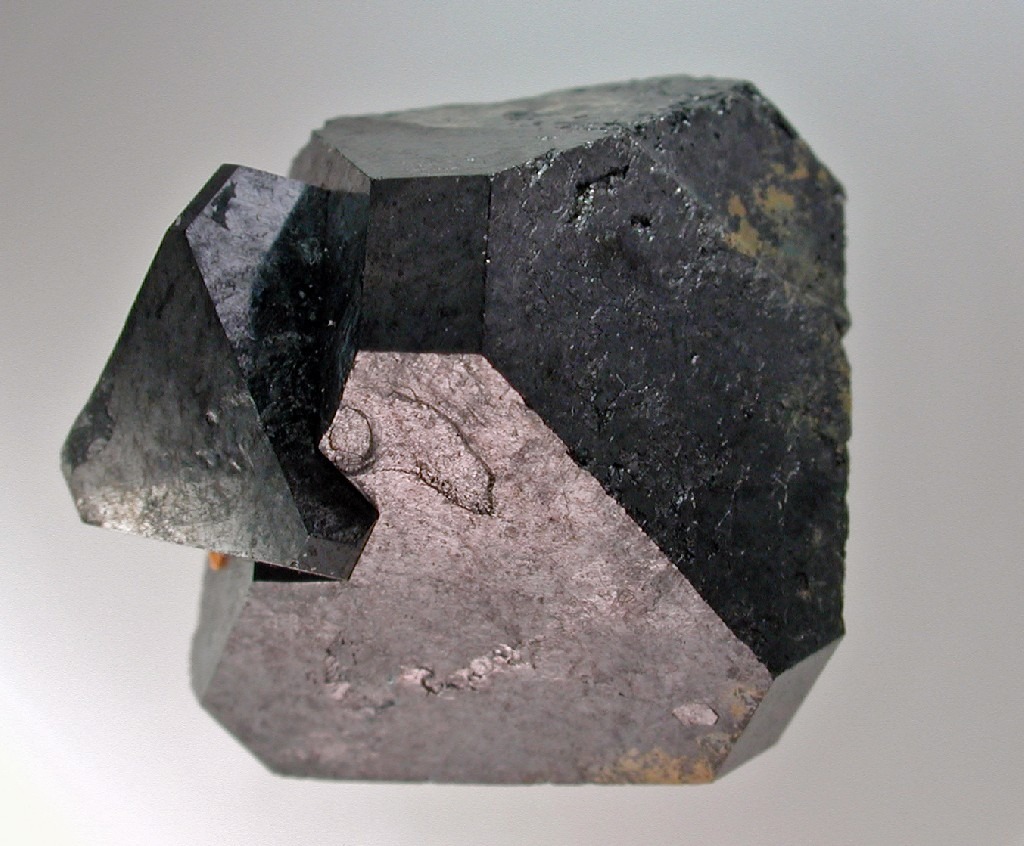
A team of scientists at the University of Toronto, led by Professor Ted Sargent, has focused on an alternative: perovskites. These are unique crystalline materials with an ABX3 structure that can be synthesized in a lab. Unlike silicon, perovskites can be dissolved into special mixtures, creating a “solar ink.” This allows for the use of standard printing methods to apply light-sensitive layers onto almost any surface.
The Tandem Breakthrough: A Multi-Layered Solar “Cake”
One of the main problems with conventional solar cells is that they “ignore” a large portion of the solar spectrum. Light consists of waves of varying lengths: from short ultraviolet to long infrared. Silicon only captures a portion of this spectrum, losing the rest of the energy as heat.
Toronto researchers have proposed a solution: tandem and triple-junction solar cells. Instead of one layer of material, they use several, each “tuned” to a specific wavelength:
- The top layer (wide-bandgap perovskite) absorbs the most energetic photons—the violet and blue parts of the spectrum.
- The middle layer focuses on green and yellow light.
- The bottom layer (low-bandgap material or traditional silicon) “catches” the infrared radiation.
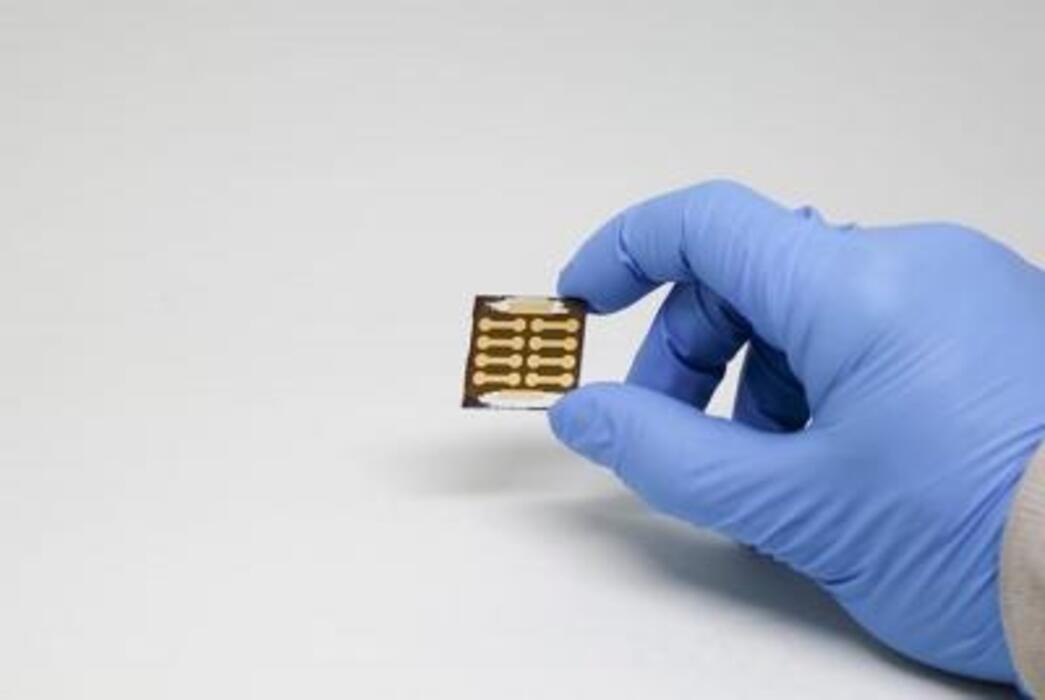
In November 2022, a collaboration of scientists from Toronto, Northwestern University, and the University of Toledo unveiled a tandem prototype with 27.4% efficiency—outperforming the best commercial silicon samples. By April 2023, the team presented a triple-junction solar cell that became a sensation in the scientific community.
Chemical Magic: Rubidium and PDA Against Instability
For a long time, perovskites were considered too unstable for commercial use. Under sunlight, the material would undergo “phase separation”: iodine and bromine atoms inside the crystals would begin to move, leading to defects and a sharp drop in power output within just a few hours.
The University of Toronto team—specifically researchers Leiwei Zeng, Caiwei Wang, and Hao Chen—found a way to “freeze” the crystal structure. Using computer modeling, they discovered that adding rubidium combined with cesium creates a much more stable inorganic structure, effectively suppressing light-induced degradation.
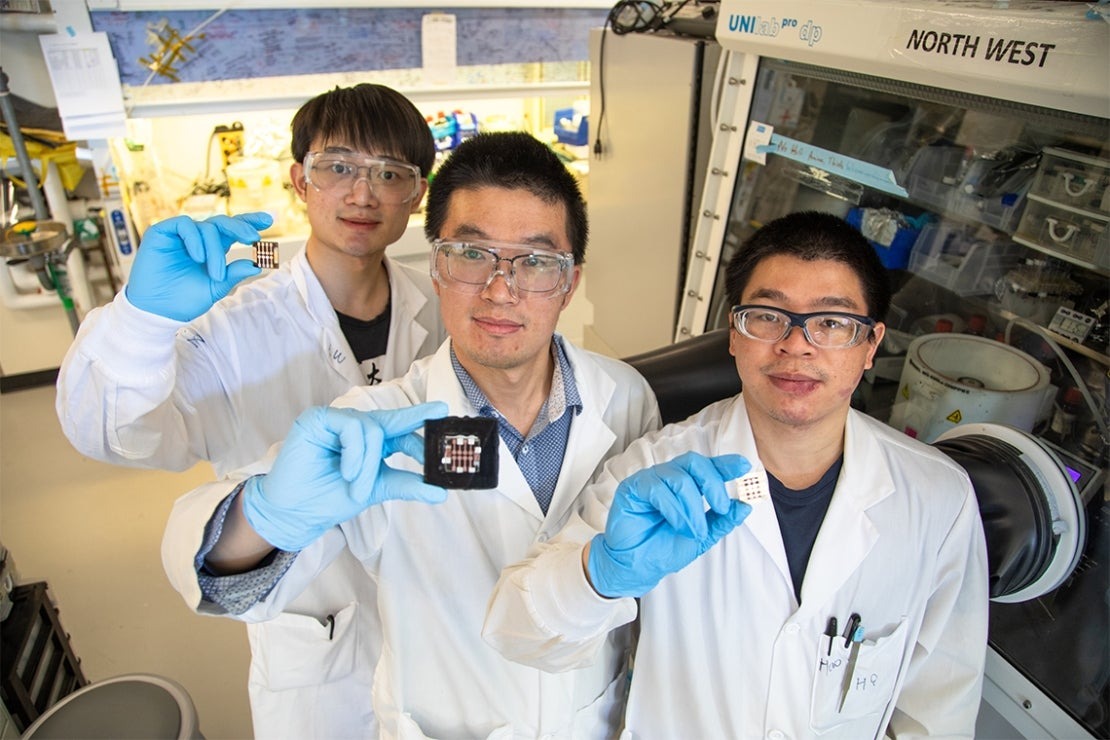
Another crucial step was introducing a 1,3-propanediammonium (PDA) molecular coating. This layer, only a few nanometers thick, acts as an electric field “corrector.” It evens out the perovskite’s surface potential, allowing excited electrons to flow freely into the circuit instead of getting “lost” at the interface. The results are impressive: new cells retain over 80% of their efficiency after 420–500 hours of continuous, intensive operation.
Quantum Dots: The Future of Transparent Windows
A separate line of research in Toronto involves colloidal quantum dots (CQDs). These are semiconductor nanoparticles no larger than a few nanometers. Because they are processed in solution, they can be applied to flexible substrates via spray-coating, making production extremely cost-effective.
For Toronto’s skyscrapers, the most promising technology is Luminescent Solar Concentrators (LSC). Here, quantum dots are embedded in a transparent polymer film applied to window glass. These dots absorb sunlight and re-emit it at a different wavelength, directing photons to the edges of the window. There, hidden within the thin frame, high-efficiency solar cells convert this light into electricity.
This window remains transparent for office occupants but functions as a full-scale power plant. Moreover, quantum dots are sensitive to infrared light, allowing the building to generate energy even on cloudy days or at dusk.
Low-Temperature Manufacturing: “Spray-On” Solar Energy
One of the biggest technological hurdles in creating tandem cells was temperature. Traditional methods require heating up to 500°C. The problem is that if you’ve already printed a perovskite layer or applied a plastic substrate, such heat would simply melt your design.
University of Toronto researchers developed a method for growing nanoparticles directly in a solution at temperatures below 150°C. This paves the way for:
- Applying solar cells onto flexible plastic that can be rolled up.
- Creating “solar stickers” to retrofit existing skyscrapers.
- Manufacturing solar cells right at the construction site using industrial printers.
Economic and Environmental Impact for Toronto
Why is this research critical now? Toronto has set an ambitious goal: to reach net-zero carbon emissions by 2040 (the TransformTO program). Since buildings are responsible for over 50% of the city’s emissions, decarbonizing skyscrapers is the top priority.
Technology Comparison
| Criteria | Traditional Silicon | Perovskites | Quantum Dots (CQD) |
| Manufacturing Temp | > 1000°C | < 150°C | Room Temp |
| Flexibility/Weight | Heavy, Brittle | Light, Flexible | Ultra-thin films |
| Transparency | Opaque | Can be Semi-transparent | High (LSC) |
| Efficiency (lab) | ~26% | > 27% (tandem) | ~20% |
| Cost | High (energy-intensive) | Low (inkjet printing) | Very Low (spraying) |
Building-Integrated Photovoltaics (BIPV) allow not only for energy generation but also for savings on construction materials. Instead of buying standard glass and then installing panels on the roof, developers buy “energy glass” that performs both functions simultaneously.
As a bonus, special coatings developed at the University of Toronto can contain patterns visible to birds but invisible to humans. This helps solve another Toronto problem: mass bird collisions with mirrored walls.
Conclusion
University of Toronto scientists are proving that the future of energy lies not just in solar farms, but on the walls of our cities. The shift from the silicon era to the era of “solar ink” and quantum dots will transform the face of metropolises.
Toronto’s skyscrapers, once merely symbols of financial power, are becoming symbols of technological salvation for the planet. Every window reflecting a sunbeam will soon be able to turn that light into a charge for your laptop or energy for an elevator. While years of work remain to scale these panels to commercial sizes, the foundation for a vertical energy revolution has already been laid.
Interesting fact: researchers have calculated that if all the glass surfaces of a modern metropolis like Toronto were covered in perovskite “solar ink,” the city could fully meet its electricity needs without any external sources.