

When we hear the phrase “wooden house”, we usually picture a cozy cabin in the woods or a classic suburban cottage. Hardly anyone imagines a 10- or 20-storey office tower in the heart of Toronto. However, architectural trends and construction technologies are taking a sharp turn.
Toronto, which for a long time was built exclusively with concrete, steel and glass, is now experiencing a true renaissance of wooden architecture. Mass Timber technology allows us to build safe, durable, and incredibly eco-friendly high-rises. We are exploring how Canadian developments are bringing nature back to the streets of a big city with toronto.name.
Back to the roots
For Toronto, wood is not a new idea, but a well-forgotten old one. In the late 19th and early 20th centuries, the city was actively built using “mill construction”. Neighbourhoods like Spadina Avenue are still adorned with majestic “brick and beam” buildings.
These historic structures, like the Empire Clothing Factory, built in 1923, have proven to be surprisingly resilient. They have survived a century, easily adapting to the needs of modern offices, art galleries and lofts. Why are they so durable? The answer lies in the “Three Ls” formula: Long life, Loose fit and Low environmental impact.
Today’s wooden skyscrapers are the direct descendants of those industrial buildings, but armed with the innovative technologies of the 21st century.
What is Mass Timber technology?
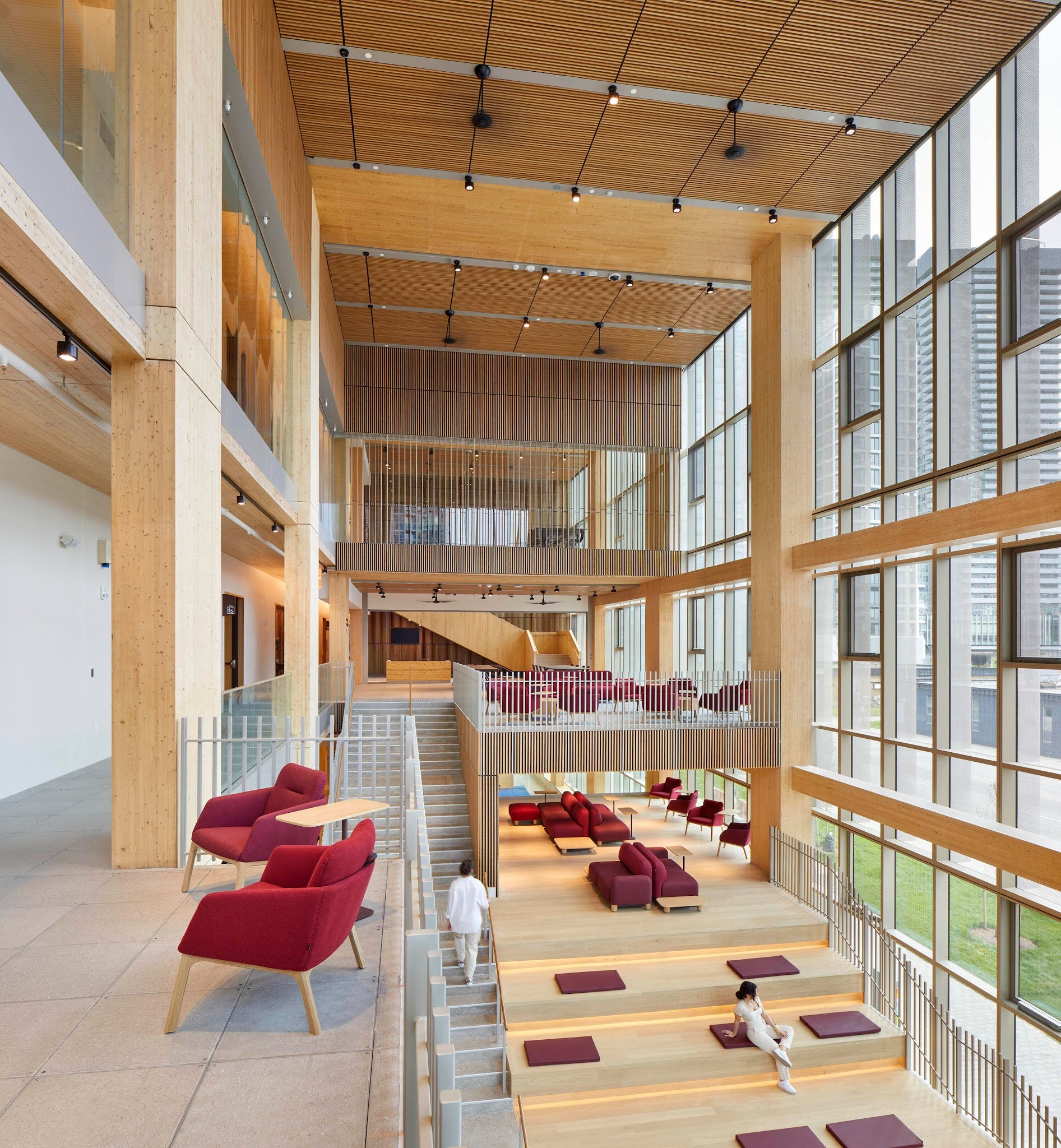
When we talk about wooden skyscrapers, we are not talking about ordinary 2x4s. Mass Timber is a high-tech product of engineering, the most popular type of which is CLT (Cross-Laminated Timber). Simply put, these are huge panels and beams created by gluing layers of wood together under pressure. They are as strong as steel but much lighter.
Building “wooden Legos”
The construction of modern wooden structures is more like assembling a Lego set than a classic building process. Most of the elements are manufactured in factories using robots and AI, and then delivered to the site.
For example, the project at 230 Royal York Road by Intelligent City uses industrial robots to create prefabricated modules. This allows to:
- Reduce construction time by 3-4 months.
- Reduce noise and the amount of garbage on the site (which is critical for densely populated Toronto).
- Improve precision: errors are measured in millimetres, whereas in concrete they can reach centimetres.

To monitor the condition of the wood in the structure, IoT sensors are used, which send real-time moisture level alerts to engineers. If the wood becomes too wet or dries out too quickly, engineers can respond instantly.
Buildings that breathe
Traditional construction is one of the biggest polluters on the planet: concrete and steel production accounts for nearly 15% of global CO2 emissions. Wood, however, acts as a natural “antidote”.
First, it’s about carbon storage. Trees absorb carbon as they grow. When we use wood in a building, we “lock” this carbon inside the walls for decades. One cubic metre of wood holds almost a tonne of CO2. Building with Mass Timber essentially turns the city into a giant carbon sink.
Secondly, it’s about energy efficiency. Manufacturing and installing wooden structures requires 50% less energy than reinforced concrete. Moreover, such buildings act as a natural thermostat, retaining heat better in winter.
But there is also a psychological aspect – biophilia. It has been proven that being surrounded by natural wood reduces stress levels, improves mood and boosts productivity. People feel calmer in Mass Timber offices than in cold concrete boxes.
Flagships of Toronto’s wooden fleet
Today, Toronto is a real showcase for ambitious timber projects.
T3 Bayside
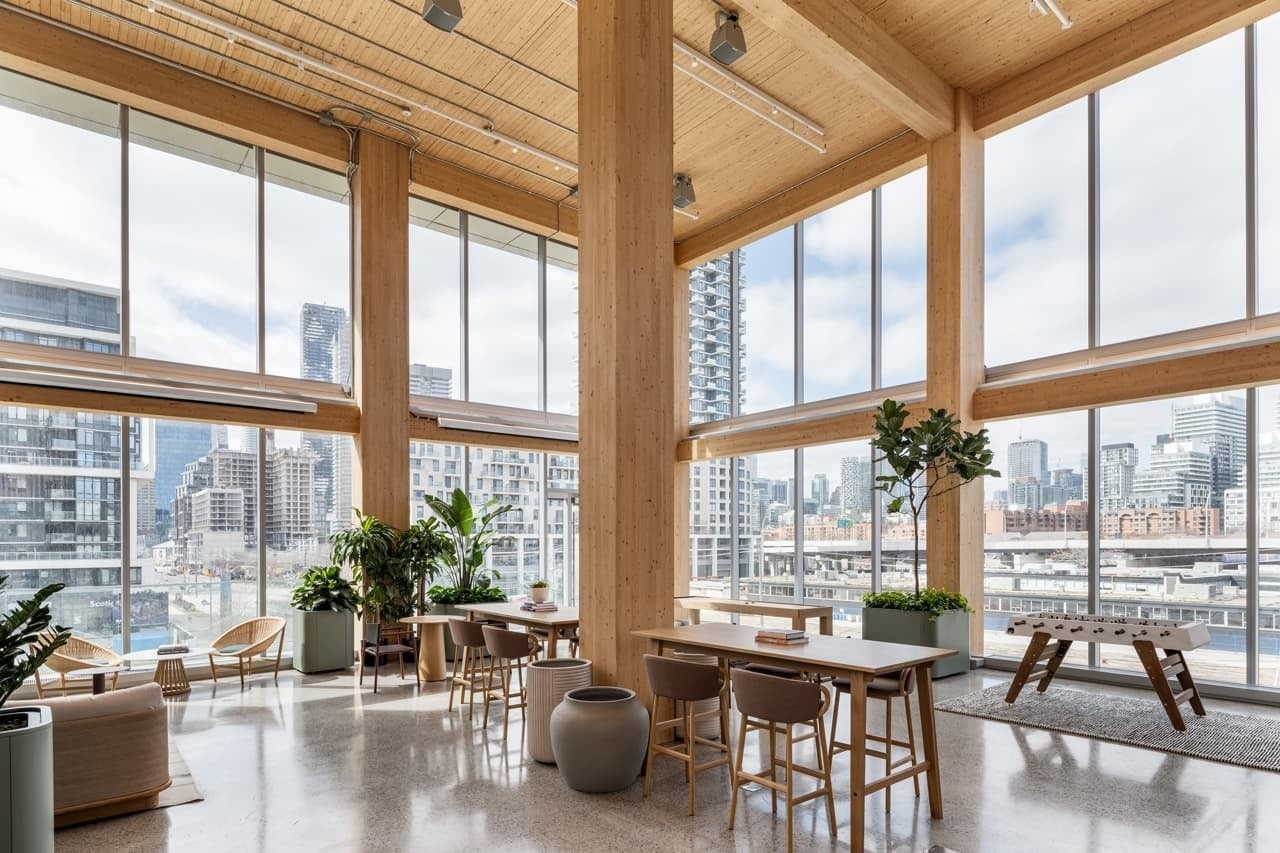
The name T3 stands for Timber, Talent, Technology. This 10-storey building in East Bayfront became one of the first large-scale examples of how wood is replacing concrete in business districts. Using timber here avoided 10,000 tonnes of carbon emissions – the equivalent of taking 2,700 cars off the road for a year. Even Waterfront Toronto believed in this project so much that they moved their head office here.
Limberlost Place
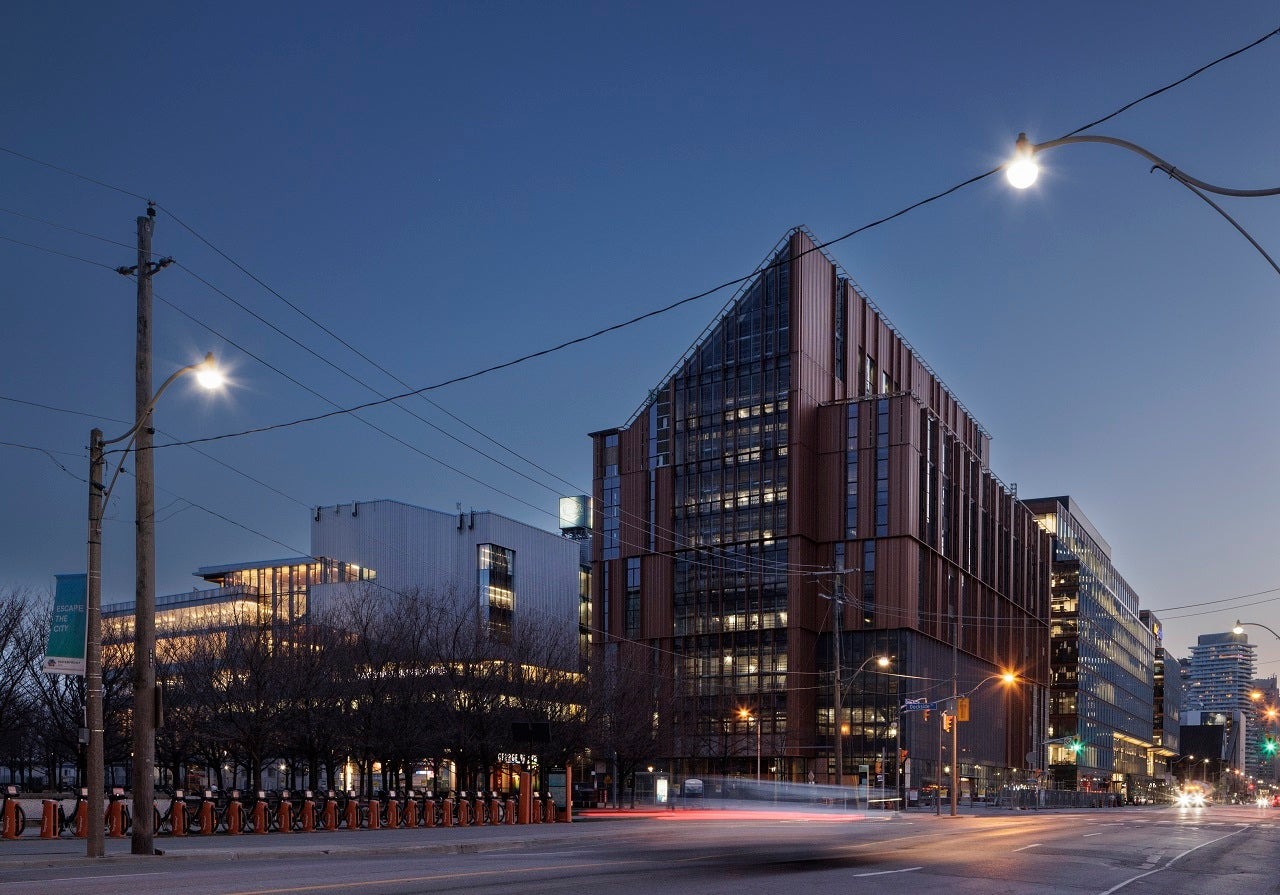
This George Brown College building is a model of “clean architecture”. It is Ontario’s first large net-zero carbon institutional building. In addition to the wooden frame, complex engineering solutions were implemented here: “solar chimneys” for natural ventilation and a cooling system using water from Lake Ontario. The project was so compelling that it forced the government to revise Canada’s building codes.
Academic Wood Tower
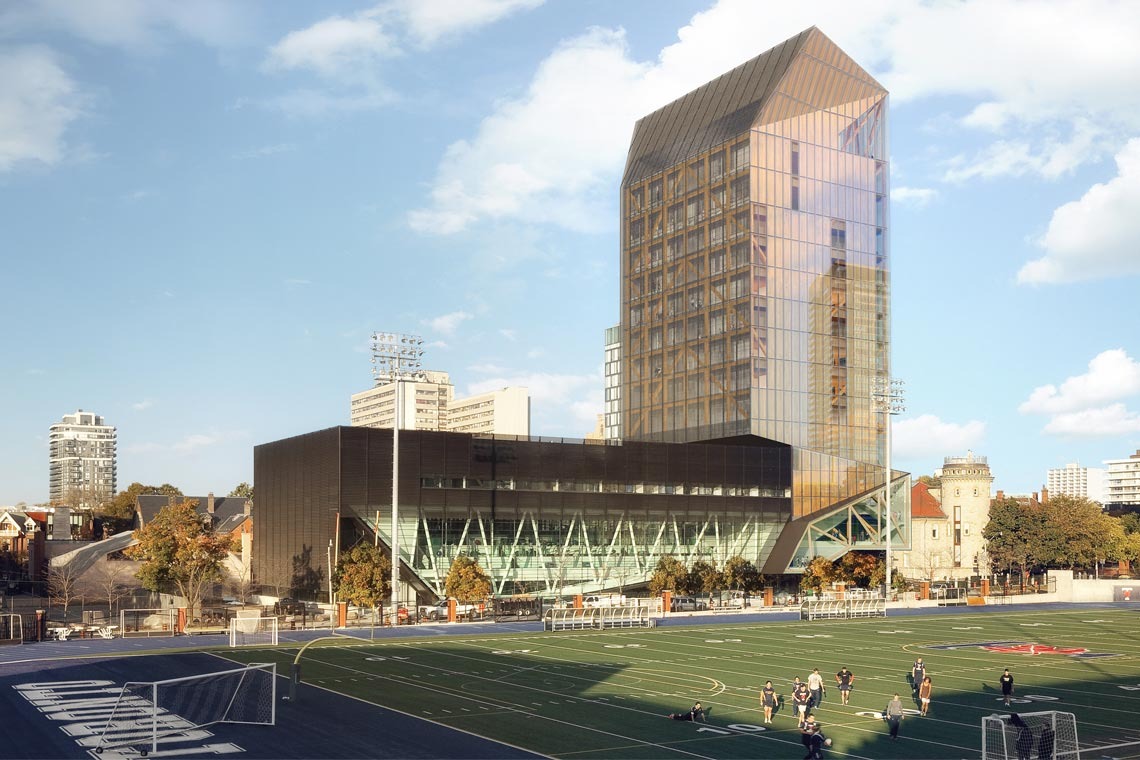
The University of Toronto (U of T) is building a 14-storey tower that demonstrates the art of compromise. It is a hybrid structure: a steel frame provides rigidity, while Mass Timber ensures lightness and sustainability. This is an ideal solution for dense downtown development, where it is important to minimize the load on the soil and foundation.
191-199 College Street
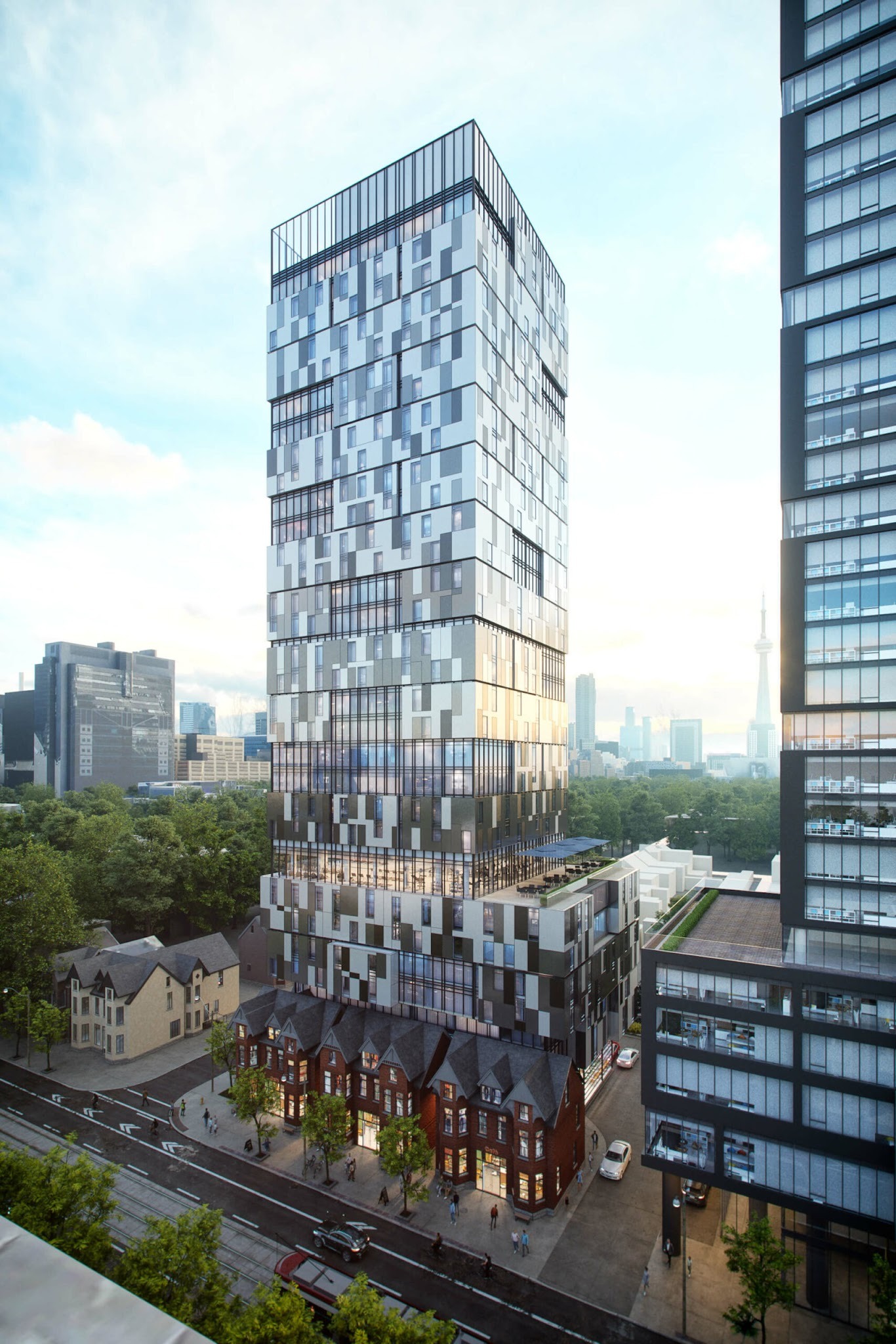
And this project by Icon Architects is aiming for global leadership. The 31-storey residential tower is planned to reach 90 metres, setting an absolute height record for wooden construction in North America. Moreover, the entire facade of the building will be turned into a giant solar panel, making the skyscraper completely energy independent.
Myths and reality: fires and deforestation
Many readers have logical questions: “Won’t a wooden skyscraper burn like a match?” and “Are we going to cut down all of Canada’s forests for these buildings?”. Toronto’s developers and architects have clear answers.
Myth 1: Fire hazard
It sounds paradoxical, but large masses of compressed wood are extremely fire-resistant. When such a panel is exposed to fire, its outer layer chars. This char layer becomes a natural protective barrier that prevents oxygen and heat from getting inside. In tests, Mass Timber beams withstood open flames longer than steel structures, which simply melt and lose their strength under high temperatures.
Myth 2: Deforestation
For Mass Timber technology in Ontario, wood is sourced exclusively from certified sustainably managed forests. There is a strict rule: for every tree cut down, several new ones are planted, ensuring sustainable forest management. Since young trees absorb carbon much more actively than old ones, this cycle only improves the health of Canadian forests.
Comparison table: traditional construction vs Mass Timber
| Criteria | Reinforced concrete and steel | Mass Timber |
| Carbon footprint | High CO2 emissions during production | CO2 storage inside the material |
| Structure weight | Very heavy (requires massive foundation) | Light (savings on underground works) |
| Installation speed | Slow (time needed for concrete to cure) | Very fast (assembly of prefabricated blocks) |
| Indoor atmosphere | “Cold” acoustics, artificial materials | Natural humidity, smell of the forest, coziness |
Techno-optimism vs reality
Of course, it’s not all that simple. Wood requires special treatment during construction (it needs to be protected from the rain until the roof is installed). Furthermore, the cost of materials can be higher than concrete, although this is offset by the speed of installation and lower foundation costs (wood is lighter!).
The main challenge today is legislation. Although Ontario’s building codes now permit up to 12 storeys, architects are pushing for more. Every new wooden skyscraper in Toronto is a battle for new standards of safety and sustainability.
Conclusion
Toronto’s wooden skyscrapers are not just a trendy architectural movement. It’s a return to the smart use of resources. The city, once choking on industrial smog, is now choosing the path of an “urban forest”.
These buildings teach us that a skyscraper can be not only a symbol of power and capital, but also a symbol of care for the planet. And the next time you see a tower in Toronto that smells of fresh pine and radiates the warmth of wood, know that you are looking into a future that has finally learned to live in harmony with nature.
Fun fact: if you put all the wooden beams used to build the Academic Wood Tower at U of T in a single line, they would stretch from Toronto all the way to Montreal!