

Park · Toronto · ⭐ 9.3/10 · 8762 reviews · updated: 2026-08-03 23:54:22
Address: 790 Queen St W, Toronto, ON M6J 1G3, Canada
Trinity Bellwoods Park — a buried river, a demolished college, and downtown Toronto’s living room
Thirty-six acres of grass with a dip in the middle: that is the whole park, and it is the busiest social space in the west end of downtown Toronto. What almost nobody standing in it realizes is that the dip is a river valley. Garrison Creek ran through here until the city buried it, and the fill that flattened the ravine came out of the Bloor–Danforth subway excavation. Under the north end lies an entire concrete bridge. Under the lawn near the middle lie the foundations of a neo-gothic Anglican college. Trinity Bellwoods is the rare Toronto park where the interesting part is what is no longer visible.
Highlights
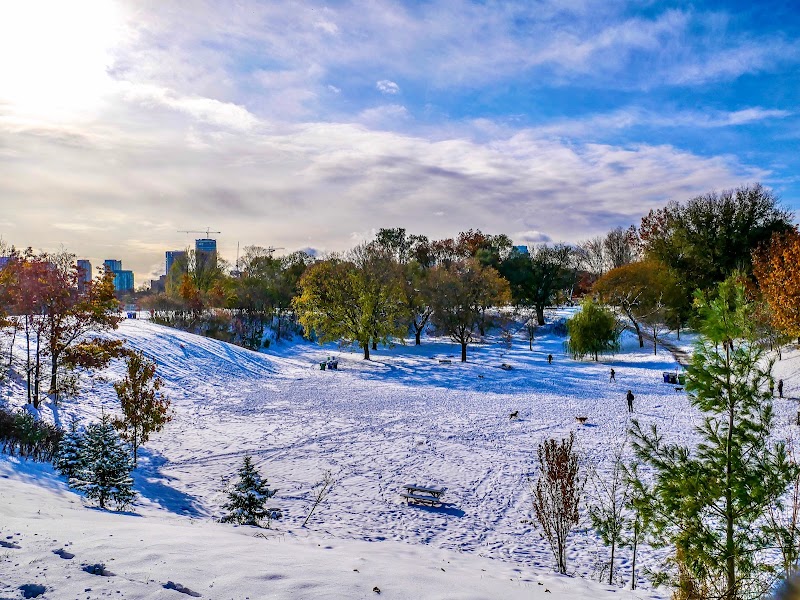
- The Bowl — locally called the Pit, the last surviving stretch of the Garrison Creek ravine and now the largest off-leash dog area in Toronto. Its steep northern slope doubles as the neighbourhood’s tobogganing hill in winter.
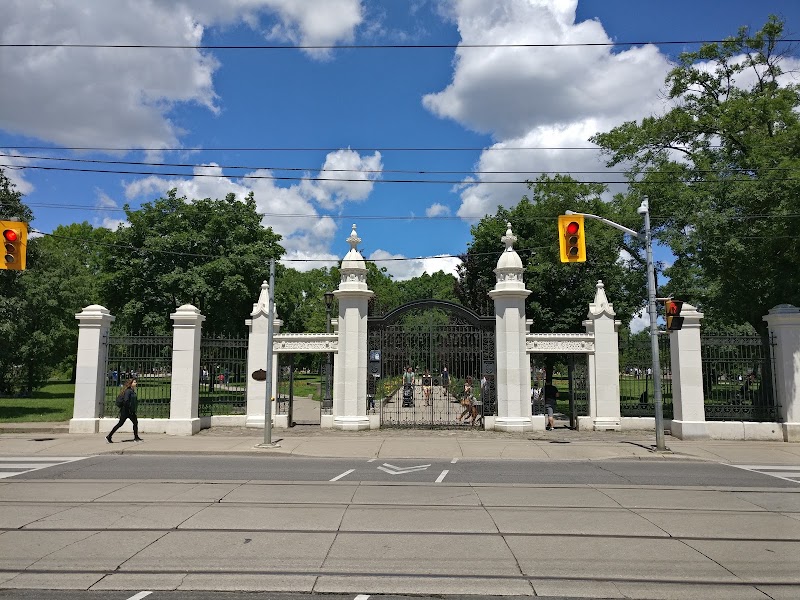
- The Trinity Bellwoods gates — the ceremonial entrance erected in 1903 for Trinity College, the most recognizable landmark in the neighbourhood and its default meeting point. The original ironwork went to Trinity College School in Port Hope, so today’s iron is a replica; the stone pillars underwent a full restoration in 2007 including masonry repair and replacement of decayed cast-stone elements.
- The buried Crawford Street Bridge — a full-sized bridge that once carried traffic over the Garrison Creek ravine and was simply buried under subway spoil in the 1960s. It is still down there; a heritage plaque marks the spot near the market end of the park.
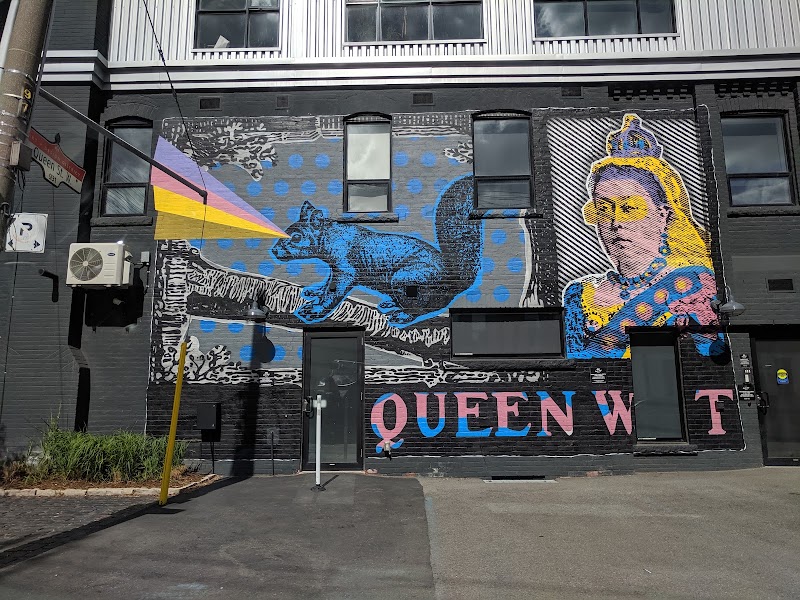
- The white squirrels — a locally famous population of white and white-morph eastern grey squirrels in the stands of trees toward the south end. Spotting one is treated as good luck, and they have become as much a neighbourhood emblem as the gates.
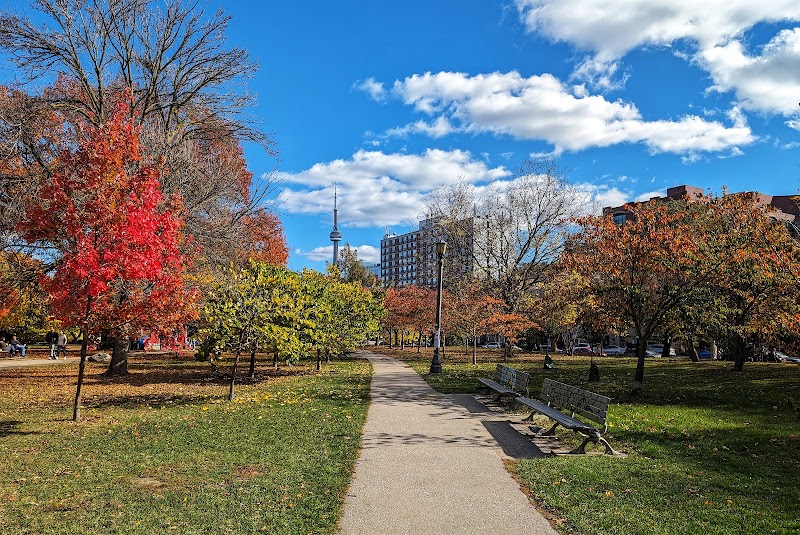
- The tree collection — over 400 trees, including sugar maple, shagbark hickory, black locust, willow, oak, elm and dawn redwood, survivals from the park’s former status as a designated arboretum, which it held until the 1950s.
- Trinity Bellwoods Farmers’ Market — running Tuesdays from 3 to 7 p.m. through the Ontario growing season; the 2026 season ran from 5 May to 27 October and marked the market’s twentieth year.
What you’ll find
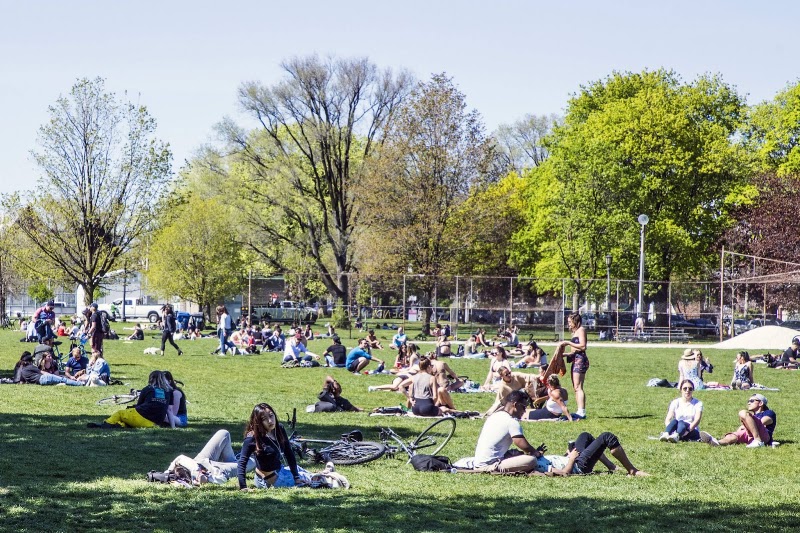
The park works as three bands. The formal, tree-shaded south end holds the gates, the old trees and the squirrels. The middle is open playing field and sports infrastructure. The north end drops into the Bowl and rises again toward the market corner. On a warm Saturday all three fill up simultaneously and the place functions less like a park than like a shared backyard for several thousand people.
- Trinity Community Recreation Centre — in the southwest corner, with indoor pools, a gymnasium, a fitness centre, an indoor walking and running track and multi-purpose rooms, running City recreation programs year-round.
- Courts and diamonds — eight tennis courts, two volleyball courts and three ball diamonds, one of which locals have long nicknamed the SkyDome.
- Water and ice — a children’s wading pool and playground for summer, and an outdoor artificial ice rink that runs through the winter season.
- The off-leash area — the Bowl itself, the city’s largest, which is why the park’s dog population is a social institution in its own right.
- A community greenhouse and slackline poles — two small things that say a lot about who runs this park in practice: volunteers and neighbours, through groups such as Friends of Trinity Bellwoods Park and its Adopt-A-Tree replanting drive.
- The circle — the paved circular clearing on the main path, which marks the ceremonial approach of the vanished college; the buried foundations lie just north of it.
Things to do — and who it’s for
- Dog owners — the Bowl is the reason many people in this part of the city chose their apartment, and the off-leash crowd there is the closest thing the neighbourhood has to a daily town square.
- Picnickers and groups of friends — the open middle of the park is Toronto’s default warm-weather meeting spot; arrive before noon on a summer Saturday if you want a specific patch of shade.
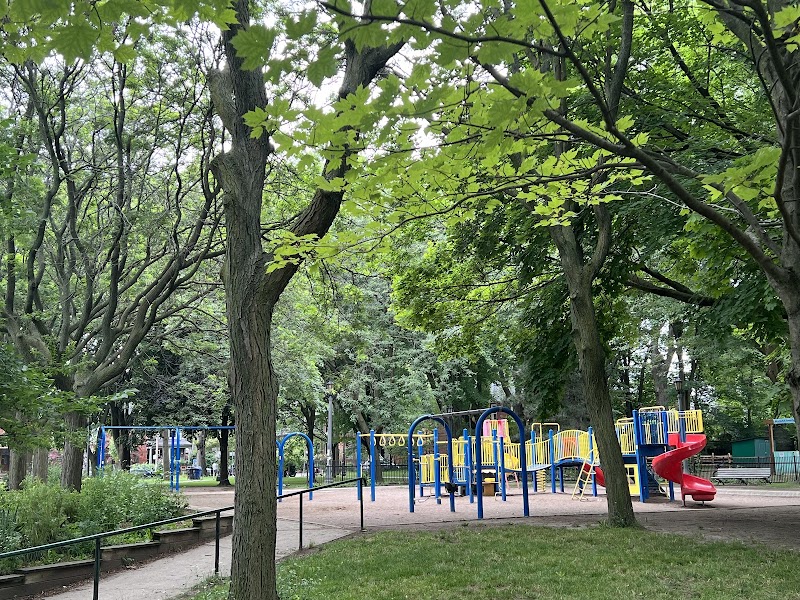
- Families — the playground, wading pool and rink cluster gives small children a full year of use, and the recreation centre puts an indoor pool within the same block.
- Racquet and ball players — eight tennis courts and three diamonds make this one of the better-equipped downtown parks for casual league play.
- History walkers — the gates, the circle, the buried bridge plaque and the ravine remnant can be joined into a forty-minute walk that explains more about how Toronto was built than most museum visits.
- Winter sledders and skaters — the northern slope of the Bowl is one of downtown’s best toboggan runs, and the artificial rink means the park does not shut down in January.
Getting there & practical
The park sits in the west end of downtown Toronto, giving its name to the surrounding Trinity Bellwoods neighbourhood, with Little Portugal and Beaconsfield Village immediately around it. The 501 streetcar runs along the park’s southern edge and the 505 streetcar along its northern edge, both of which put you at an entrance without walking far. From the subway, take Line 2 Bloor–Danforth to Ossington station and transfer to the 63 bus southbound; the 511 streetcar also passes within a short walk of the eastern side. Entry is free and the park has no gates or closing time in the usual sense. Facilities are priced separately: the recreation centre’s swims, fitness and registered programs follow City of Toronto rates, and tennis and diamond bookings go through the City’s permit system. One rule worth knowing — Trinity Bellwoods is part of Toronto’s Alcohol in Parks program, which began as a 27-park pilot in August 2023 and is now a permanent program covering a designated list of more than fifty parks: people 19 and over may drink their own beverages, but not within two metres of playgrounds, wading pools, splash pads, outdoor pools, ice rinks or skate and BMX facilities, and public intoxication remains an offence. Check the City’s current designated list before you plan around it. Allow an hour for a walk-through, two or three if you are meeting people, and a full afternoon on a summer weekend, because nobody leaves this park quickly.
When to visit
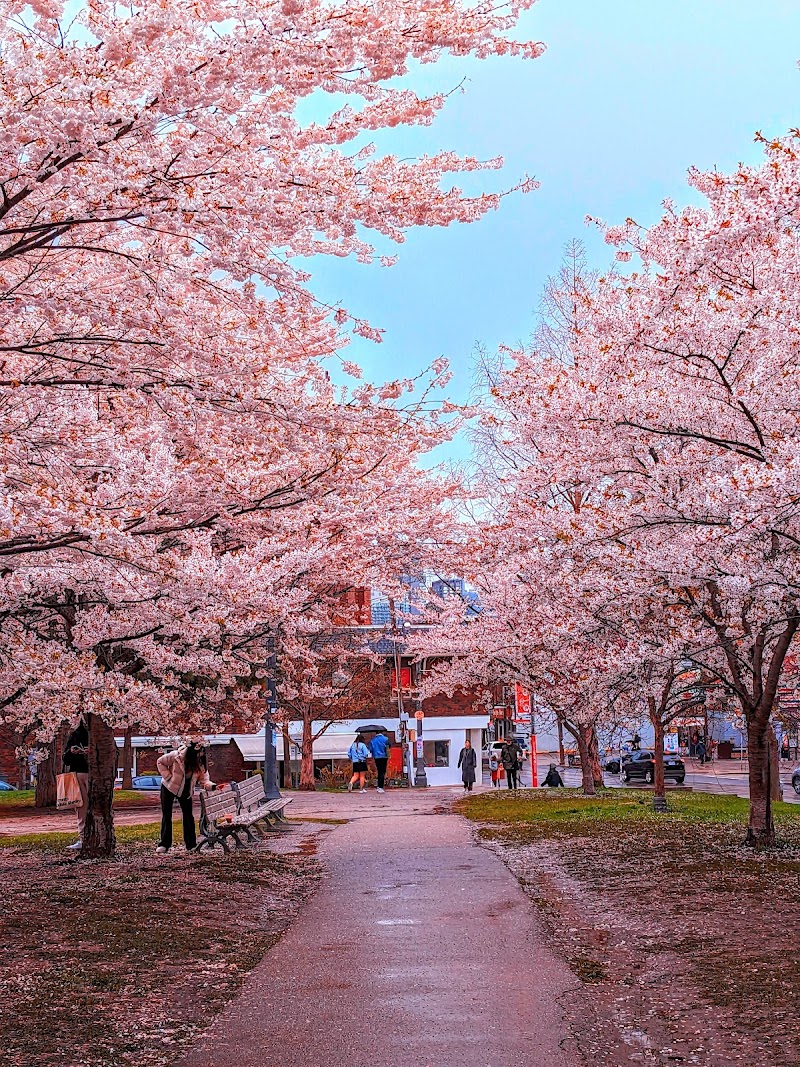
Spring is the park’s most anticipated season, not for any single flowering event but because the first genuinely warm weekend fills the lawns end to end; the Bowl stays muddy well into April, so dog owners plan accordingly, and the farmers’ market returns in the first week of May. Summer is Trinity Bellwoods at full volume — picnics, music, the wading pool, weekday evening tennis, the Tuesday market, and a density of people on the grass that is closer to a festival than a park. Mornings are calm; afternoons are not. Autumn is the connoisseur’s season: the sugar maples and the old hickories turn, the market runs to the end of October, and from late August into early October large flocks gather in the trees at sunset and wheel over the north end in one of the more surprising urban wildlife displays downtown. Winter flips the park’s geography — the Bowl becomes the toboggan hill, the artificial rink runs all season, cross-country skiers use the flats after a heavy snow, and the buried ravine, with its slopes stripped of leaves, is finally legible as the river valley it was.
Good to know
In 1851 Bishop John Strachan, the combative Anglican churchman who had lost control of the province’s university to secular reform, bought land here from a Mrs. Cameron of Gore Vale in order to found his own institution. Trinity College took its first students in 1852, and its neo-gothic main building was one of the finest structures in the city. Its ceremonial gates went up in 1903. The college moved to the University of Toronto’s downtown campus in 1925, the buildings were sold to the City, and most of them were demolished in the early 1950s; their foundations remain buried just north of the circle on the main path. Portions of the original gate ironwork were sent to Trinity College School in Port Hope in the 1940s and the gates themselves were relocated there in 1965, which is why the ironwork you walk through now is a replica standing in restored original pillars. The former St. Hilda’s College building, the women’s residence, still stands nearby. The park’s other buried history is hydrological: Garrison Creek ran through this valley to the lake, and by the 1950s it had been entirely enclosed. In the 1960s the ravine was backfilled with earth excavated for the Bloor–Danforth subway, raising the northern end almost to the level of the surrounding streets and burying the Crawford Street Bridge whole. One frequent confusion is worth correcting: the Provincial Lunatic Asylum, known by its address as 999 Queen Street West, was a separate institution nearby, not part of this park. Its influence on Trinity Bellwoods was social rather than physical — when deinstitutionalization began in the 1970s, discharged psychiatric patients became part of the park’s population, and the park’s long reputation as contested ground dates from that period. That tension resurfaced in June 2021, when police cleared an encampment of roughly twenty to twenty-five people from the park, an operation that remains one of the most argued-about events in the neighbourhood’s recent history. The park’s ecology has its own casualties: the emerald ash borer has forced treatment or removal of infected ash trees, and volunteers replant continuously to hold the canopy. One tree is protected behind its own stone wall north of the Bowl — a shagbark hickory believed to be the last survivor of the woodland that lined the original Garrison Creek ravine.
Visitor tips
- If you are coming to sit on the grass on a summer weekend, come before noon. By mid-afternoon the shaded south end is fully occupied and the open middle offers no cover at all.
- The Bowl is a working off-leash area, not a picnic lawn. If you are not there with a dog, cross it rather than settle in it — and if you are, remember that the slopes get slick and muddy in spring and after rain.
- Time a visit to a Tuesday afternoon between May and late October and you get the farmers’ market at the northwest end on top of everything else; it runs rain or shine from three until seven.
Questions & answers
Is the park free to enter? Yes, entirely, at any hour. Only the facilities carry charges: swims, fitness and registered programs at the recreation centre follow City of Toronto rates, and permits are required to book tennis courts, ball diamonds or organized events on the grass.
Can I let my dog off leash? Yes, in the designated off-leash area — the Bowl — which is the largest in Toronto. Everywhere else in the park dogs must be leashed, and they are not permitted in the playground, wading pool area or sports courts.
How do I get there on transit? The 501 streetcar runs along the southern edge and the 505 streetcar along the northern edge, so either drops you at a park entrance. From the subway, Line 2 Bloor–Danforth to Ossington station and then the 63 bus southbound is the standard connection.
Is there really a buried bridge and a buried creek? Yes to both. Garrison Creek was enclosed and its ravine backfilled with excavation spoil from the Bloor–Danforth subway in the 1960s, which buried the Crawford Street Bridge intact beneath the north end of the park. A heritage plaque marks the location near the market end, and the Bowl is the last open remnant of the ravine itself.
What about the white squirrels — are they real? They are. A population of white and white-morph eastern grey squirrels lives in the tree stands toward the south end and in the surrounding streets. They are not albino as a rule, and local custom holds that seeing one brings luck.
Can I drink alcohol in the park? Trinity Bellwoods is included in Toronto’s Alcohol in Parks program, permanent since the 2023 pilot, so adults 19 and over may bring their own drinks. The restrictions matter: not within two metres of playgrounds, wading pools, splash pads, outdoor pools, ice rinks or skate and BMX areas, and public intoxication is still an offence. Confirm the City’s current designated-park list before relying on it.
What is there to do in winter? The northern slope of the Bowl is one of downtown’s most-used toboggan hills, the outdoor artificial rink operates through the season, cross-country skiers use the flat ground after a heavy snowfall, and the indoor pool at the recreation centre runs year-round.
How long should I plan to stay? An hour is enough to walk the gates, the circle, the Bowl and the old trees. Two to three hours is realistic if you are meeting people or using the courts, and a summer Saturday afternoon in this park has a way of consuming itself entirely.
Photos
Show 1 more photos
Visitor reviews
Reviews last updated: 2026-08-03 23:54:22
Data is refreshed monthly. Sources: toronto.name and editorial picks based on reviews.
This park is one of the most beautiful and serene places amidst the humdrum of city life. This park is for all seasons! During summer, there’s live music and the guitarist is just amazing! In fall, the colors are gorgeo…
A nice park. But there isn't enough lighting. On the plus side, alcohol consumption is allowed.
A cool park, there's a playground for kids. It's really great to have a picnic here.