

Park · Toronto · ⭐ 9.3/10 · 4306 reviews · updated: 2026-08-03 23:54:24
Address: 25 Queens Quay W, Toronto, ON M5J 2G4, Canada
Harbour Square Park — the city’s front door onto the Inner Harbour
Almost everyone who has ever taken a ferry to the Toronto Islands has walked through this park, and most of them never learned its name. It is a narrow green wedge pressed between the condominium towers of the central waterfront and the open water of the Inner Harbour, and it does one thing better than any other space downtown: it puts you at the true edge of Lake Ontario, at eye level with the boats. Ferries swing out of their slips every few minutes through the summer, sailboats tack across the gap toward the Islands, floatplanes and turboprops climb off the runway at the island airport, and the whole restless machinery of a working harbour plays out a few metres from wherever you have chosen to sit. The park exists because Toronto finally stopped treating its shoreline as a freight yard in the 1960s, and it has served as the city’s front door to the lake ever since.
Highlights
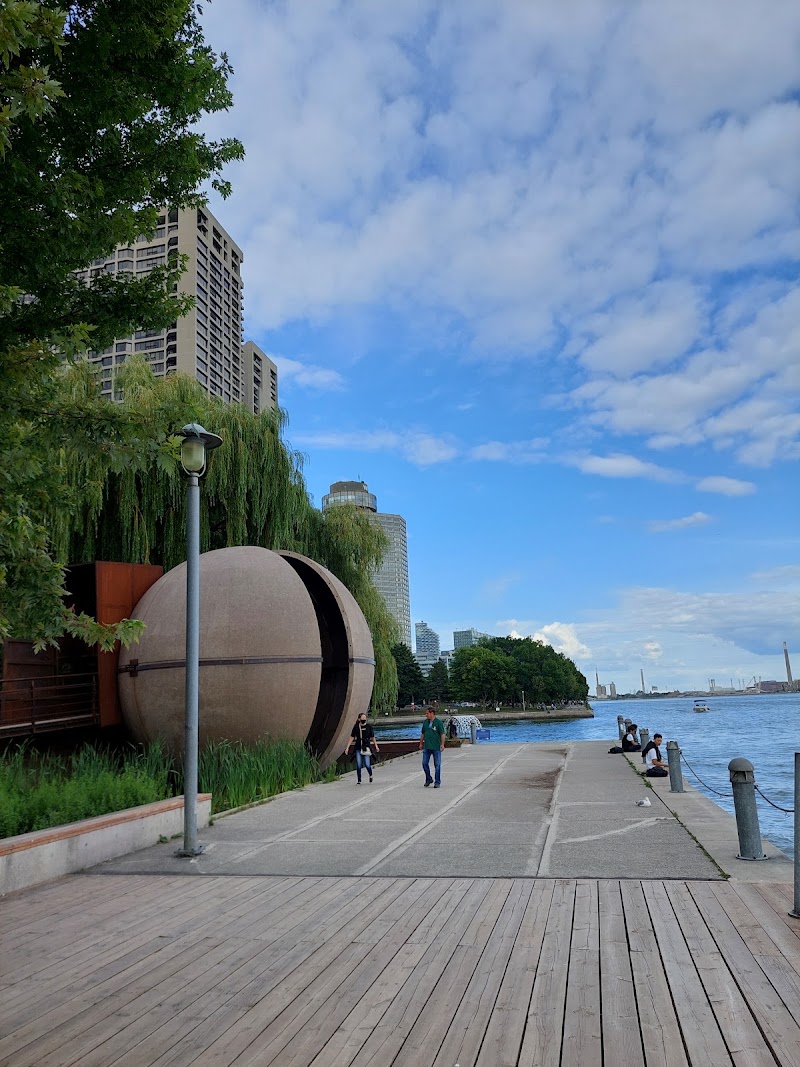
- Sundial Folly — a hollow concrete sphere, cracked open and sunk into a pool at the water’s edge, installed in 1995 by John Fung and Paul Figueiredo. You walk down and step inside it; the interior is a cool, dim, echoing chamber with the harbour framed through the split, and the noise of the lake amplified around you. It is the least advertised and most genuinely surprising piece of public art on the central waterfront.
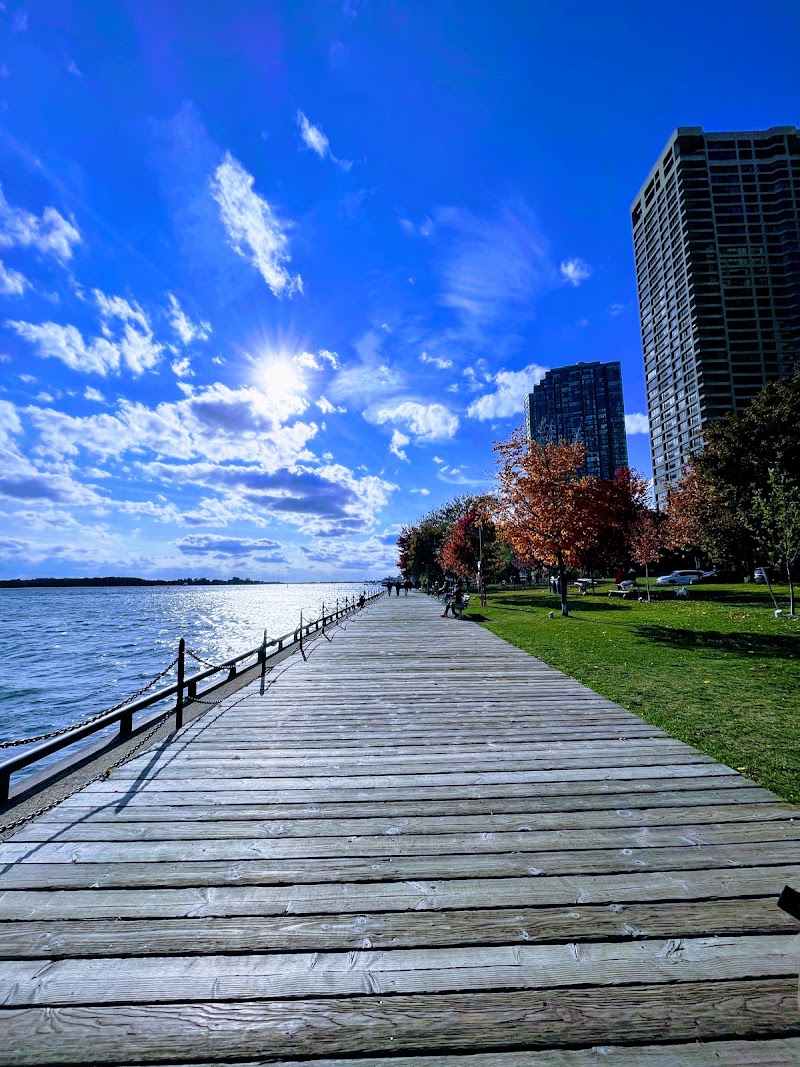
- The harbour promenade — a continuous boardwalk and stone edge running the length of the park along open water, forming part of the Martin Goodman Trail and of the longer Waterfront Trail that traces the Toronto shoreline from end to end.
- Jack Layton Ferry Terminal — the park wraps around the terminal that moves roughly 1.2 million passengers a year to Ward’s Island, Centre Island and Hanlan’s Point. It opened in January 1972 as the Toronto Island Ferry Docks and was renamed by a unanimous vote of city council in 2012.
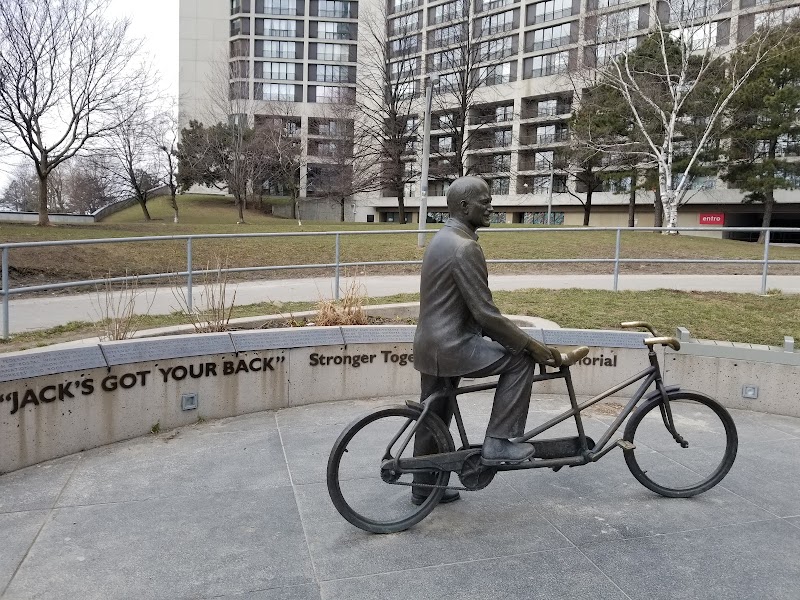
- The Jack Layton memorial — a bronze of the former city councillor and federal party leader riding the rear saddle of a tandem bicycle, unveiled in 2013 on the second anniversary of his death. The front saddle is deliberately left empty so that anyone can climb on and ride with him.
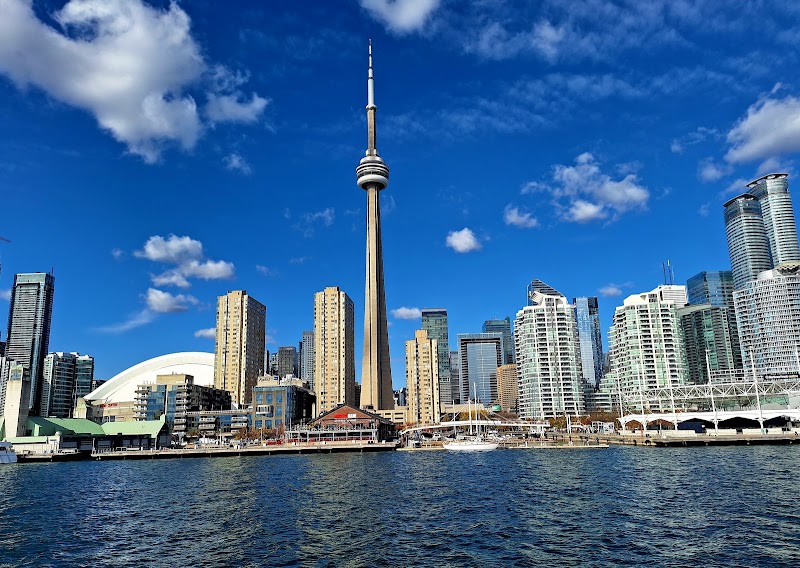
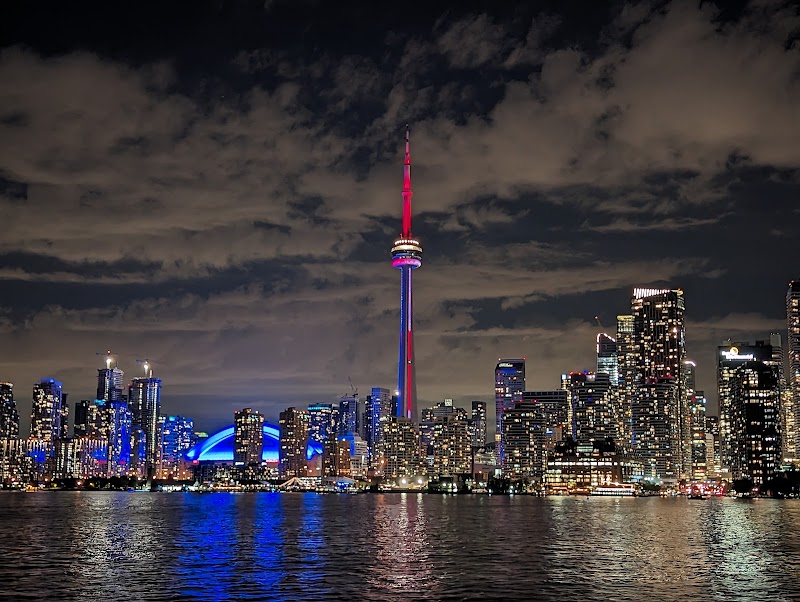
- The Island panorama — an uninterrupted southward view across the harbour to the treeline of the Toronto Islands, with the Gibraltar Point lighthouse territory to the west and the city’s own skyline rearing up behind your shoulder. It is the standard vantage point for photographing both at once.
- The Khojaly memorial trees — a small commemorative planting installed in 2014 in memory of the victims of the Khojaly massacre, one of several quiet memorials that have accumulated in the park over the decades.
What you’ll find
This is a working transit park as much as a leisure one, and its design reflects that: broad hard-surfaced plazas that can absorb a ferry’s worth of people at once, then softer lawn and planting where the crowds thin out toward the water.
- Open lawn terraces stepping down toward the harbour, used for picnics, sunbathing and impromptu gatherings all summer.
- Benches and seating walls oriented south at the water’s edge, plus movable seating in the plaza areas during the warm months.
- Mature shade trees and perennial beds separating the park from the towers behind it.
- Direct access to the ferry docks, with the ticket hall, washrooms and seasonal concessions inside the terminal building.
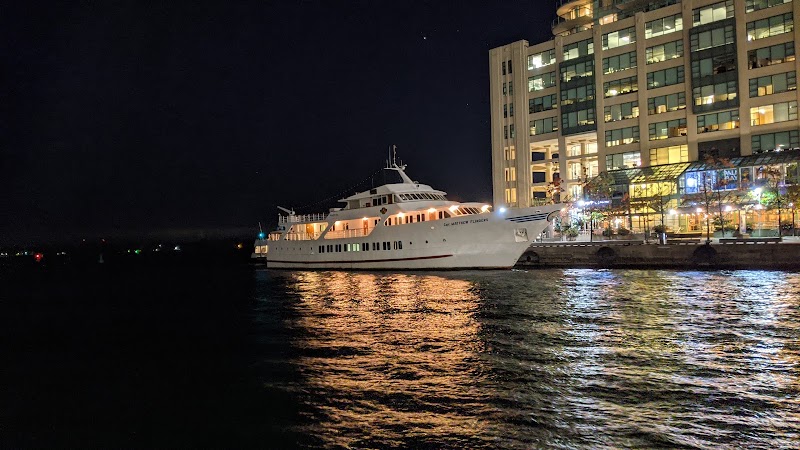
- A short pier and viewing edge where the harbour tour boats and charter vessels load.
- Connections west toward Harbourfront Centre, HTO Park and the Toronto Music Garden, and east toward the Redpath sugar refinery and Sugar Beach — the entire chain is walkable in under an hour.
Things to do — and who it’s for
- Island-bound day trippers — this is the staging ground. Arrive early, buy the ferry ticket, and spend the wait on the lawn rather than in the queue.
- Downtown office workers — a genuine lunchtime escape from the financial district, close enough to walk to and far enough away in feel to reset a day.
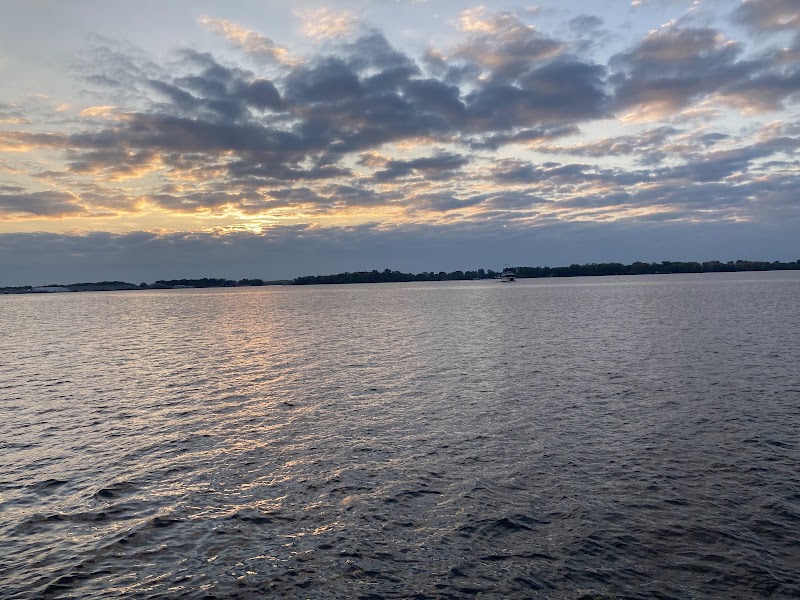
- Photographers — skyline behind, Islands ahead, ferries and sails crossing the frame constantly, and a west-facing water edge that turns gold at the end of the day.
- Runners, cyclists and walkers — the park is a link in the Martin Goodman Trail, so it doubles as a scenic stretch of the city’s main waterfront route rather than a destination you have to detour for.
- Visitors with limited time — for anyone with a single free hour in Toronto, this delivers lake, skyline, public art and a working harbour in one flat, easy walk.
- Families — flat, stroller-friendly ground, water on one side to watch, and the ferry itself as the payoff at the end.
Getting there & practical
The park sits on the central waterfront in downtown Toronto, in the Harbourfront district directly south of the financial core. The simplest approach is Union Station on Line 1 Yonge–University, then the 509 Harbourfront or 510 Spadina streetcar, which run in a tunnel from Union and surface at Queens Quay station — the ferry docks stop puts you at the park’s edge. Both streetcar routes also connect westward along the waterfront, and the 6 Bay bus runs south from the subway to the terminal. On foot it is about a ten-minute walk south from Union Station through the PATH system or on the surface. Entry is free and there is no gate; the park follows the City of Toronto’s standard park hours, which close public parks overnight between roughly midnight and half past five in the morning. Allow twenty minutes for a walk through and a look at Sundial Folly, an hour if you plan to sit, and a full day if the park is simply your departure point for the Islands. Note that ferry tickets are a separate paid service and sell out on hot summer weekends, so book ahead if the Islands are the plan.
When to visit
Summer is the park at maximum intensity: ferry queues snaking across the plaza, every patch of lawn taken, sailing regattas crossing the harbour and the lake air giving downtown a few degrees of relief it badly needs. Autumn is the connoisseur’s season — the crowds evaporate after Labour Day, the light goes low and hard, migrating waterfowl gather in the harbour, and the same view costs you nothing in elbow room. Winter here is a real event rather than an off-season: the Inner Harbour freezes in patches, the ferry keeps running to Ward’s Island as an icebreaker of sorts, steam rises off open water on the coldest mornings, and the wind coming across the ice is genuinely serious — dress for a lake, not a city. Spring is transitional and often raw, but it brings the first sailboats back to their moorings and the earliest evening light worth walking out for, and the park is at its emptiest in April.
Good to know
Nothing you are standing on is natural ground. Lake Ontario’s original shoreline lay several blocks inland from here, and everything south of it is nineteenth- and twentieth-century landfill, built out of construction rubble, dredged harbour muck and railway ballast as the port expanded. The main departure point for the Islands has been in this immediate area since the nineteenth century, and when the harbour was infilled after 1918 the docks shifted westward along the new quay line. The park itself is a product of the great waterfront rethink that began in 1964: a project first budgeted at roughly 85 million dollars, which by its completion in the early 1970s had cost around 250 million and had filled in the old Bay Street shipping slip, raised the Harbour Castle hotel tower and the Harbour Square residential complex, moved the ferry docks to the east side of the new park, and laid out the green space itself to a design by the landscape architects Fleisher Ridout Partnership. The ferry terminal opened in January 1972; four decades later, in 2012, city council voted unanimously to rename it for Jack Layton, the councillor turned federal opposition leader who had died the previous year, and the memorial bronze went up at the 2013 ceremony. The park’s next chapter is already drawn: in April 2015 Waterfront Toronto and the City announced the winner of an international design competition that had drawn 33 teams from 12 countries, with five shortlisted in January of that year. The winning submission, called Harbour Landing, came from KPMB Architects with West 8 and Greenberg Consultants, and proposes a terminal building of roughly double the current size beneath an accessible green roof, rolling hills through the park, new play areas and reopened sightlines to the water, with the Jack Layton memorial kept at the central crossing point.
Visitor tips
- Sundial Folly is easy to miss because it sits below the level of the promenade — look for the sunken circular pool at the water’s edge and go down into it rather than photographing it from above.
- If you are heading to the Islands on a summer weekend, buy the ferry ticket online in advance and treat the park as your waiting room; walking up to the counter at midday in July can mean well over an hour in line.
- The park faces open water with no shelter, which is glorious in June and brutal in February — a windproof layer changes the experience completely from November through March.
Questions & answers
Is Harbour Square Park free to enter? Yes. It is a City of Toronto public park with no gate, no ticket and no admission charge, open every day under the city’s standard park hours. Only the ferry service to the Islands costs money.
Is this where the ferries to the Toronto Islands leave from? Yes. The Jack Layton Ferry Terminal sits within the park and serves all three Island destinations — Ward’s Island, Centre Island and Hanlan’s Point — with service levels that change by season.
What is the big concrete ball at the water’s edge? That is Sundial Folly, a public artwork by John Fung and Paul Figueiredo installed in 1995. The sphere is hollow and split open, and visitors are meant to walk down into the pool and step inside it.
Who was Jack Layton and why is the terminal named after him? He was a Toronto city councillor who became leader of the federal New Democratic Party and, in 2011, leader of the Official Opposition. He died later that year, and city council voted unanimously in 2012 to rename the terminal in his honour; a bronze of him on a tandem bicycle was unveiled in 2013.
How long should I allow for the park itself? Twenty minutes covers a walk through with a stop at Sundial Folly. An hour is comfortable if you want to sit by the water. If the Islands are your real destination, treat the park as a pleasant thirty-minute buffer before the boat.
Is the park worth visiting in winter? Yes, though it is a different park. The harbour ices over in patches, steam rises off the open channels, the ferry still runs to Ward’s Island year-round, and the whole waterfront empties out. The wind off the lake is severe, so dress accordingly.
Can I walk from here to other waterfront parks? Easily. The promenade links west to HTO Park, Harbourfront Centre and the Toronto Music Garden, and east toward Sugar Beach, all along the Martin Goodman Trail. The full chain takes well under an hour on foot.
Is the park being rebuilt? A redesign is planned. In April 2015 the Harbour Landing scheme by KPMB Architects with West 8 and Greenberg Consultants won an international competition to remake both the terminal and the park, with a larger terminal under a walkable green roof and reshaped parkland around it.
Photos
Show 1 more photos
Visitor reviews
Reviews last updated: 2026-08-03 23:54:24
Data is refreshed monthly. Sources: toronto.name and editorial picks based on reviews.
Walking here is a wonderful experience. My friends and I visited this place when the giant rubber duck was in town, and we got to see it while enjoying the beautiful scenery. Besides the Toronto Islands park, this spot i…
This cozy park sits on the lakeshore in Toronto. It offers a beautiful view of the waterfront and is an ideal spot for a picnic or a leisurely stroll. The breeze off the lake is especially pleasant, refreshing even on ho…
We visited this place on the weekend, and the park was crowded, with lots of people having picnics. The view is mesmerizing, since you can see the entire horizon, and planes fly by everywhere — it's a great spot to enjoy…
Always a wonderful park with a view of Lake Ontario and the islands, where you can watch the ferries make their crossings, or the countless water taxis taking part in the process.
It's a laid-back place where you can sit…
The view of the lake is wonderful; you can definitely spend a few minutes there admiring the lake and watching the boats and people passing by.
The sad thing is that, looking at the park, even with many trash cans around…