

Park · Toronto · ⭐ 9.3/10 · 2770 reviews · updated: 2026-08-03 23:54:28
Address: Beverley St & McCaul Street, Toronto, ON M5T 2W7, Canada
Grange Park — the AGO’s front lawn, opened to the city
Grange Park is 1.8 hectares of downtown green that began life as the private grounds of a Georgian manor and is still owned by the Art Gallery of Ontario, though the City of Toronto runs it as a public park. A $15-million rebuild reopened it on 10 July 2017 after fifteen months of construction, turning a tired lawn into one of the most heavily programmed small parks in the core.
Highlights
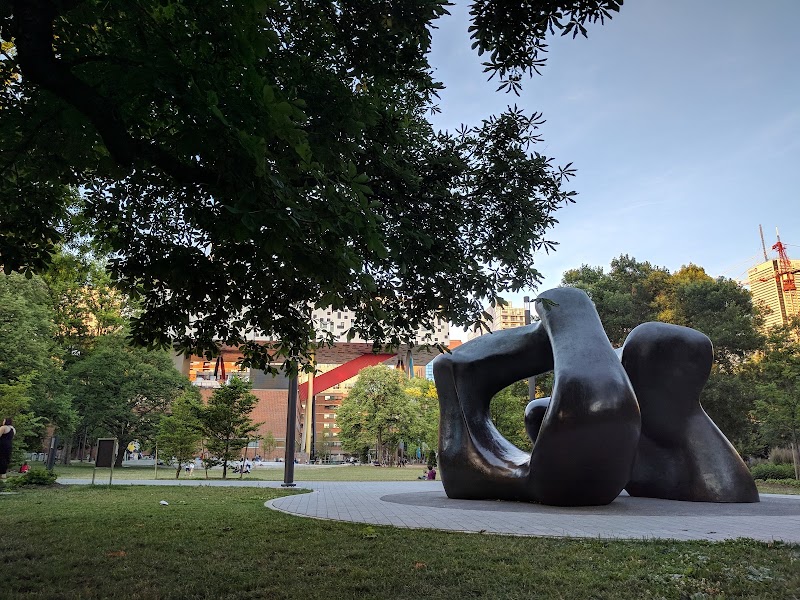
- Henry Moore’s “Large Two Forms” — the bronze the AGO bought directly from the artist in 1973 and installed on a street corner in 1974; it was moved into the park in 2017 and now sits on open grass where you can walk right around it.
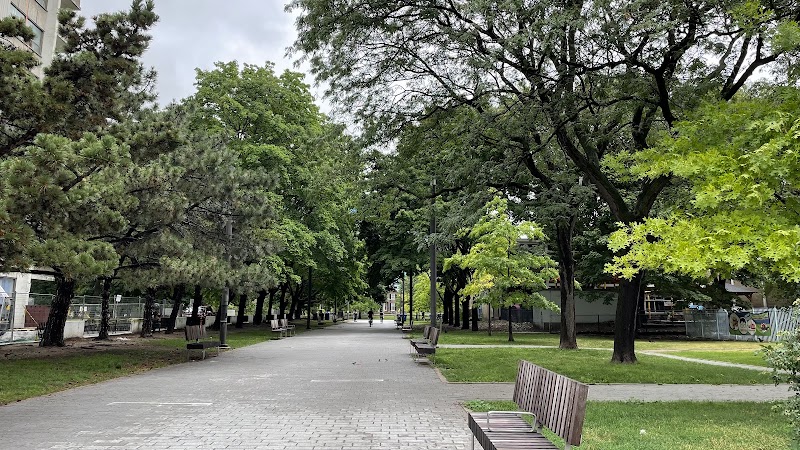
- The circular promenade — a carriage-path loop that defines the central civic green and organizes every other space around it.
- The Grove — the stand of mature trees on the western side, thinned and re-floored to hold small gathering spaces beneath the canopy.
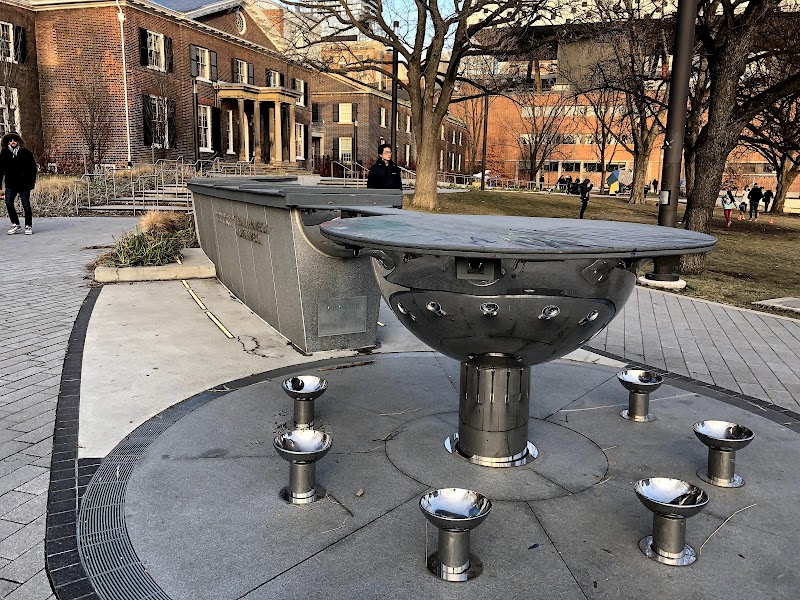
- The Weston family fountain — the sculptural water feature at the gallery’s south entrance.
- The water plaza — a separate splash-play surface on the eastern side, with seating alongside.
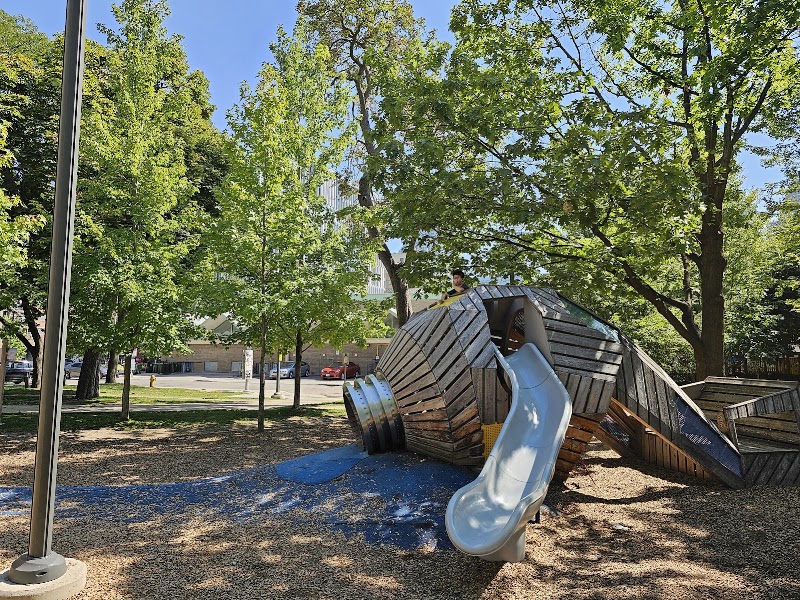
- The play area — age-separated structures that the designers describe as among the largest and most unusual play spaces in Toronto.
- The bell tower of St. George the Martyr — the sole surviving fragment of an 1845 church, standing at the park’s western edge.
What’s inside
PFS Studio of Vancouver, led by Greg Smallenberg, drew the new plan with Thinc Design as executive architects; the work was paid for by the AGO, the City of Toronto, the Weston family and neighbourhood groups, and it later took a 2019 CSLA Award of Excellence and a Toronto Urban Design Award of Excellence.
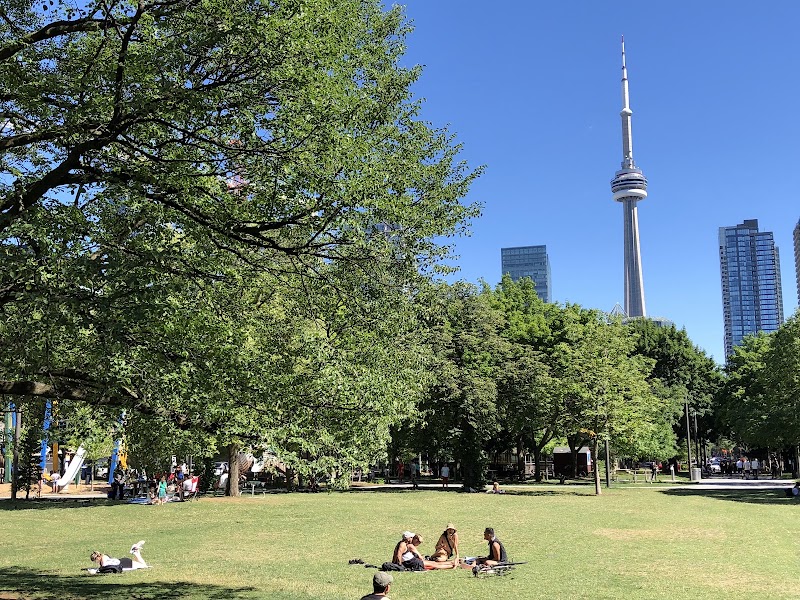
- A large open civic green for lying about, reading and informal games.
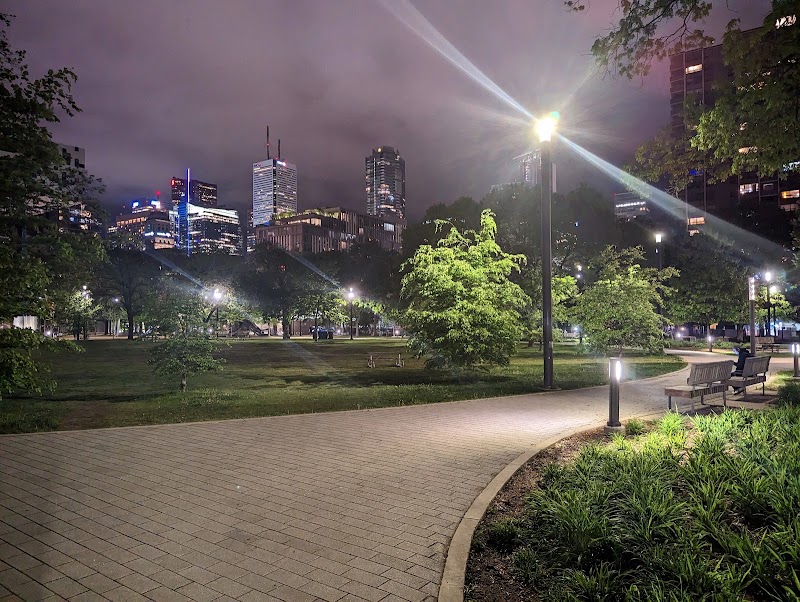
- About 80 newly planted trees added to the existing canopy, with new lighting and generous seating along the loop.
- An off-leash dog area, kept separate from the play zones.
- Public washrooms — a rarity in a downtown square this size.
- The Art Gallery of Ontario and the Georgian manor of The Grange along the north edge.
- OCAD University’s Sharp Centre for Design overhead to the east — Will Alsop’s checkerboard box on coloured legs, completed in 2004.
What to do and who it’s for
- Gallery visitors — the park is the AGO’s outdoor room, and the gallery programs events on the grass through the warm months.
- Families with young children — the playground is split by age and sits next to the water plaza, so one stop covers both.
- Dog owners — a proper off-leash run inside the downtown core is unusual.
- Students and downtown workers — lunch on the green between the university campus and the office towers.
- Anyone interested in architecture — three eras stand within one view: an 1817 manor, an 1845 church tower and a 2004 landmark on stilts.
- Photographers — the Moore bronze reads differently from every point on the circular path.
Getting there and practicalities
The park sits immediately south of the Art Gallery of Ontario, between the gallery and the OCAD campus, in the arts district that runs between Chinatown and the entertainment quarter. St. Patrick and Osgoode subway stations are each a short walk, and the east–west streetcar lines that frame the district stop within a couple of blocks. There is no admission charge and no gate; the green is open through the day and lit at night. Half an hour covers the park on its own, an afternoon if you fold in the gallery next door.
When to visit
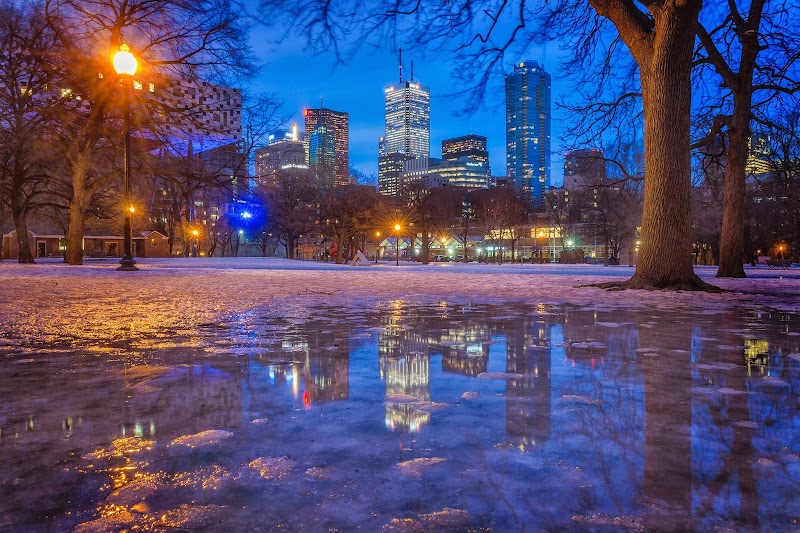
Summer is the busiest season: the water plaza runs, the lawn fills at lunchtime, and the AGO stages outdoor programming on the grass. Late spring is the prettiest, when the Grove leafs out and the new trees are in flower. In autumn the mature canopy on the western side turns before most of the downtown street trees do. Winter empties the park out but leaves the sculpture and the church tower stark against the snow, which is when photographers tend to show up.
Worth knowing
The land was part of a 100-acre park lot granted to the Boultons, and the manor at its head — The Grange — was built in 1817 for D’Arcy Boulton Jr., a two-storey Georgian brick house of about 60 by 40 feet whose bricks were probably fired on site. It passed to his son William Henry Boulton, a mayor of Toronto; his widow Harriette married the scholar Goldwin Smith in 1875, and in 1902 the couple pledged the property to the Art Museum of Toronto. After their deaths in 1909 and 1910 the manor became the museum’s first home, and on 20 January 1911 the museum and the City agreed on the arrangement that keeps the grounds public to this day. The park reached its present size in the mid-1970s when two adjoining roadways were closed. The Grange itself was named a National Historic Site of Canada in 1970.
Visitor tips
- Walk the full circle of the promenade around “Large Two Forms” — the two masses open and close on each other as you move.
- Bring a towel in summer: the water plaza is a splash surface, not a pool, and children come out soaked.
- Use the Grove on hot afternoons; the mature canopy is several degrees cooler than the open green.
- Note that the church tower is a ruin, not an entrance — the congregation worships in the 1857 parish hall behind it.
- Pair the visit with the gallery: the park’s south gate and the AGO’s south entrance face each other directly.
Questions and answers
Who owns Grange Park? The Art Gallery of Ontario owns the land; the City of Toronto’s Parks division operates it as a public park.
How large is it, and is it free? About 1.8 hectares, and yes — there is no admission and no gate.
What is the big bronze sculpture? Henry Moore’s “Large Two Forms”, cast between 1966 and 1969, acquired by the AGO from the artist in 1973 and relocated into the park during the 2017 rebuild.
When was the park rebuilt, and by whom? It reopened on 10 July 2017 after a $15-million, fifteen-month project designed by PFS Studio with Thinc Design.
Is it good for children? Yes — the playground is divided by age group and there is a water plaza for splash play beside it.
Can I bring a dog? There is a dedicated off-leash area, set apart from the play spaces.
What is the old stone tower on the edge of the park? The bell tower of St. George the Martyr, a Gothic Revival church by Henry Bowyer Lane whose cornerstone was laid in August 1844 and which opened in November 1845; fire destroyed the building on 13 February 1955 and only the tower survived.
Photos
Show 1 more photos
Visitor reviews
Reviews last updated: 2026-08-03 23:54:28
Data is refreshed monthly. Sources: toronto.name and editorial picks based on reviews.
This is a nice park to visit with kids… But you'll be sharing it with a lot of teenagers during the day, so come early. Most of the time it's not a problem, but it can be a bit distracting. The restrooms are very nice…
A nice park between the AGO and OCAD. A brand-new playground and a small water area where kids can run and play. It's a great place for exercise, and there's also a large grassy area for a picnic. Close to Queen Street,…
2022 July 4.5★
Located right beside the art gallery you'll find this nice open space along side with an art piece, water feature (possibility for kids) and decent sized play area separated by age. The play structures hav…
A playground for different ages, a "fountain" zone — simply a lifesaver on a hot day.
A nice park; I never knew it existed. Today I took a walk through the park and around it. Lovely autumn colours and a great place for kids to play, with very interesting playhouses on the playground and futuristic equipm…