

The development of Toronto’s hydroelectric system was no simple task. This article explores its construction, inauguration, operations, and challenges. Learn more on toronto.name.
Authorization for Construction
By 1907, Toronto received authorization to create its own municipal hydroelectric distribution system, but it lacked the necessary infrastructure. Repeated attempts to purchase the assets of the Toronto Electric Light Company (TELC) were unsuccessful, as TELC refused to sell at a price acceptable to the city.
On January 1, 1908, Toronto taxpayers were asked to approve a bond issue of $2,750,000 to build a municipal network to distribute electricity supplied by the Hydro-Electric Power Commission of Ontario (HEPCO). The bond issue was approved, and on May 4, 1908, an agreement was signed with HEPCO.
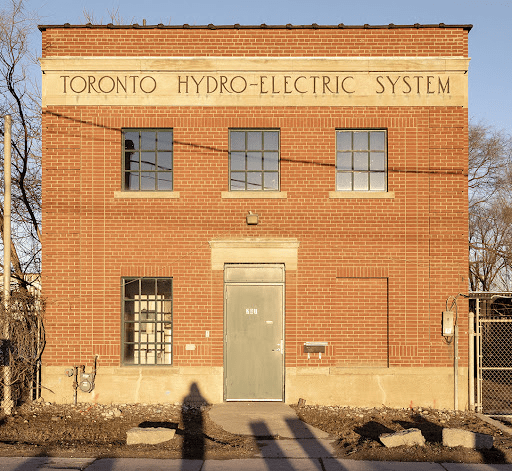
A sub-department within the City’s Engineering Department was established to construct distribution facilities across the city. Under the supervision of City Engineer C.H. Rust, K.L. Aitken was tasked with building electrical substations, a 13,000-volt main distribution line, a 2,300-volt primary feeder line, and a three-wire low-voltage secondary line. Aitken also coined the name for the division: Toronto Hydro-Electric System (THES).
The Toronto Hydro Inauguration Ceremony
While construction progressed in Toronto, HEPCO was simultaneously building transmission lines between Niagara and Toronto. On February 24, 1911, electricity first reached Toronto via provincially controlled transmission lines.
The official inauguration ceremony of Toronto Hydro took place on May 2, 1911. Following a banquet at the King Edward Hotel, guests and dignitaries proceeded to City Hall, where a large crowd had gathered. A massive painting of Niagara Falls was displayed above the main entrance to City Hall. The crowd was promised a visual spectacle: water would appear to flow over the painting as soon as the lights were switched on. After speeches, Premier Whitney invited Adam Beck to press the button, ceremonially powering Toronto with hydroelectricity. Lights illuminated the painting, water cascaded down, and a few guests standing below even got wet.
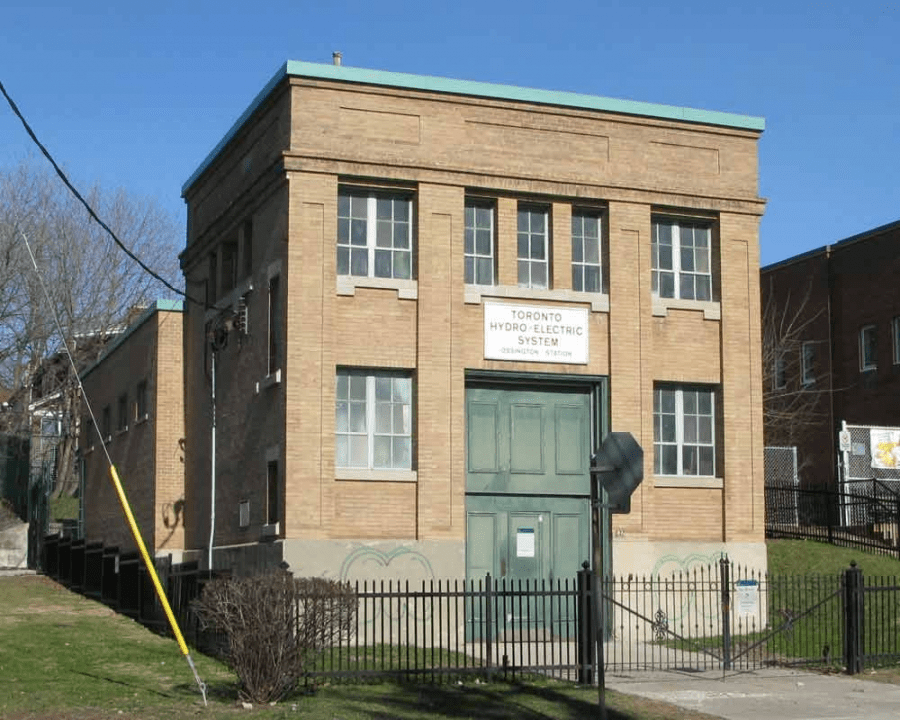
A month later, control of the “System” was transferred from the City’s Engineering Department to a three-member commission known as the “Toronto Electric Commissioners.” The first commissioners were P.W. Ellis (chair, appointed by City Council), Mayor G.R. Geary (ex-officio), and H.L. Drayton (appointed by HEPCO). Ellis sought an experienced general manager, hiring Englishman H.H. Couzens in 1913. Couzens, with extensive experience in municipal electric service, was well-equipped to lead the new system. Notably, P.W. Ellis also chaired both Toronto Hydro-Electric System and the Toronto Transportation Commission. H.H. Couzens served as THES’s general manager from 1913 to 1924, steering the utility through critical growth periods. By the end of 1913, THES had approximately 25,000 customers, surpassing TELC’s clientele.
Power Outages and Collaboration Between THES and TTC
In 1913 and 1914, power outages frustrated residents, leading some to switch to TELC. THES was even forced to purchase electricity from TELC, causing embarrassment for the commissioners. Adam Beck’s strategy to address customer dissatisfaction was to use the “weapon of cheapness,” directing THES to charge significantly lower rates. Customers benefited from prices 50% lower than TELC’s.
The demand for electricity surged during World War I. From the fall of 1917 to the fall of 1920, winters were marked by acute power shortages. The situation improved in the early 1920s when TELC’s and the street railway’s charters expired, leaving the municipal system as Toronto’s sole power distributor.
In 1921, the franchise of William Mackenzie’s streetcar operations expired, and Toronto’s street railway ceased to exist. The city passed an act to create the Toronto Transit Commission (TTC), which assumed control of the former street railway and other city-built public lines. Like THES, TTC was governed by a three-member board, none of whom could be City Council members. TTC and THES collaborated extensively, sharing poles and supplying electricity to electric railways—a major market for THES’s power. To save money, the boards of THES and TTC were consolidated.
Two commissioners, P.W. Ellis and George Wright, served both organizations, with H.H. Couzens as general manager of both. Even after the TTC and THES split in 1924, when Couzens left Canada to work in Brazil, Ellis and Wright continued serving on both commissions. P.W. Ellis passed away on April 21, 1929, after serving as chair of THES for eighteen years.
Sources: