

Park · Toronto · ⭐ 9.5/10 · 2499 reviews · updated: 2026-08-03 23:54:28
Address: 1132 Leslie St, Ontario, Canada
Sunnybrook Park — a working farm that became Toronto’s riding valley
Sunnybrook Park covers 147 acres (59.5 hectares) of the West Don River valley between Leaside and the Bridle Path, and it is the only large city park in Toronto with a public riding stable at its centre. Meadow, cricket outfield and forested ravine sit side by side on the valley floor, and the trails run out of the park in both directions into the wider Don ravine system.
Highlights
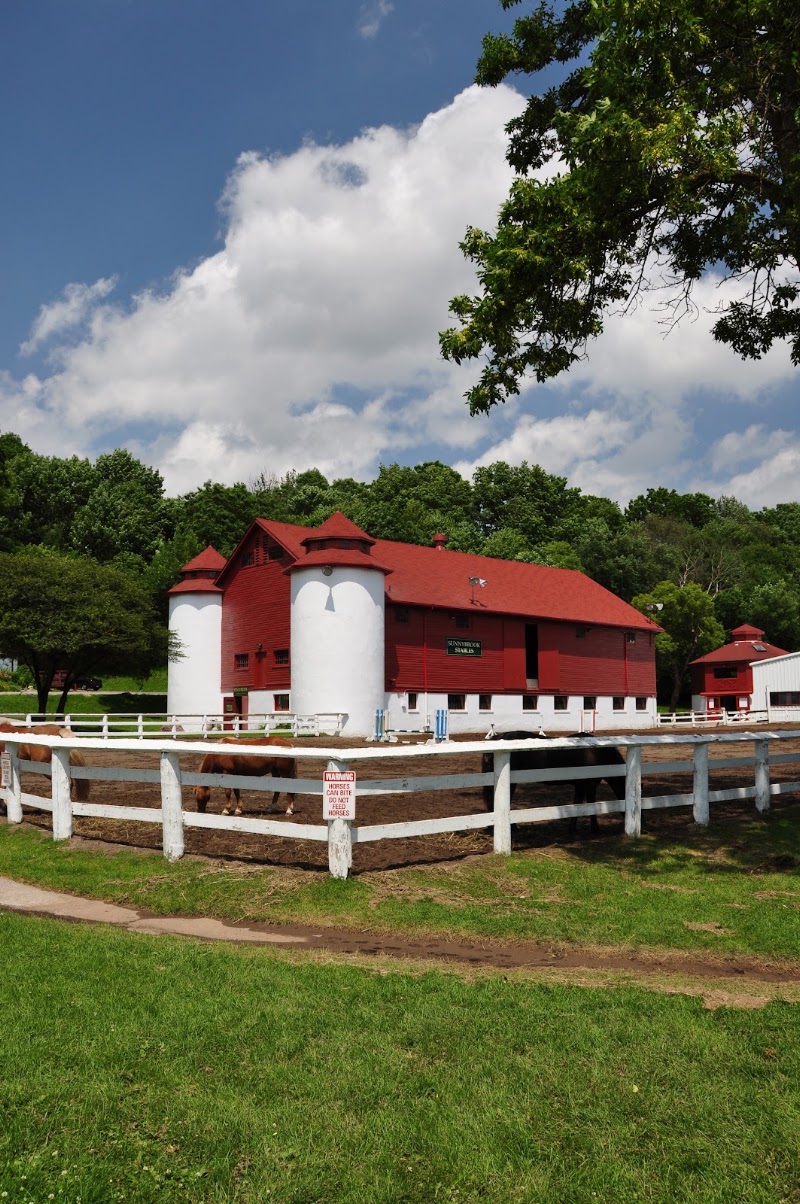
- Sunnybrook Stables — a public riding operation on the site since 1978, keeping roughly thirty horses and running lessons and summer day camps.
- The indoor arena — a 12,000-square-foot riding hall built in 1982, with an outdoor arena and paddock alongside and three further paddocks behind.
- The cricket ground — three pitches, four multipurpose fields and a practice wicket, a genuinely rare configuration for a municipal park.
- International cricket history — six ICC Trophy matches were played here in 2001, and a first-class fixture between Canada and Bermuda followed in 2004.
- The Wilket Creek Trail — the paved spine that threads Sunnybrook, Wilket Creek Park and Serena Gundy Park into one continuous walk.
- The off-leash dog area — a large fenced run on the valley floor.
What’s inside
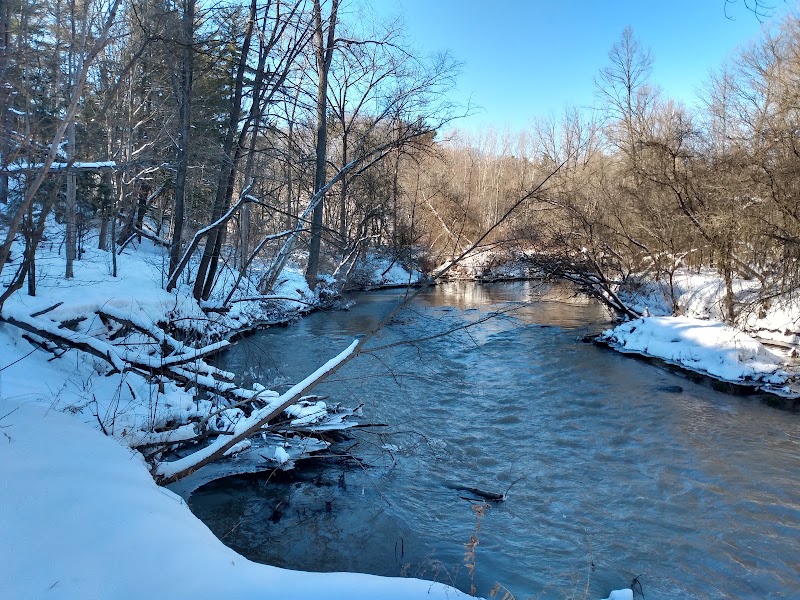
The park is laid out on the flat of the valley, with the wooded slopes rising on either side and the West Don River drawing the line the trails follow.
- The stables complex — barns, arenas and paddocks — set apart from the sports grounds.
- Sports fields for soccer, rugby and cricket, in near-constant use from spring through autumn.
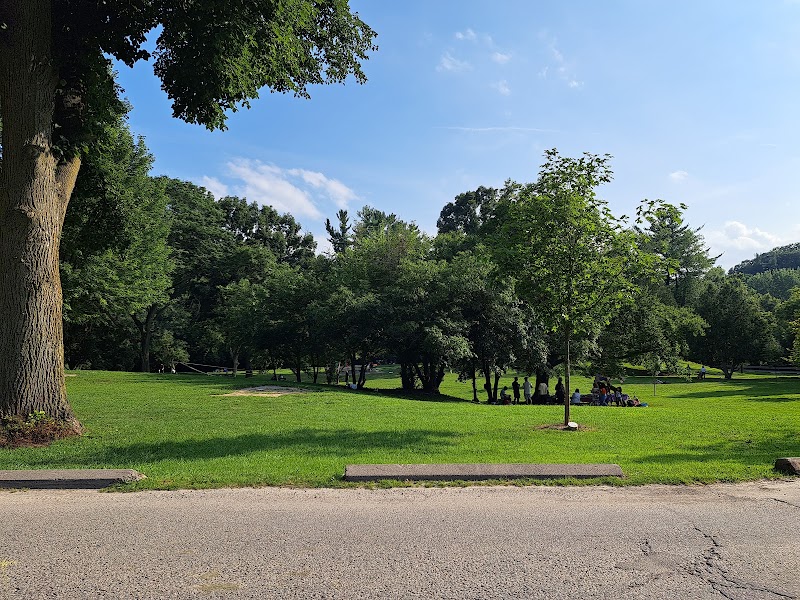
- Playgrounds and bookable picnic sites under mature trees.
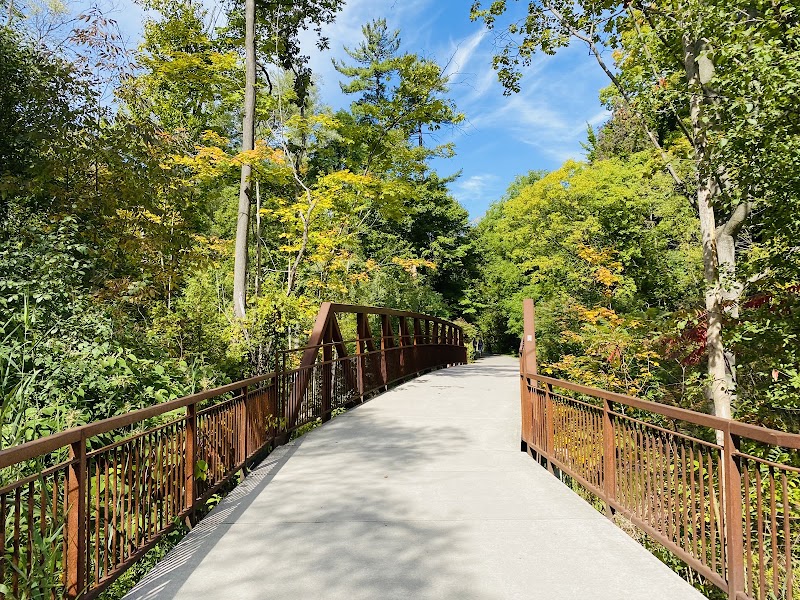
- Paved and unpaved trails for walking, running and cycling along the river.
- A trail link north to Edwards Gardens and the Toronto Botanical Garden.
- A trail link east to Serena Gundy Park and south toward E.T. Seton Park and the Lower Don network.
What to do and who it’s for
- Riders — a public stable inside city limits is unusual anywhere in North America, and lessons here run year-round.
- Runners and cyclists — kilometres of near-flat valley-floor trail with no traffic lights on it.
- Cricketers — one of the few grounds in Toronto laid out and maintained for serious play.
- Field-sport clubs — soccer and rugby pitches booked out through the season.
- Families — playgrounds, picnic tables, horses to watch over the fence and a valley that feels far from the city.
- Dog owners — an off-leash area with room to actually run.
- Birdwatchers and walkers — the wooded slopes and the river corridor carry far more wildlife than the open lawns suggest.
Getting there and practicalities
The park sits in the valley below the Sunnybrook hospital campus, with road access down into the valley floor and parking beside the sports fields. On transit, the practical route is Eglinton station on Line 1 and an eastbound bus to the valley rim, then a short walk down. Cyclists can reach it entirely off-road along the ravine trails, from Edwards Gardens in the north or from the Lower Don in the south. There is no admission charge and no gate. Allow an hour for a walk, half a day if you combine a ride, a trail loop and a picnic.
When to visit
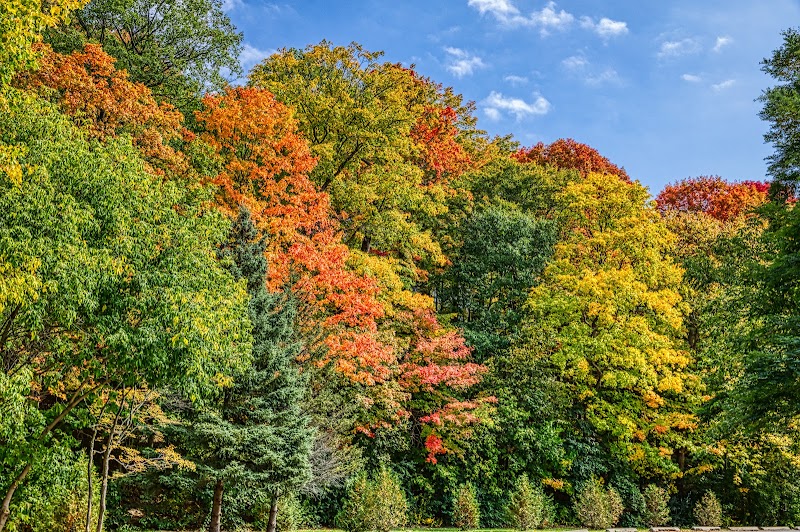
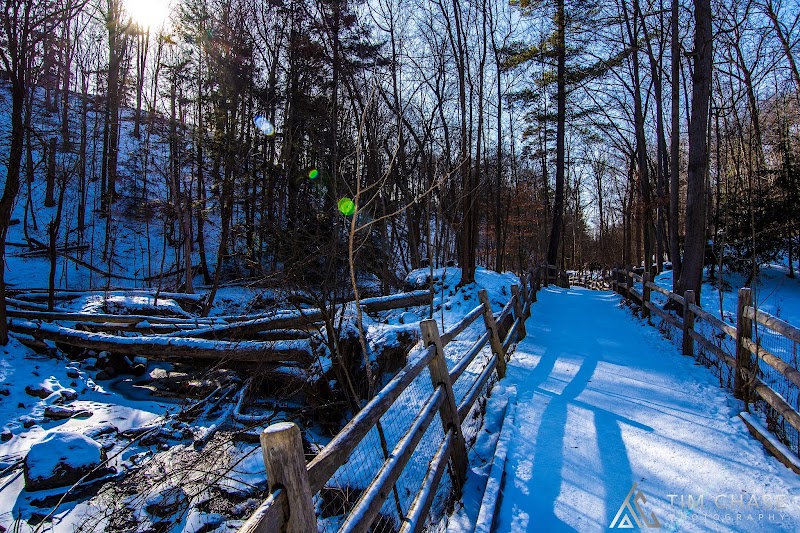
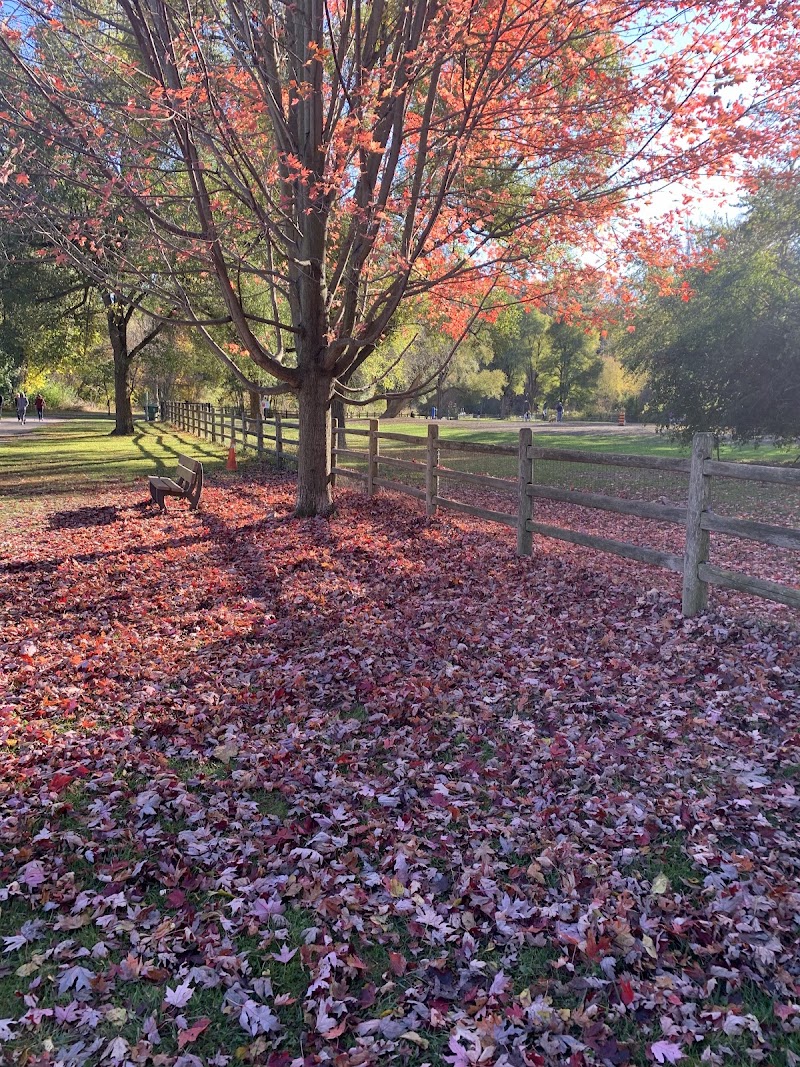
Autumn is the strongest season here — the ravine slopes turn while the valley floor stays open and bright. Summer belongs to the fields: cricket, soccer and rugby run most evenings and weekends, and the picnic sites are booked well ahead. Spring brings the river up and the understorey into leaf. In winter the trails go quiet and hard-packed, and the stables keep working through the cold. Early mornings on any weekday are the emptiest the park ever gets.
Worth knowing
This was Sunnybrook Farm, roughly 175 acres bought in the 1890s by Joseph Kilgour, president of the Canada Paper Company, who kept horses here. After his death his widow, Alice Kilgour, gave the property to the City of Toronto in 1928 on the condition that it be kept as a public park; memorial gates went up at the north-west entrance in 1933 and were later removed, and a commemorative plaque stands in the adjoining Wilket Creek Park. In 1943 part of the land was transferred to the federal government, and the veterans’ hospital that opened on it in 1948 became the largest of its kind in Canada. The parkland itself passed to Metro Parks on 12 June 1969. On 21 May 2018 a fire destroyed one of the stable barns and killed sixteen of the twenty-nine horses on site; the surviving animals were moved to the Horse Palace at Exhibition Place, the Ontario Fire Marshal linked the blaze to fireworks set off nearby, and the stable was rebuilt and is running again.
Visitor tips
- Book riding lessons and day-camp places well ahead — the stable is one of a kind in the city and fills early.
- Keep clear of horses on the shared paths: step to the side, stand still and let riders pass.
- Follow the river trail north and you are in Edwards Gardens and the Toronto Botanical Garden without crossing a road.
- Come on a summer weekend if you want to watch cricket; the pitches are in use almost continuously.
- After heavy rain the valley floor drains slowly — expect mud on the unpaved sections.
- Reserve a picnic site in advance for a group; the shaded tables go quickly in July and August.
Questions and answers
Can you go horseback riding at Sunnybrook Park? Yes. Sunnybrook Stables has operated as a public riding facility here since 1978, with lessons and summer day camps.
How big is the park, and is entry free? About 147 acres, or 59.5 hectares, and yes — there is no admission charge.
What sports can be played here? Cricket above all — three pitches and a practice wicket — plus four multipurpose fields used for soccer and rugby.
Has international cricket been played at Sunnybrook? Yes: six ICC Trophy matches in 2001 and a first-class fixture between Canada and Bermuda in 2004.
Which parks does it connect to? Wilket Creek Park, Serena Gundy Park, Edwards Gardens and the Toronto Botanical Garden to the north, and the Lower Don trail network to the south.
Where did the name come from? From Sunnybrook Farm, the Kilgour family property donated to the City by Alice Kilgour in 1928; the neighbouring hospital took its name from the same farm.
Can I bring a dog? Yes — there is a dedicated off-leash area on the valley floor, away from the sports fields and the stables.
Photos
Show 1 more photos
Visitor reviews
Reviews last updated: 2026-08-03 23:54:28
Data is refreshed monthly. Sources: toronto.name and editorial picks based on reviews.
I love this park. Big, clean, peaceful. You can take a relaxed walk with your dog or come for a picnic/barbecue.
One of the most beautiful and best-kept parks. It has amazing trails and water streams. There are also 3 great cricket pitches, 2 soccer fields and 2 rugby fields.
A huge park with plenty of parking spots all around. A quick tip: be sure to park and rent a bike to explore everything around. A small river, picnic spots, trails, little bridges over the river. It's a very large, quiet…
A wonderful shaded park with free parking and restrooms placed at strategic spots throughout the park. Lots of trails — both main ones and dirt side paths. It can rival a whole network of other parks. A great park for a…
A big park with trails and roads you can explore for hours. A ravine runs through the park, where you can see the city's nature. On the grounds there are historic buildings that make great photo spots. At the back of the…