

Tossing something in the trash and hoping it magically gets recycled is wishful thinking. Proper waste sorting has become increasingly challenging, especially with new packaging alternatives labeled “biodegradable” or “compostable,” which add to the confusion. In Toronto, as in many municipalities, the rules for waste disposal vary, making it essential to understand what goes where. This article explores the process of waste management in Toronto. Read more on toronto.name.
Municipal Waste Management
In most places, household waste management is handled at the municipal level. Each municipality creates its own program, which may include curbside collection, depot drop-offs, pay-as-you-throw systems, or a combination of these methods. While these approaches are flexible, they must comply with Canada’s environmental protection laws.
Sometimes municipalities outsource their waste management programs to private companies, a practice known as privatization.
Although allowing municipalities to manage their own waste seems straightforward and efficient, it can lead to a fragmented system where waste disposal rules differ between cities.
Recycling, Sorting, and Disposal Programs
According to city statistics, Toronto processes 900,000 tonnes of waste annually. This includes blue bins for recyclables and green bins for organic waste. Additional programs address yard waste, hazardous materials, and more.
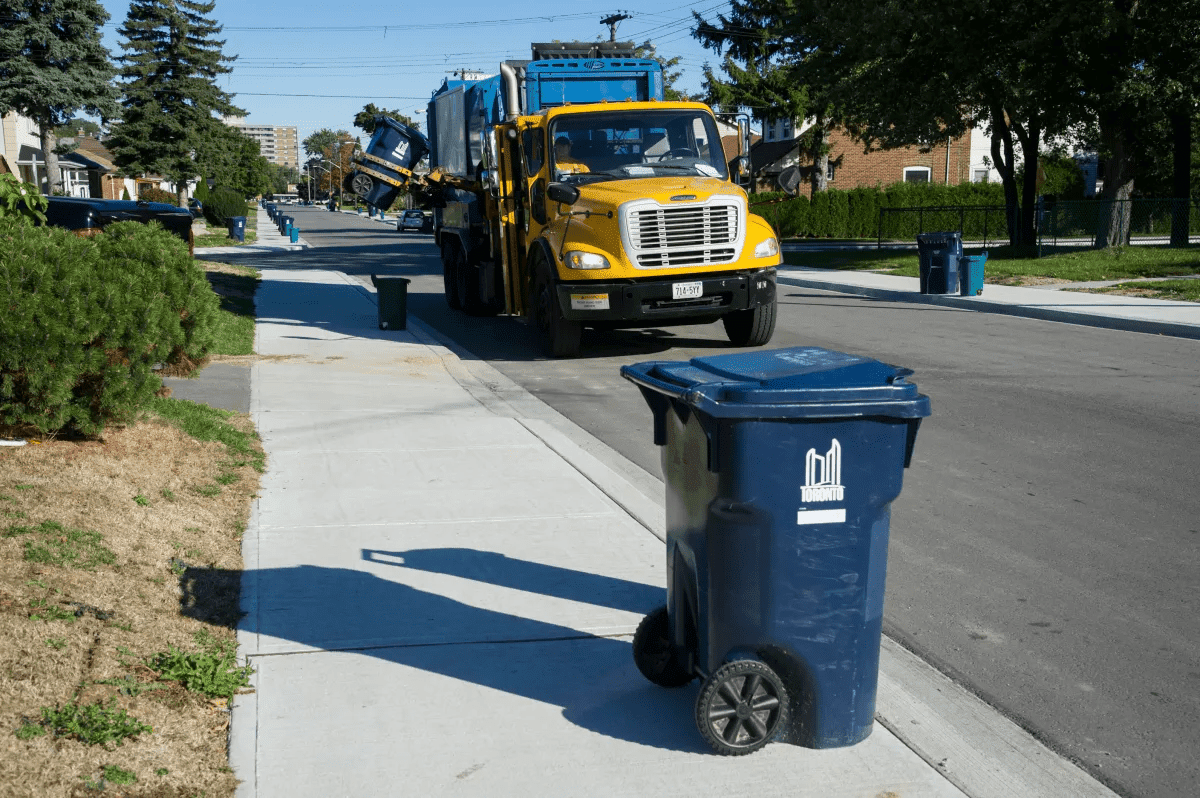
Toronto operates seven transfer stations where waste is collected, sorted, and then sent to recycling or disposal facilities. The city’s system is semi-private, as some residential waste is collected by private companies like GFL, while city crews handle other areas.
What Goes Where? A General Guide for Toronto
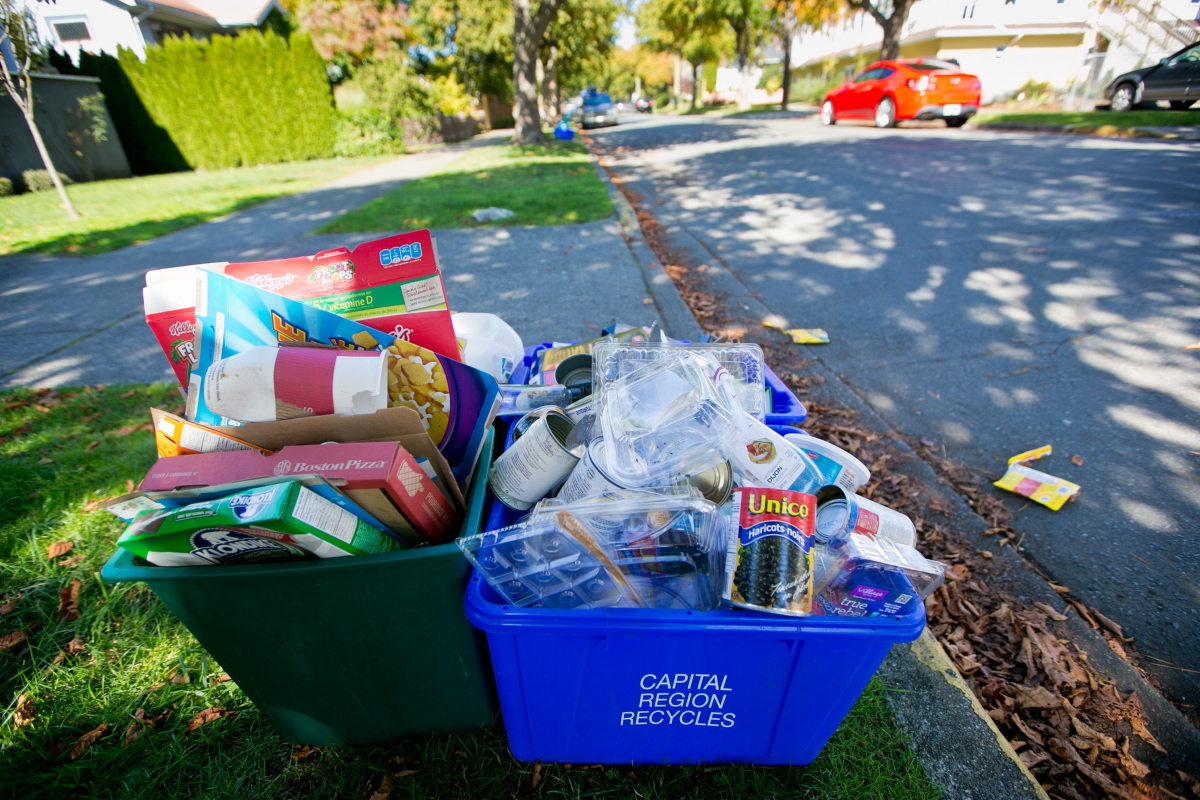
Recyclables: Items like glass bottles, cans, paper, and cardboard belong in the blue bin. Plastics require extra attention, as only specific types are recyclable in Toronto. Look for the numbered triangle symbol on the item. Plastics numbered 1, 2, 4, 5, and 6 are typically recyclable, while 3 and 7 are not (black plastics, like takeout containers, are also not recyclable).
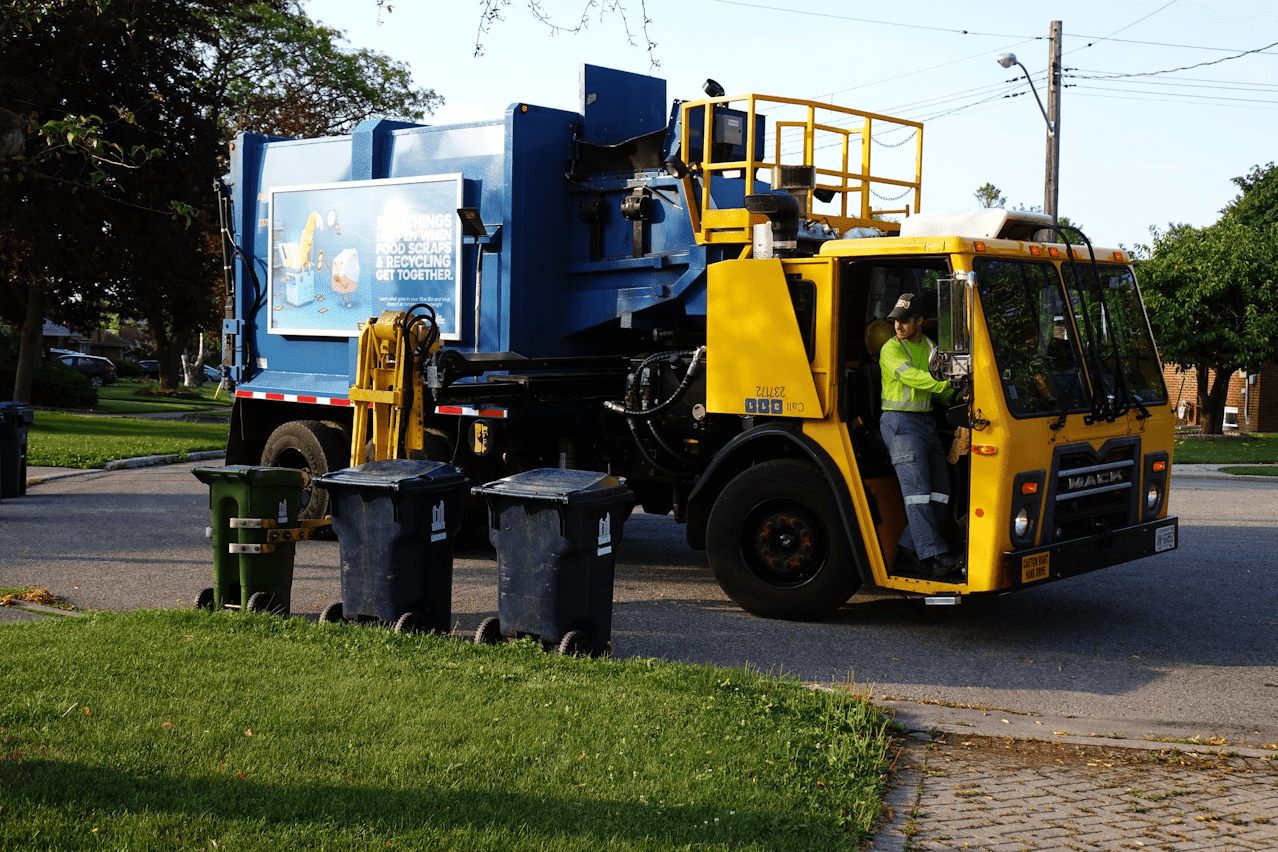
It’s essential to rinse and clean recyclable containers to ensure they can be processed effectively.
Organic Waste: Green bins are for food scraps, paper towels, napkins, 100% paper plates, compostable takeout containers, coffee/tea grounds, pet waste, and paper food packaging (e.g., flour or sugar bags).
Garbage: Non-recyclable and non-compostable items go in the garbage bin. These include cleaning pads, wet wipes, hot beverage cups, plastic utensils, black plastics, and most gift wrap.
Common Misplaced Items in Toronto
Polystyrene foam: Some people believe that polystyrene foam belongs in the trash, but it can actually be recycled if it is clean, non-black, and larger than 4×4 inches.
Black plastic: As already mentioned, many think black plastic is recyclable. Unfortunately, it is not. It belongs in the trash.
Items labeled as compostable or biodegradable: Some assume these items should go in the green bin with organic waste, but they actually belong in the trash bin.
Pizza boxes: Many people recycle them because they are made of cardboard. In fact, they belong in the green bin with organic waste!
Hair and nails: Many believe that items like hair (both human and pet) and nail clippings should go in the green bin, considering their organic nature. However, they should be disposed of in the trash.
As you can see, a significant amount of our waste still ends up in the trash bin, even when disposed of correctly. Additionally, for recyclable items, energy is required not only to collect and properly sort the recycled material but also to reprocess it for reuse—a process that is not entirely efficient. The same applies to organic waste. For this reason, while recycling and organic diversion are better than trash disposal for waste management, they are not comprehensive solutions to the problem.
By prioritizing reusable alternatives and ensuring proper disposal of items we cannot access in reusable (or repurposed/repaired) form, we can work toward creating a more sustainable system.