

Canada’s dairy industry traces its origins back to the early 1600s, when French settlers introduced dairy cattle to the region. The City Dairy farm, founded by Walter Edward Massey, president of the Massey-Harris agricultural company, was the first to produce pasteurized milk. This pioneering farm was established to deliver milk to Toronto and became a leader in Canadian milk production, reports toronto.name.
When Did Torontonians Start Drinking Milk?
In the early years of Toronto’s development, there were no local enterprises producing milk. As the city’s population grew, milk had to be delivered from rural farms. By 1909, approximately 20,000 gallons of milk were transported daily to Toronto from around 900 farms located outside the city. However, the milk’s quality was often inconsistent, with a high risk of contamination and spoilage due to inadequate temperature control.
To ensure safe and quality milk for the population, the city council mandated pasteurization. This process involved heating milk to a high temperature and then quickly cooling it before bottling. Farms were required to adhere to this standard before delivering milk to Toronto.
To maintain compliance, Toronto’s Department of Health developed report cards to evaluate farm conditions, including the health of cows, cleanliness of barns, and milking areas. Farms scoring above 80% were featured in the Ministry of Health bulletin. The first farm performance report was published in 1912, recognizing 10 farms as top producers of pasteurized milk. Within three months, this number rose to 15 and continued to grow.
Founding and Growth of Canada’s First Pasteurized Milk Farm, City Dairy
At the start of the 20th century, pasteurization was introduced on farms outside Toronto, with City Dairy leading the charge. Businessman and philanthropist Walter Edward Massey established the farm. Massey already had experience in the dairy business, having owned Dentonia Dairy around 1896-1897. While his first farm was primarily for his family’s milk supply, it lacked the capacity for large-scale production.
Recognizing the city’s need for milk, Massey leveraged his previous experience to organize operations at City Dairy. Toronto architect George Miller designed the new facility, which was equipped with state-of-the-art machinery, including the world’s largest commercial clarifier for filtering milk.
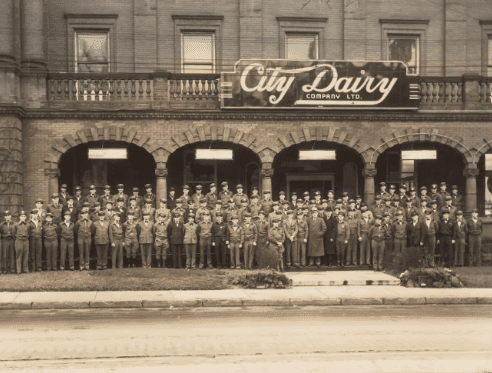
In addition to pasteurization, City Dairy conducted 75,000 daily laboratory tests to ensure its milk was free of infections. Strict adherence to sanitary conditions further bolstered the farm’s reputation. These innovations gave City Dairy a competitive edge in Toronto’s dairy market, enabling it to scale up production and become the city’s leading milk supplier.
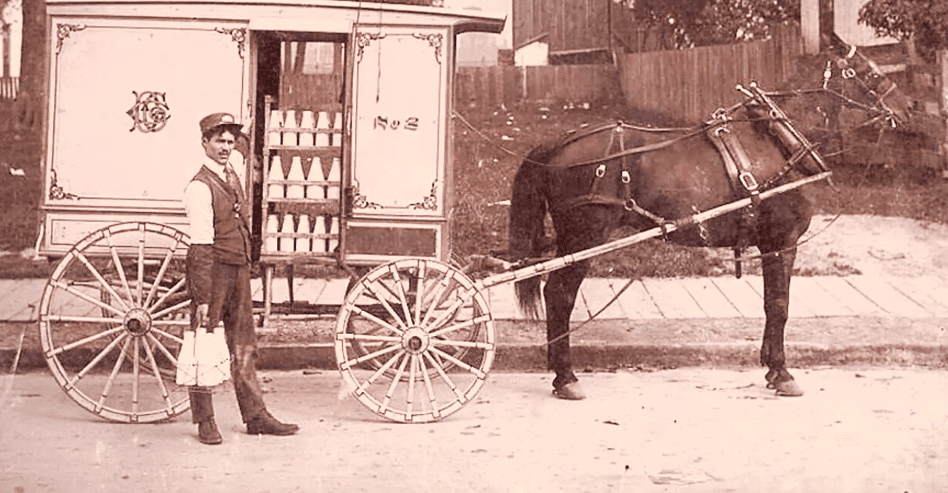
By 1915, Massey’s farm controlled 40% of Toronto’s dairy market. Tragically, Massey did not live to see his farm’s success, passing away in 1901 after contracting typhoid fever during a business trip to Ottawa. In 1930, City Dairy was sold to Borden Company representatives. Milk deliveries continued throughout the city in wagons bearing the City Dairy name, available for purchase on Toronto’s streets and in its stores.