

For most industrial and commercial facilities, ensuring a continuous supply of quality water is a top priority. From serving as a simple coolant for equipment to being a crucial ingredient in food preparation, water has become an indispensable resource with diverse applications. Industries worldwide rely on water treatment plants to meet various needs. More about this topic on toronto.name.
What is the Purpose of a Waterworks System?
Without delving too deeply into technical details, waterworks facilities can be described as a system of interconnected structures, equipment, and processes designed to extract, treat, store, and distribute water to end users.
This infrastructure is highly complex and includes:
- Structures: reservoirs, pipelines, aqueducts, etc.
- Equipment: ultrafiltration systems, vacuum evaporators, paper filters, etc.
- Processes: coagulation, flocculation, filtration, disinfection.
In industrial and commercial settings, the primary purpose of waterworks facilities is to provide a steady water supply tailored to the specific needs of various sectors and processes. Beyond mere quantity, the quality of water is of utmost importance.
Given the diverse uses of water in industrial and commercial contexts, the water produced must meet stringent quality standards for each unique application. Waterworks facilities ensure compliance with these requirements, enabling operations to function optimally.
What Happens at Water Treatment Plants?
The processes at water treatment plants are intricate, but they can be broken down into four primary stages:
- Extraction: Water is sourced from natural reservoirs and transported to treatment facilities.
- Treatment: During this phase, water is purified and contaminants are removed to meet strict industrial quality standards.
- Storage: After purification, the water is stored in designated reservoirs for subsequent distribution.
- Distribution: The treated water is delivered to industrial and commercial facilities according to their requirements.
The History of Toronto’s Waterworks System: Construction and Treatment Processes
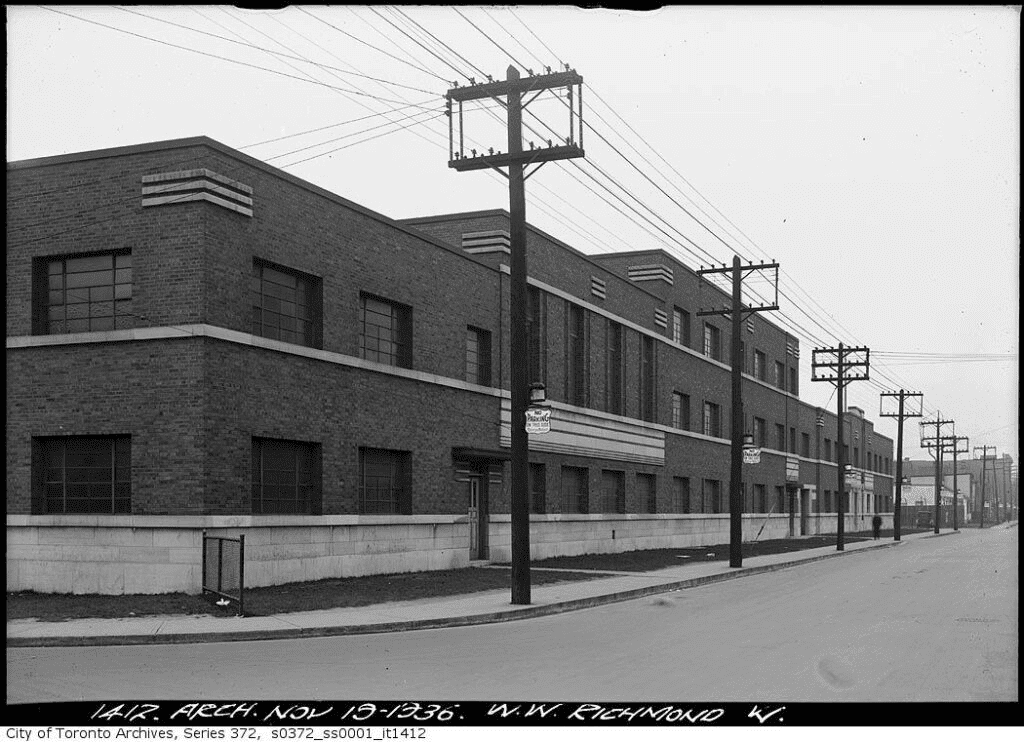
The site, originally owned by the City of Toronto, operated as a public market from 1837 to around 1900. The current waterworks buildings, designed in Art Deco style by city architect J.J. Woolnough, began operations in 1933. The construction was part of a plan supported by federal, provincial, and municipal governments to create jobs during the Great Depression. The complex was bordered by Brant, Richmond, and Maud Streets and organized around a central courtyard with St. Andrew’s Playground to the south. The site was officially designated in 2013.
By the early 1930s, Toronto had already developed a 6,000-kilometre pipeline network, significantly improving water accessibility in various neighbourhoods. Local architects and construction firms contributed to building the waterworks system. Projects like this symbolized hope and recovery for the community during an economic crisis.
The initiative was led by then-Commissioner of Toronto Works, R.C. Harris. The engineering firm Gore, Nasmith & Storrie handled construction, hydraulic engineers HG Acres & Co contributed expertise, and Thomas Pomphrey served as the architect. Construction began in 1932, with a total project cost of $15 million. The waterworks plant remained idle for over two years as the city council sought to minimize operating costs. The complex included three key structures: The Filter Building, The Service Building, and The Pumping Station. All were clad in brick and limestone.
Architectural highlights of the Filter Building included marble walls, mosaic floors, and an elegant signal pylon in the rotunda. This feature displayed time, backwash filter conditions, and reservoir levels. The pylon, made from Valternache (green-black) and Rosata Clair (honey-toned) marble, stood on a mosaic compass floor. The rotunda’s polygonal domed ceiling featured geometric patterns and was crowned with a spider-web skylight. The eastern wing of this building was added in the 1950s. The site, located on the Scarborough waterfront, was declared a National Historic Site in 1992 by the Canadian Society for Civil Engineers.
The water purification process involved pumping raw water from intake pipes located approximately 2.5 kilometres from Lake Ontario. Pumps pushed the raw lake water uphill to the Filter Building. Chlorine and alum were added to coagulate fine particles, allowing them to settle and be easily filtered. The water then rested in sedimentation basins for several hours, where impurities settled. Afterward, the water was filtered and treated with chlorine, fluoride, phosphate, and ammonia before being distributed across Toronto and northward to the York Region.
Adaptive Reuse and Reconstruction of the Waterworks Facility
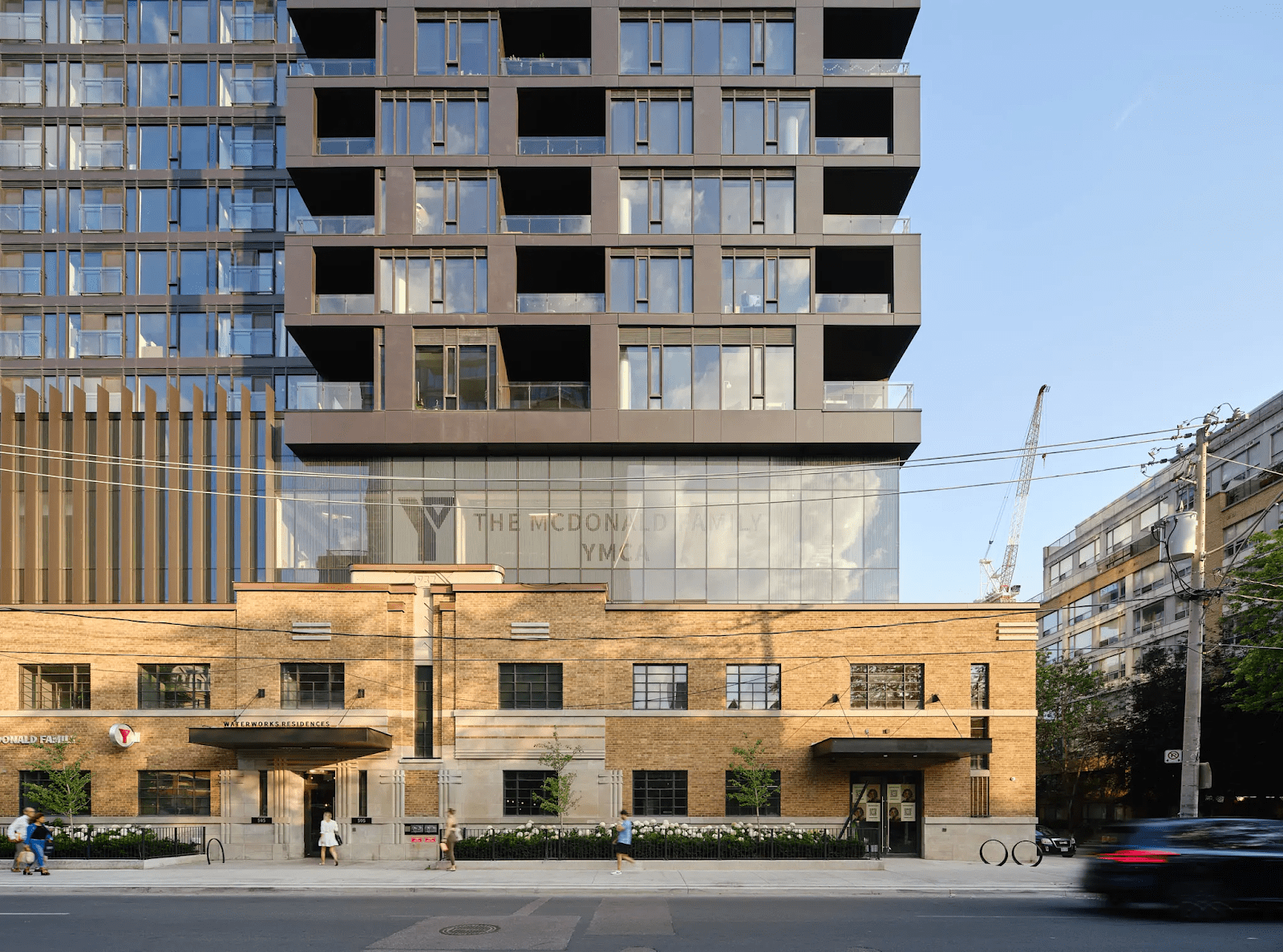
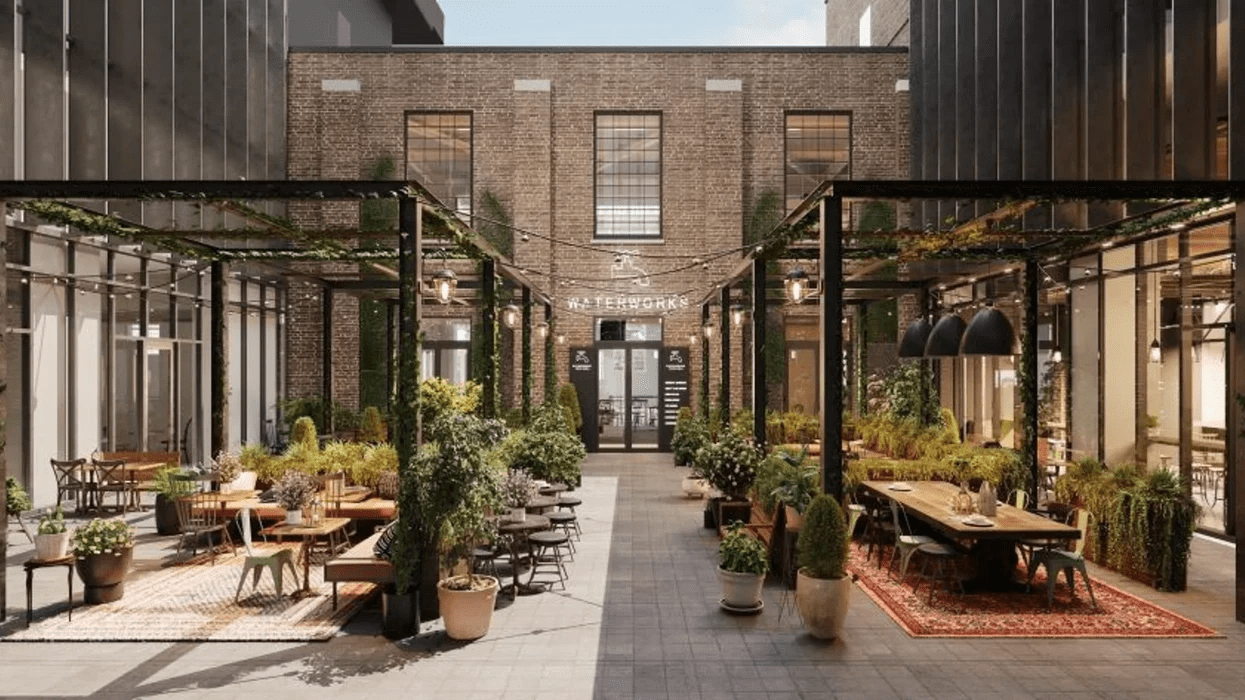
The first phase of adaptive reuse for the eastern part of the complex was completed in 2016 by Eva’s Phoenix, providing temporary housing and employment training facilities. The second phase involved repurposing the Machine Shop into a food hall and using the northern part of the complex for community-oriented functions. The updated design combines retail spaces on the ground floor, a YMCA sports complex on the second and third floors, and residential additions on the upper levels. The renovation also included pedestrian pathways in the courtyard and driveways restored for convenient access.
This adaptive reuse of the site, including the food hall, YMCA, and courtyard, offers public amenities and activates the space in line with its central location in the city. The reconstructed area, along with the revamped park, serves as an excellent destination for both locals and visitors.
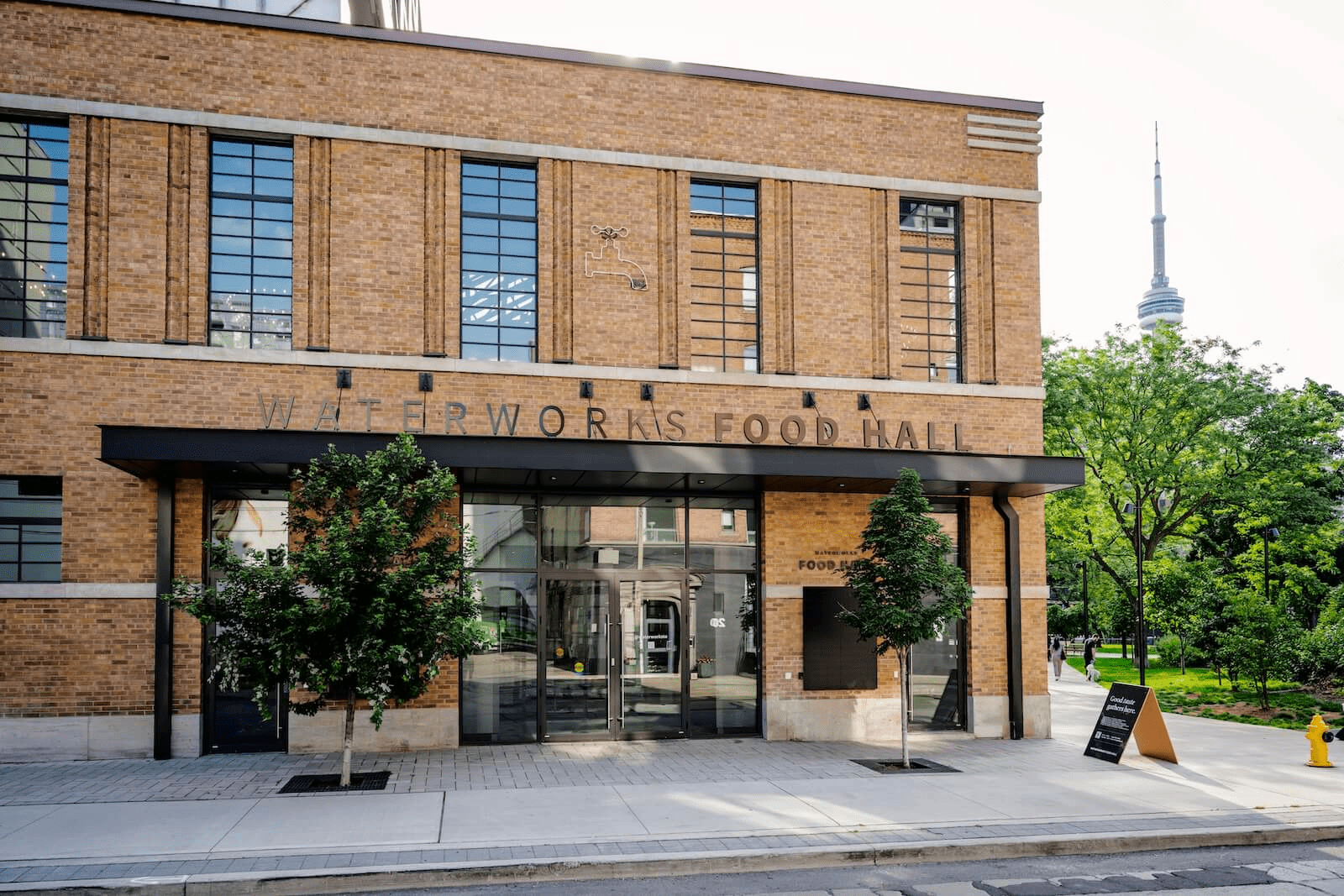
With structures of varying heights, scale, and detail, Woolnough’s original Art Deco design remains unique (notably, it was initially a municipal project with an unconventional yet recognizable design). Entry to the courtyard is through Richmond Street, as in the original design. Some windows have been expanded to create storefront entrances, while others provide park views. The food hall retains loading doors on its western side, serving as a commercial-scale entrance. The reconstructed 88-metre brick-and-glass Machine Shop facade is a standout architectural feature of the renewed park.
The integrity, structure, and features of the original complex have been preserved and enhanced for new purposes, highlighting its value. Despite significant vertical additions, the historical components remain physically distinct through contrasting materials, black porcelain panels, and glass. The interior has been modernized with new mezzanines on the northern and eastern ends of the Machine Shop, allowing visitors to appreciate the scale, volume, and intricate details of the crane and steel tracks. This adaptive reuse, along with the preservation and exhibition of its architectural details, underscores the complex’s significance as a public asset.
Sources: