

The development of poultry farming in Toronto may not be extensive, but there are a few farms dedicated to raising birds. These places are often more expansive than one might imagine. In this article on toronto.name, we’ll take a closer look at one such location.
Poultry Farming in Canada
Domestic poultry refers to birds raised for meat or eggs. Common types in Canada include chickens (Gallus gallus or Gallus domestica, family Phasianidae), turkeys (Meleagris gallopavo, family Phasianidae), ducks (Anas platyrhynchos, Cairina moschata, family Anatidae), and geese (genus Anser, family Anatidae). Canadian poultry farming generates approximately $2.6 billion annually, accounting for over 7% of agricultural revenue. Canada exports more than 35.4 million chickens, turkeys, waterfowl, and guinea fowl worth $36 million to 22 countries.
Breeders have developed hybrid chicken strains for commercial egg and meat production. While similar efforts have been made for turkey meat, there has been minimal breeding work for waterfowl. Primary breeders maintain pure bloodlines for crossbreeding, while most purebred birds are kept for hobby purposes or exhibitions. Key international companies involved in poultry breeding in Canada include Shaver Poultry Breeding Farms Ltd (Cambridge, Ontario) and Hybrid Turkeys Ltd (Kitchener). However, most primary breeding stock is sold to franchised hatcheries, which supply commercial stock to poultry producers.
The primary breed for white egg production is the White Leghorn, while brown eggs are produced by hybrids, particularly Rhode Island Reds, Barred Plymouth Rocks, and New Hampshires. Industrial white layers weigh around 1.8 kg and produce 300-340 eggs in 12-13 months. Each dozen eggs requires approximately 1.55 kg of feed. Broilers, bred for meat, result from crossbreeding White Plymouth Rocks and/or New Hampshires for the maternal line and Cornish for the paternal line.
About Riverdale Farm
Riverdale Farm is a working farm located in Toronto’s Cabbagetown neighborhood. Visitors to this 7.5-acre space can experience farm life firsthand, from raising livestock (cows, pigs, sheep, goats, and chickens) to participating in year-round craft and handwork programs at the Meeting House. The site also features flower, vegetable, and herb gardens, wooded areas, and ponds connected to the city’s rich ravine system. Riverdale Farm has become a popular meeting place for families from Toronto and beyond.
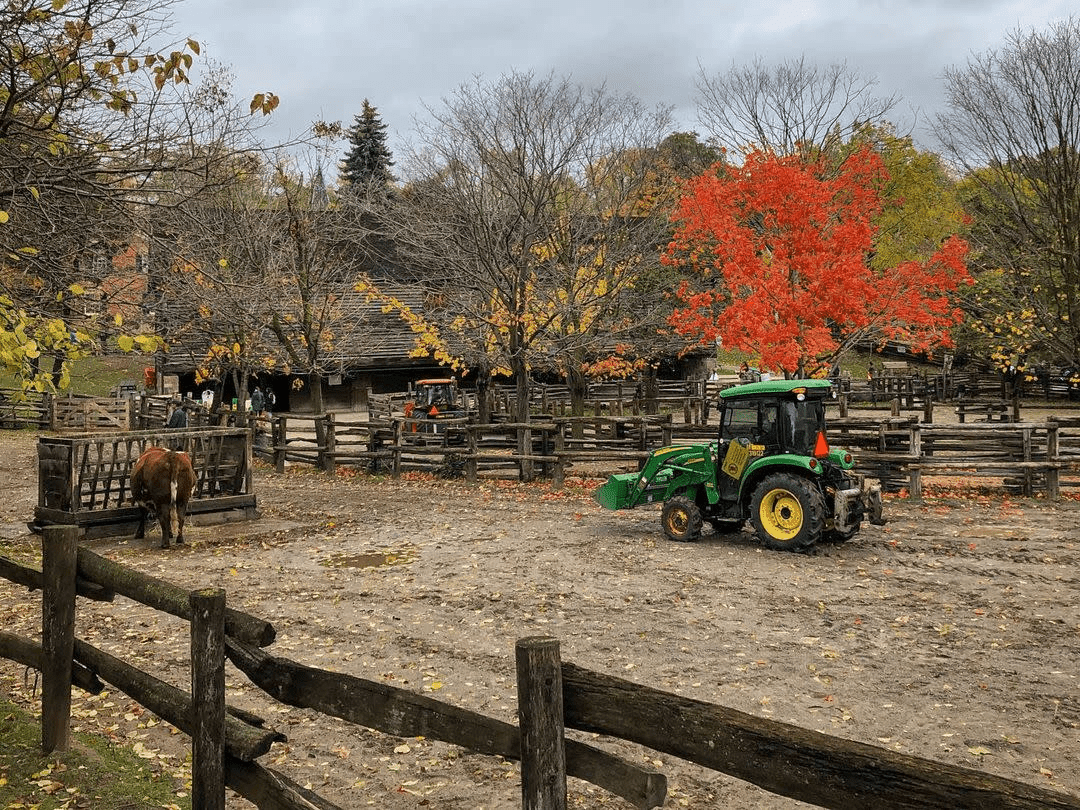
Officially opened on September 9, 1978, Riverdale Farm originally belonged to John Scadding. The City of Toronto acquired the land in 1856, converting it into a park named Riverdale. In 1894, a nearby zoo—the first in Toronto—was established and operated until 1974. The zoo’s animals were then relocated to the newly built Metro Toronto Zoo. Between 1974 and 1978, most of the zoo’s buildings were demolished, and the site was leveled. The Residence, Donnybrook, and Island House are the only remaining zoo structures on the farm today.
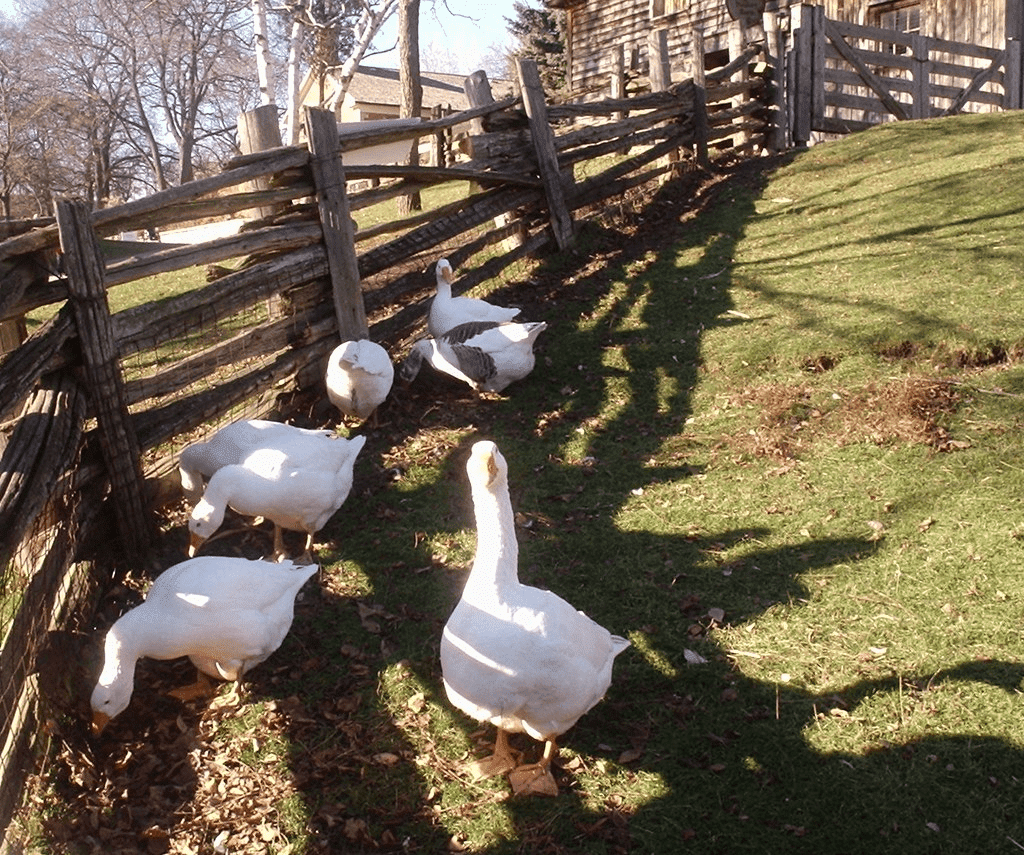
The Francy Barn, located near the main gates, was built in 1858 on a farm in Markham and donated to Toronto by Mrs. Garnet Francy in 1977. This rare architectural style, known as a Pennsylvania Bank Barn, is designed to provide ground-level access to both the upper and lower floors. The lower level houses animals, while the upper level stores hay, straw, and feed. The barn includes spaces for pigs and poultry and is situated east of the Simpson House. Domestic waterfowl, chickens, turkeys, and pigs can be found around the barn. During the day, waterfowl often gather at the Duck Pond, located across from the Meeting House. The farm regularly replenishes its population of chickens and turkeys.
Ruins of the Old Zoo
From 1894 to 1974, the Riverdale Zoo occupied this site. When the Metro Toronto Zoo opened in Scarborough in 1974, the area was repurposed as a farm.
Three structures remain from the old zoo:
- Donnybrook Building: Located near the cattle enclosure, this was originally a two-story structure. As of 2024, only the tower and main floor remain.
- Island House: Situated in the middle of the lower pond, this building housed various bird and animal species during the zoo’s 80 years of operation.
- Zookeeper’s House: Built in 1902 by inmates of Toronto’s Don Jail, this building served as a residence, staff quarters, and temporary morgue for the cemetery. Now known as the Residence, it is used for farm and community programs and houses the farm’s Program Office.