

Industrialization is the process of economic and social transformation, shifting the centers of economic activity toward work, wages, and incomes. This transformation took two forms in Canada, beginning in the 19th century. First, economic and social activities transitioned from agriculture and natural resource extraction to manufacturing and services. Second, these activities moved from rural domestic households to urban industrial production. More on toronto.name.
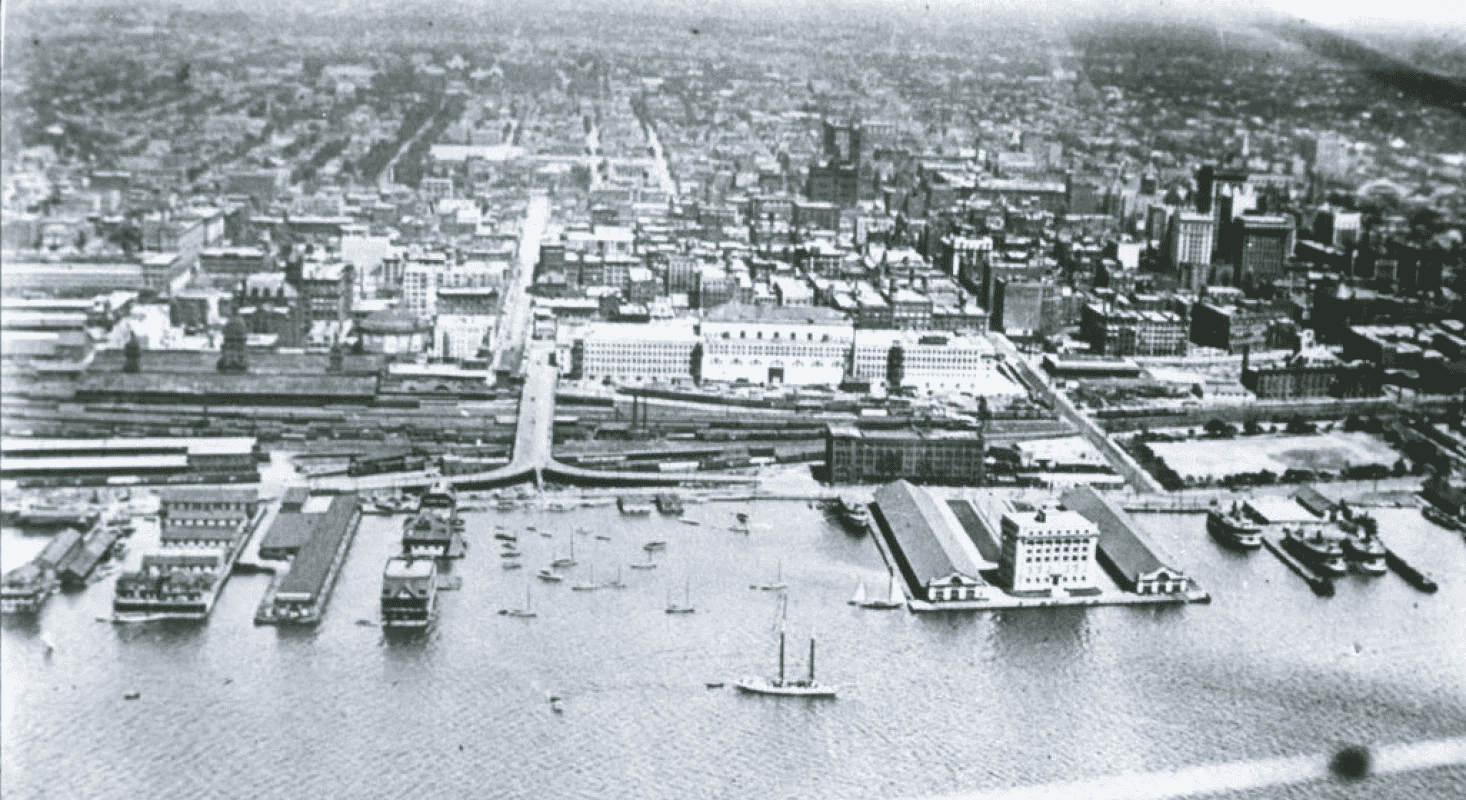
Industrial production operated within the framework of a private factory system, where a larger share of the population expected to be wage workers throughout their working lives. Consequently, industrialization brought significant changes not only to work and the economy but also to how society was organized and relationships among various societal groups. While industrialization unfolded over nearly two centuries, it is considered revolutionary—as suggested by the term “Industrial Revolution”—because it marked the shift from feudalism to capitalism and from agriculture to manufacturing and services, fundamentally altering human existence.
Industrial and Commercial Toronto
By 1832, the year before Howard moved to York, the city had overtaken Kingston as the leading urban center of Upper Canada. Its economy partially relied on servicing interior regions stretching across a 60-kilometer arc in the pre-railroad era as lumbermen and farmers cleared forests and transformed the colony’s landscape. The city’s port expansion and road connections spurred economic growth, ushering in a transportation revolution marked by steamboats on Lake Ontario (1816), the openings of the Erie and Welland Canals (1825 and 1833), and smaller but impactful developments such as macadamized portions of Yonge Street (1830s).
Industrial production in Toronto remained modest until the 1860s, with only a few enterprises expanding beyond workshops to meet local needs. However, early signs of transformation appeared in the 1830s with the introduction of steam engines in some establishments. Dramatic changes began with the advent of the railroad in the 1850s, bringing modern industrialization, waterfront development, and the growth of banking, white-collar businesses, consumerism, and new social and class structures.
A Glimpse into Toronto’s Industrial History
Toronto, Canada’s most populous city, boasts a rich industrial history that has made it a vital cornerstone of the nation’s economy. From humble beginnings to its transformation into an international business hub, Toronto’s industrial districts have undergone significant changes, reflecting progress and innovation over time.
Toronto’s industrial importance began as a British colonial outpost. In the early 18th century, factories emerged along the harbor and near Fort York, spurring rapid urban growth with industrial jobs attracting immigrants worldwide. The next major phase started in the 1850s with railroad construction, ushering in growth and bringing industries ranging from tanneries to metal workshops to the city, shaping its future as a leading manufacturing hub.

Enterprises, Companies, and Factories
By the 1880s, the Gooderham & Worts Distillery had become one of the world’s largest distilleries, significantly shaping Toronto’s industrial landscape. The distillery’s original location remains relevant today as The Distillery District, a globally recognized hub for arts, culture, dining, and entertainment—a lasting reminder of Toronto’s rich industrial heritage.
The 1900s marked the rise of Canada’s industrial sector. Toronto’s industrial sector flourished in the early 20th century, during what could be called its “golden age,” facilitated by the expansion of the city’s rail network, connecting Toronto to national and international trade routes. The Harbour District, home to numerous warehouses and factories, experienced significant growth due to the railway’s development. Goods could be easily transported from factories to warehouses and onward to distant seaports, establishing a robust trade system that fueled Toronto’s economic development.
The opening of Union Station in 1927 marked another milestone, providing direct access to the harbor and easing freight transport. During World War II, warehouses evolved significantly, adapting to wartime demands. Factories were converted into ammunition plants, becoming wartime production hubs. The post-war period saw a shift from rail to automobile transport—a global trend—and large infrastructure projects like Highway 401 solidified Toronto’s role in national logistics. Iconic enterprises, such as Massey-Harris (now Massey Ferguson), a leading global agricultural equipment manufacturer, established operations in Toronto. Their Somerville plant became an integral part of the city’s industrial identity. This era cemented Toronto as Canada’s thriving industrial hub, with its influence still felt throughout the city.
Impact of the City’s Industry on the Economy and the Nation
The growth of Toronto’s industrial sector had a profound impact on Canada’s broader economy. As Toronto solidified its status as a leading manufacturing city, it evolved into an international business center serving various industries.
Additionally, Toronto’s central location offered geographic advantages in terms of transportation infrastructure, with access to domestic markets through road and rail links and global markets via seaports and the U.S. market. Modern Toronto remains Canada’s commercial capital, with its vibrant industrial history embedded within its contemporary skyline. Its famed streets echo tales of entrepreneurship and industry—the foundation upon which this great city was built. As leaders in e-commerce services, order fulfillment, co-packing, transportation, and 3PL warehousing, Toronto employs specialized expertise in distribution. Consequently, its clientele spans various industries, including some of the world’s most prominent companies.