

Toronto, Canada’s most populous metropolis and one of the most developed cities in the world, is home to hard-working and happy residents. Its architectural landmarks and picturesque landscapes foster diverse activities. Among these, local beekeepers have mastered the art of producing honey on rooftops, a practice that has thrived for decades. Learn more on toronto.name.
The Beginnings of Beekeeping in Toronto
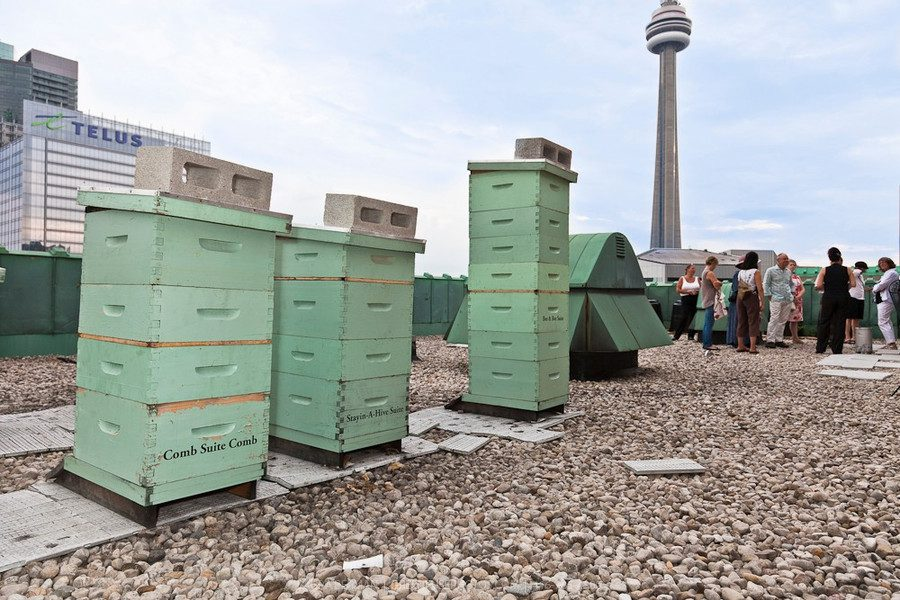
Beekeeping isn’t limited to rural areas where bees collect nectar from wildflowers—Toronto residents have proven this. There was a time when bee populations were declining globally, and North American cities, including Toronto, were not spared. However, urban dwellers found an innovative solution to this problem by establishing rooftop beekeeping operations on high-rise buildings.
One of the main challenges faced by local residents is Ontario’s Bees Act, which requires that hives be at least 30 meters from the boundaries of private properties. To comply with this regulation, beekeepers began placing hives on rooftops, balconies, and verandas of restaurants, cafes, hotels, and financial centers.
Toronto’s urban beekeepers are united under the Toronto Beekeepers Co-operative, which is part of the Toronto District Beekeepers’ Association and the Ontario Beekeepers’ Association.
Beekeeping in Toronto began in the late 20th century, though it wasn’t as popular as it would become in subsequent decades. In the early 21st century, keeping bees became a prestigious and profitable venture, supported by the local co-operative. Many residents expressed interest in this form of urban agriculture and joined the co-operative.
The Experience of Toronto Beekeepers
One of the first urban apiaries in Toronto was established on the site of the former Evergreen Brick Works industrial complex in Don Valley Park. Additionally, around 20 hives were placed in Downsview Park, a former military base.
An interesting and unconventional example comes from the luxurious Fairmont Hotel, where hives are located on the rooftop. Adjacent to the site where world leaders arrive during official visits to Toronto, the hotel boasts a vineyard and an apiary. Among the nine restaurants at the hotel, one serves dishes featuring ingredients harvested from its rooftop farm. Some of the honey produced is also sold at agricultural exhibitions organized by the Fairmont hotel chain.
The first hives were installed on the hotel’s rooftop in 2008. The following year, under the direction of Executive Chef David Garcelon, the number of hives increased from three to six. Visitors can access this unique apiary by taking an elevator to the 14th floor and then climbing a few flights of stairs. Over ten staff members maintain the hives, providing fresh honey daily for the hotel’s chefs. This rooftop beekeeping practice has also been adopted by other Fairmont hotels.
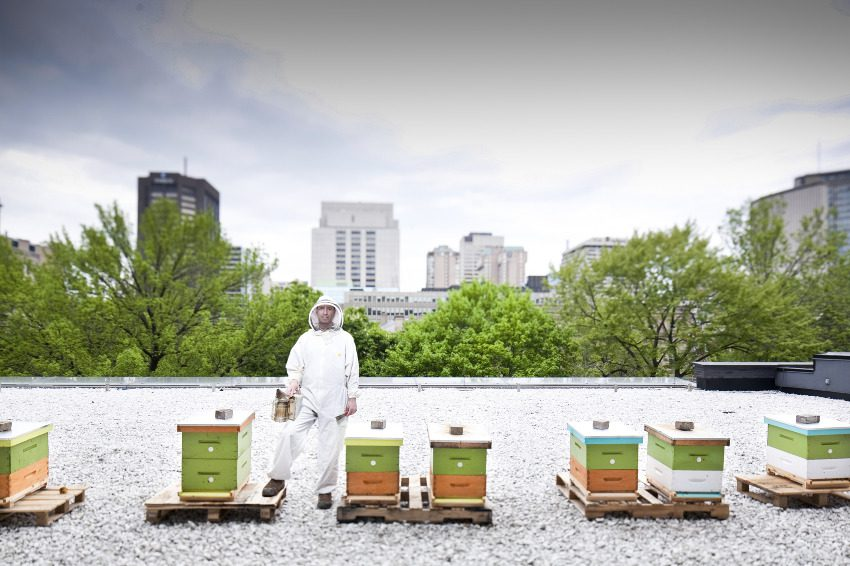
Another renowned rooftop apiary is located atop the Four Seasons Centre for the Performing Arts, managed by the Canadian Opera Company. Fred Davis, an experienced beekeeper, considers this his hobby. Inspired by the beekeeping practices at the Paris Opera House, Davis installed seven hives on the center’s rooftop, situated in one of Toronto’s most densely populated and urbanized areas. He also maintains another apiary on the veranda of the famous Casa Loma castle.
Despite wearing protective suits and gloves, Fred Davis occasionally gets stung by bees. He considers them peaceful creatures, admires their industriousness, and is deeply passionate about his work, vowing never to abandon his beloved hobby.