

Imagine a perfect morning by Lake Ontario: the sound of seagulls, the gentle lapping of waves, and… the soft hum of a strange device that looks like a miniature Mars rover. This isn’t a scene from a science fiction movie; it’s the new reality here in Toronto. While we admire the scenery, tireless robotic assistants are sifting through tons of sand and filtering water, catching something we often overlook: microplastics.
Lake Ontario is the heart of our region, but it is currently in need of help. Statistics show that approximately 10,000 tons of plastic end up in the Great Lakes every year.
In the past, the battle against this waste rested solely on the shoulders of volunteers and municipal crews. But recently, new “employees” have appeared on the shores of Ontario. They don’t get tired, they don’t need coffee breaks, and they look like gear straight out of a sci-fi film. Meet the BeBot, PixieDrone, and WasteShark: a robotic squad standing guard over the cleanliness of our waters, as reported by toronto.name.
Why human hands are no longer enough
The problem of plastic pollution in the Great Lakes has reached a critical point. According to modeling data from the Rochester Institute of Technology, Ontario and the other lakes in the system absorb 22 million pounds (over 10,000 tons) of plastic waste annually. It isn’t just large bottles or bags; the greatest danger lies in microplastics.
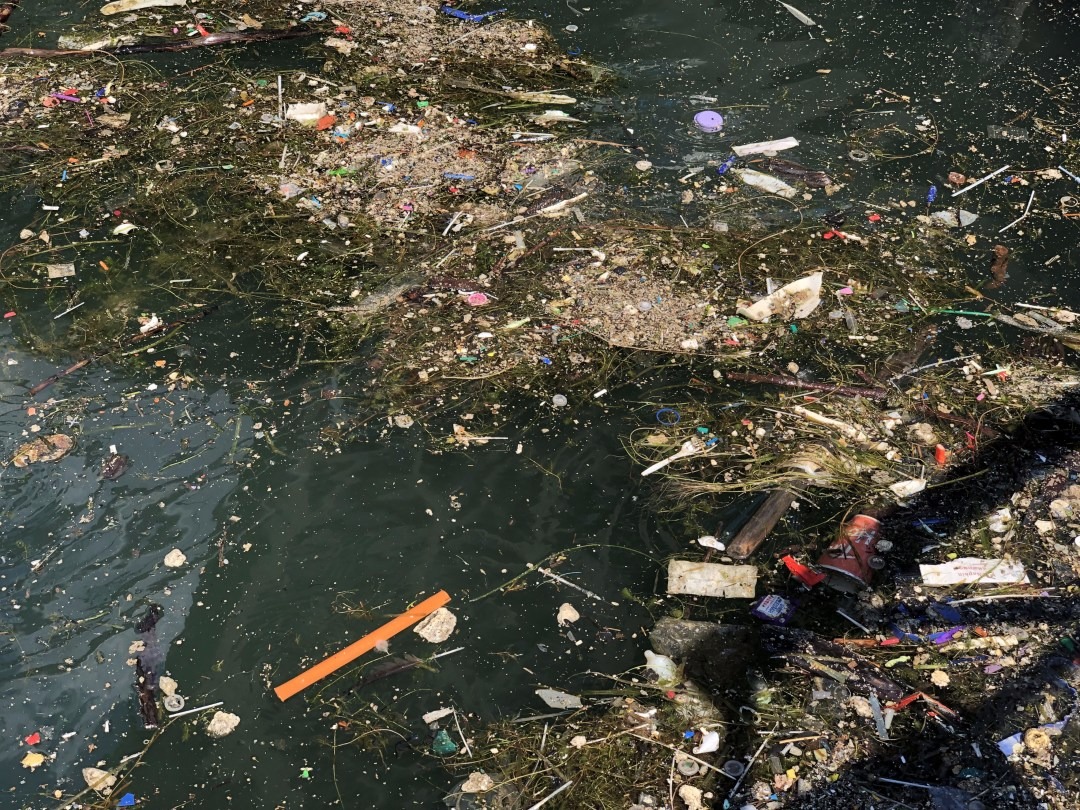
When the sun, waves, and rocks grind plastic waste down, it turns into tiny particles less than five millimeters in size. Fish and birds mistake them for food, leading to the accumulation of toxins in the food chain. Furthermore, microplastics are increasingly being detected in drinking water. Traditional cleaning methods—volunteer waste collection drives—are effective for large items, but they are physically incapable of “sifting” through kilometers of sand to remove thousands of tiny fragments. This is exactly where technology comes to the rescue.
BeBot: A “Mars rover” on duty at Toronto’s beaches
If you’re walking along the lakeshore during beach season, don’t be surprised to see a device that resembles a cross between a Mars rover and a Zamboni ice resurfacer (locals have already jokingly dubbed it the “Sand-boni”). This is the BeBot—Canada’s first fully electric, autonomous beach-cleaning robot.
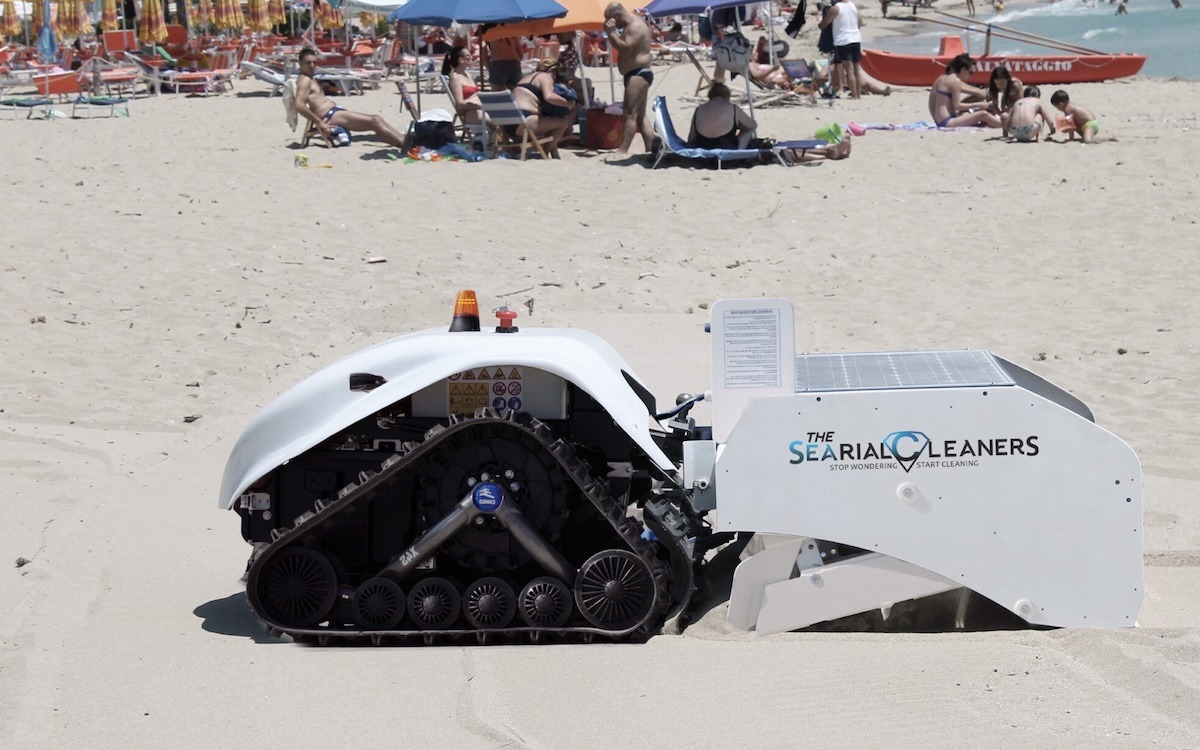
Developed by Searial Cleaners, the BeBot moves across the sand on tracks, allowing it to easily traverse bumps and slopes. It sifts the sand to a depth of 10 centimeters, catching everything from cigarette butts to tiny plastic pellets (nurdles) that are almost impossible to spot with the naked eye.
“Predators” in the service of ecology
While the BeBot patrols the shoreline, a real “hunt” is underway in the water. Cleaning Toronto’s harbors is a challenge: narrow passages, constant yacht traffic, and a jagged coastline require surgical precision. This is where the technological stars of the water fleet take the stage.
WasteShark
One of the most powerful players in this team is the WasteShark from the Dutch company RanMarine. It got its name thanks to a design inspired by the whale shark. The WasteShark doesn’t just collect trash—it “swallows” it. With its wide hull, it efficiently clears the water’s surface of bottles, bags, and even oil slicks, working like an autonomous vacuum cleaner.
What makes it impressive? The WasteShark can operate for up to 16 hours straight and collect up to 500 kg of waste in a single run. Additionally, it is equipped with sensors that analyze water quality (pH, temperature, and salinity) in real-time, transmitting data back to scientists.
PixieDrone and Jellyfishbot
If the WasteShark is the fleet’s “truck,” then the PixieDrone and Jellyfishbot are the maneuverable “city cars.”
The PixieDrone uses LiDAR technology (optical remote sensing) to create 3D maps of its environment. This allows it to skillfully maneuver between expensive yachts in Harbourfront without ever touching them.
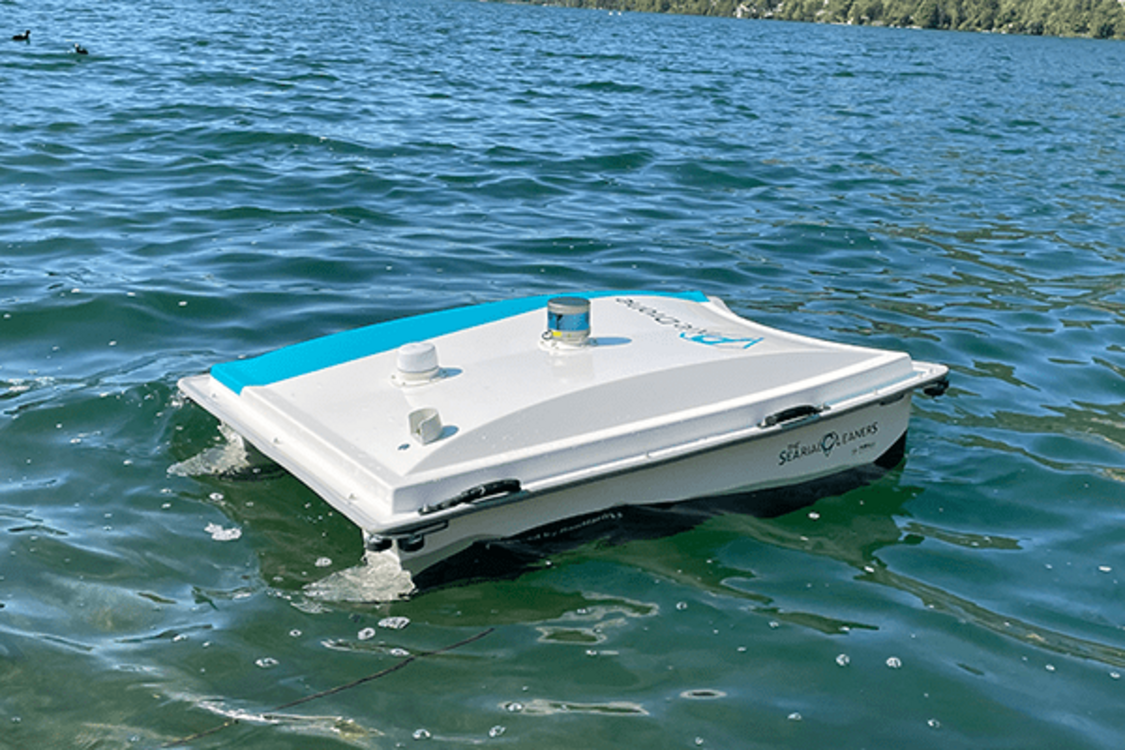
The Jellyfishbot is a compact apparatus that specializes in operating in the tightest corners of marinas and under pontoons, where no other vessel can reach.
Seabin
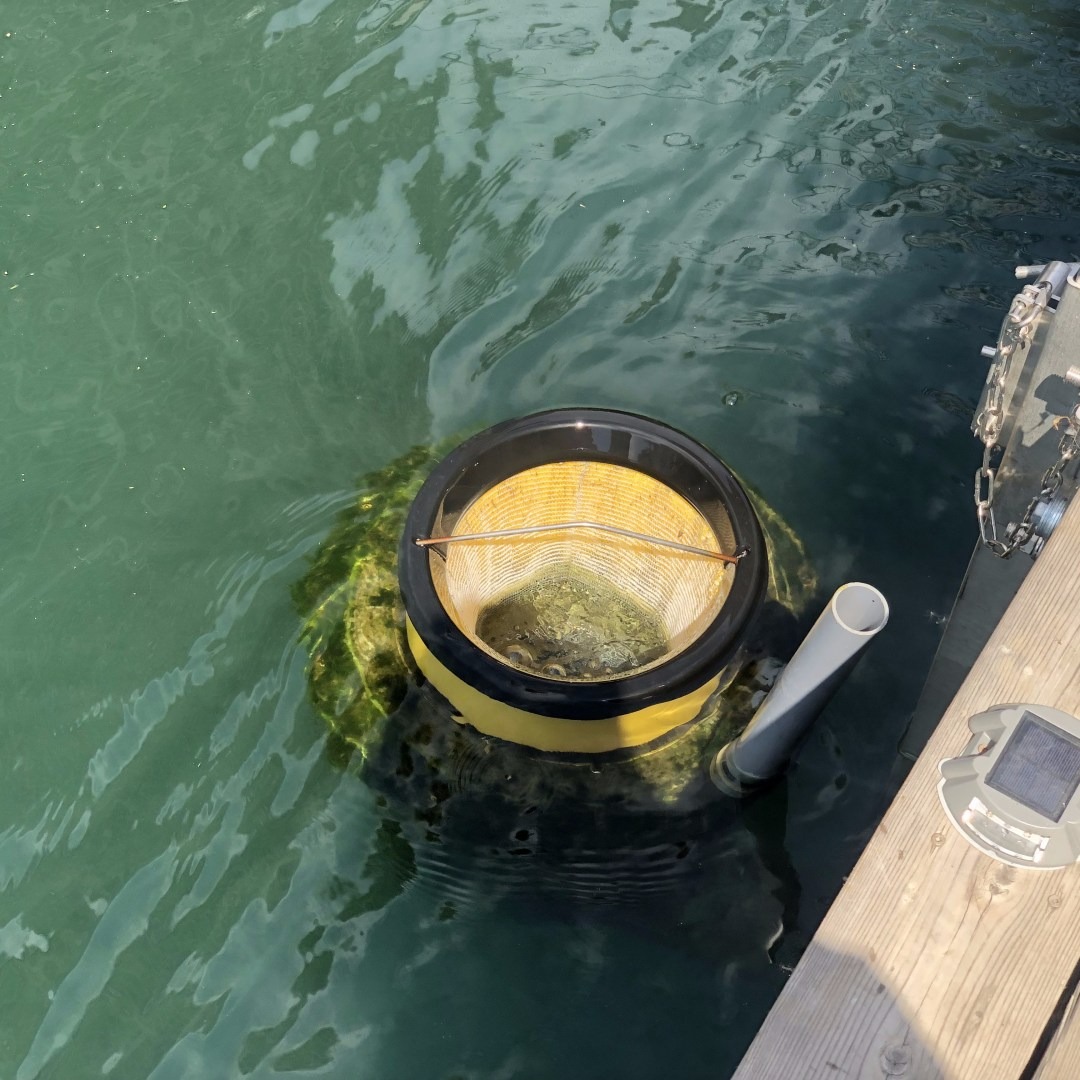
The Seabin is another hero of Toronto’s aquatic ecosystem. It is essentially a floating trash can installed in strategic points around marinas. A pump creates a water vortex that pulls floating debris into a mesh basket. Professor Chelsea Rochman from the University of Toronto, who oversees the work of these devices in our city, notes that just one such basket can catch hundreds, even thousands, of pieces of microplastic every day.
The Great Lakes Plastic Cleanup project: Who is behind this?
The deployment of the robot fleet in Ontario isn’t a random initiative; it is part of the large-scale Great Lakes Plastic Cleanup project, launched in 2020. This is the largest initiative of its kind in the world, uniting the environmental organization Pollution Probe, the Council of the Great Lakes Region (CGLR), the Ontario provincial government, and scientists from the University of Toronto.
At the project’s start, the Ontario government invested nearly $1 million to support these technologies. Today, more than 160 different debris-catching devices are in operation across the Great Lakes basin.
More than just cleanup: Data as a weapon
It might seem like a few robots won’t save a massive lake. And in part, that’s true. However, the mission of these devices isn’t limited to just gathering trash. Every trip the robot makes is a collection of extremely valuable data.
University of Toronto students and scientists analyze the “catch” every day. They carefully count the number of straws, cigarette butts, Styrofoam remnants, and plastic pellets.
Why is this needed?
- Detective work. If an excess of industrial pellets is found in a specific Toronto area, scientists can trace the plastic’s “path” to a specific facility.
- Legislative change. Data collected by these devices helped push a law in Ontario that obligates manufacturers of floating docks to use closed-cell foam so it doesn’t crumble into the water.
- Education. Robots attract attention. When people see a BeBot or WasteShark, they start to realize the scale of a problem that is usually hard to notice in the water.
Where do eco-robots usually work?
The technological fleet doesn’t stay in one place; it cruises key provincial waterways. You can most often see them in action during the active navigation season (from May through October).
The main locations for the deployment of BeBot, WasteShark, and their colleagues usually include:
- Large provincial parks with sandy beaches, such as Sandbanks or Darlington (here, the BeBot helps maintain unique dune ecosystems).
- Busy harbors and marinas in Toronto (Toronto Harbour), where PixieDrones and Seabins operate on a regular basis, cleaning the water around docks.
- The shores of Lake Erie and Lake Huron, where robots participate in regular environmental expeditions.
Since the Great Lakes Plastic Cleanup project is constantly expanding, an up-to-date map of robotic cleaning points and their “visit” schedules can be found on the initiative’s official resources. This allows anyone interested to see firsthand how modern technologies are changing our approach to environmental protection.
Techno-optimism vs. Reality
Despite the excitement surrounding new gadgets, experts warn against relying solely on technology. Oceanography professor Mark Benfield compares the situation to an overflowing sink: “Before you mop the floor, you need to turn off the faucet.”
Robots are a reactive measure. They help clean up what we have already thrown away. It’s like trying to bail out the ocean with a spoon while a fire hose is pumping trash into it from the other side. The real solution lies in the realm of the “circular economy”: refusing single-use plastics, improving filtration systems on washing machines (so microfibers don’t enter the sewage system), and responsible consumption.
Conclusion
Cleanup robots on Lake Ontario are a symbol of Toronto becoming a “smart city”—not just in IT, but in ecology. They are making our city a global hub for eco-innovation. But their main role is to serve as a reminder to each of us.
The next time you see a cute “Mars rover” or a robot shark, remember: it is here because we left a trace behind. Technology gives us a chance to fix the mistakes of the past, but the future of Lake Ontario still depends on whether the next plastic bottle ends up in a trash can or in the hands of a robot on the shore.
A tip for readers: if you see a BeBot while out for a walk, don’t be afraid to approach (just don’t get in the operators’ way). Usually, there are volunteers or scientists nearby who will gladly show you the “catch” of the day and tell you more about how to help our lake.