

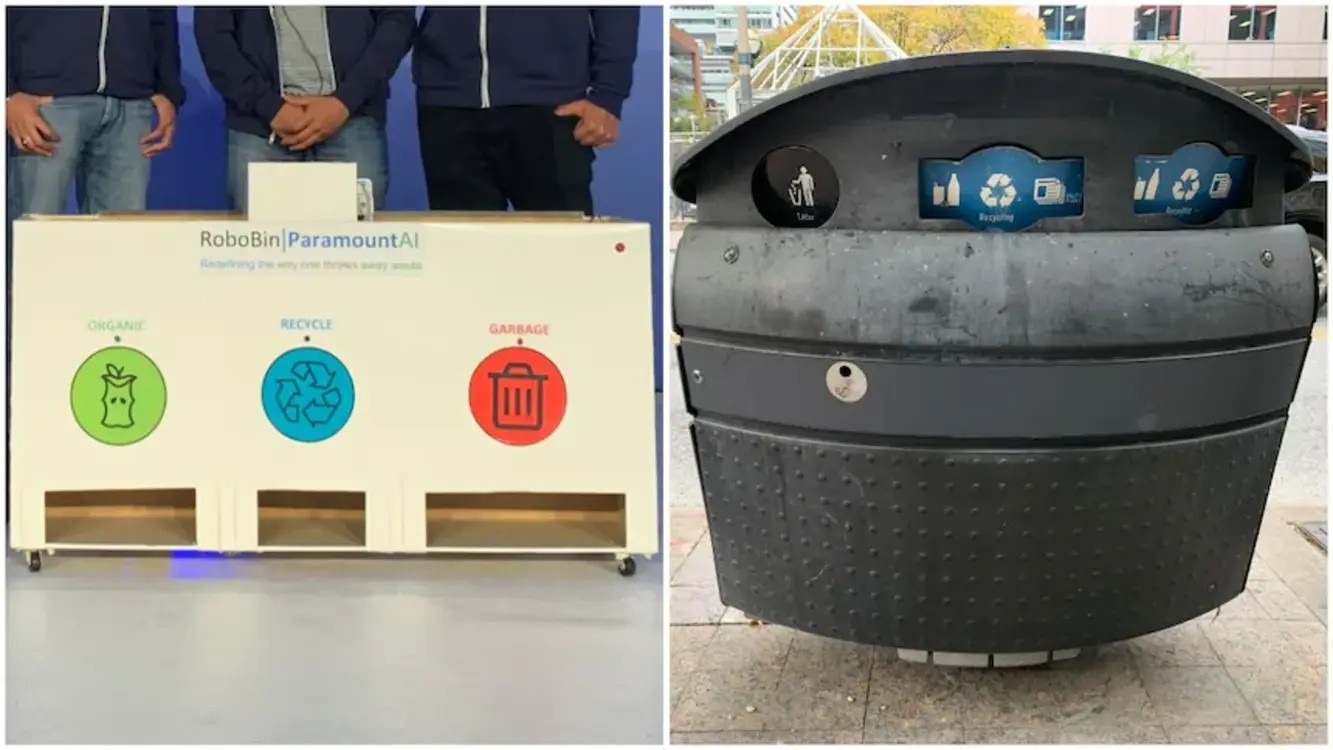
You’re standing at the corner of Yonge and Bloor, holding an empty paper coffee cup. Before you stands the standard city waste station with three slots: “Garbage,” “Recycling,” and “Organics.” You hesitate for a second, toss the cup into the blue recycling bin, and head off, feeling like a responsible citizen. But here’s the catch: you might have just made Toronto’s environmental situation a little worse.
What seems like a minor move is actually part of a massive crisis. In Toronto, about 25% of the material that ends up in blue bins is “contaminated,” meaning it cannot be recycled. This costs the city millions of dollars every year. However, a solution has emerged from right in our backyard—thanks to researchers at the University of Toronto and the city’s vibrant innovation hubs. Artificial Intelligence is now teaching us how to trash like pros, reports toronto.name.
The “Wish-Cycling” Trap: Why We Get It Wrong
The term “wish-cycling” perfectly describes the behavior of many Torontonians. We want an item to be recycled, so we toss it in the blue bin and hope for the best. Yet, recycling rules vary from one municipality to the next, and packaging is becoming increasingly complex.
Jim McKay, former general manager of Toronto Solid Waste Management, once highlighted a staggering statistic: every percentage point reduction in recycling contamination could save the city between $600,000 and $1 million annually. When a half-eaten burger or a plastic-lined paper cup ends up in the plastic bin, an entire load of recycling can be rendered unusable and sent straight to the landfill.
RoboBin
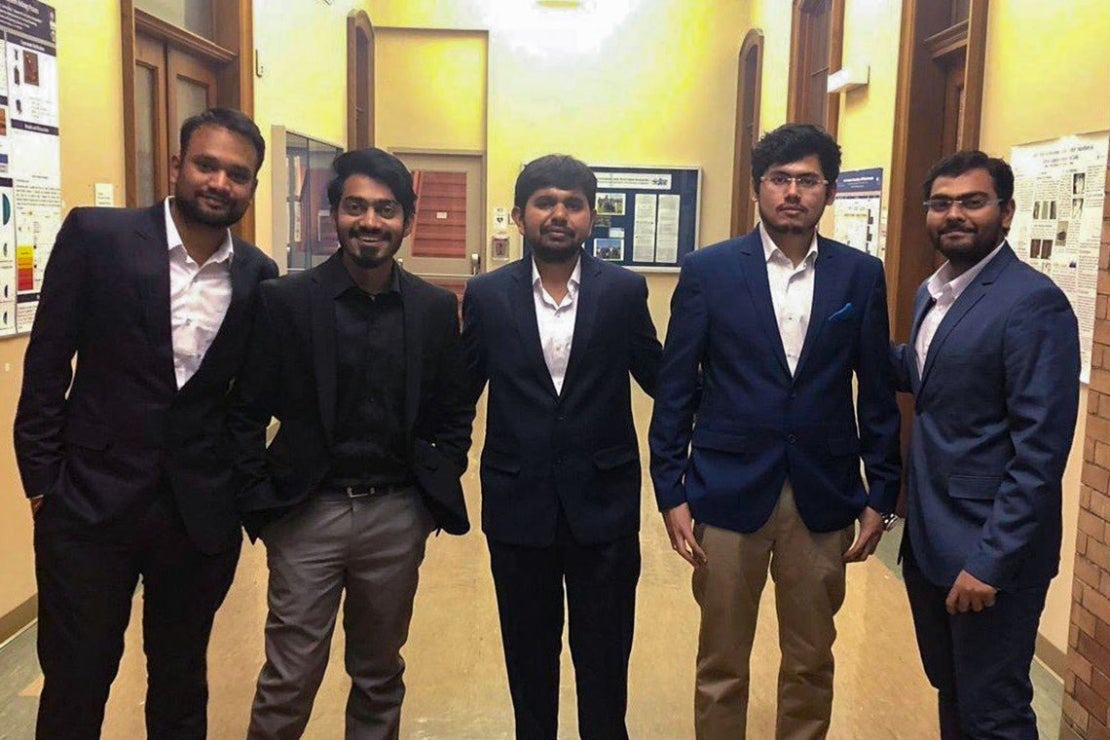
Toronto’s fight for a cleaner environment got a major boost in 2019, when five graduate students from the University of Toronto introduced a game-changing invention: RoboBin. The startup team, Paramount AI, created a system that literally “thinks” for the user.
How does it work? RoboBin uses computer vision. The system was trained on over 35,000 images of various waste types. When you place an item into the bin, a camera analyzes every pixel, identifies the material, and mechanically moves it into the correct compartment—garbage, recycling, or organic.
This wasn’t just an academic project. The Paramount AI team won the prestigious KPMG Ideation Challenge, beating out 600 competitors from around the world. Their goal was ambitious: to make RoboBin an attachment for existing public bins so the city wouldn’t have to overhaul its entire infrastructure. It’s a perfect example of Toronto serving as an incubator for the global CleanTech market.
Oscar Sort
If you’ve traveled through Billy Bishop Airport recently, you might have spotted some unusual digital stations near the lounges. Meet Oscar Sort—another Canadian innovation by Intuitive AI that has become a familiar sight in Toronto.
Oscar isn’t just a bin; it’s an interactive assistant equipped with a large screen and a camera. When you approach with an item in hand, Oscar instantly recognizes it and displays a prompt: “Put this in the paper bin” or “This goes in the general trash.”
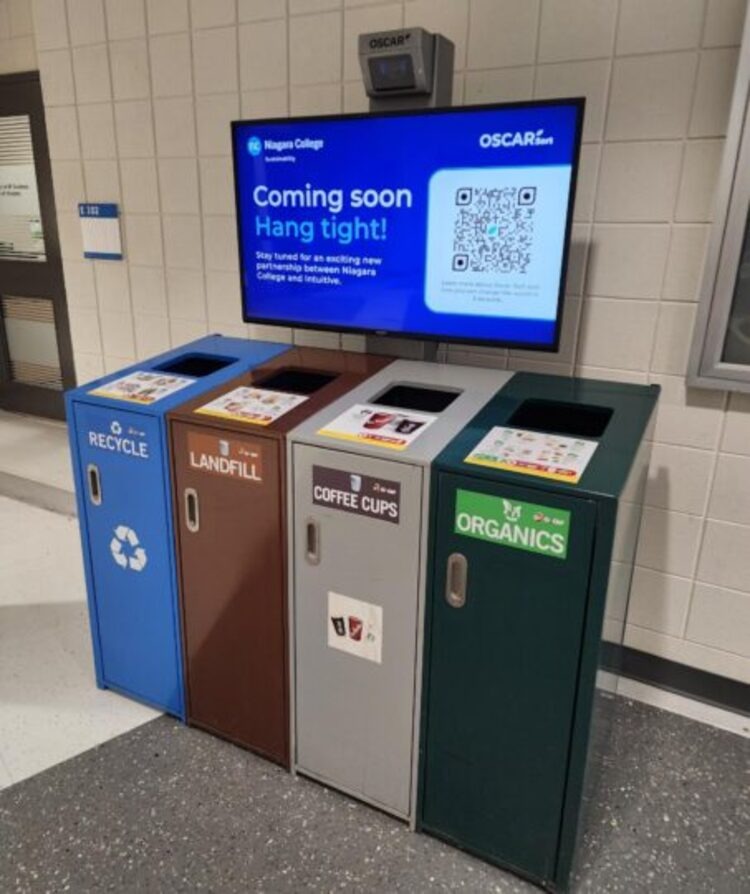
Alex Rector, a project leader, explains that an airport is the perfect venue for this technology. Travelers arrive from all over the world where sorting rules are radically different. Oscar bridges the language and cultural gaps with over 92% recognition accuracy.
Gamifying Waste: Why We Love to Play
One of the most engaging aspects of AI in sorting is gamification. Deborah Wilson from PortsToronto notes that people are more responsive when engaged in a playful way. Oscar doesn’t just point out mistakes; it interacts. For example, it might offer a quick eco-quiz while you wait for your flight, or issue a QR code for a coffee discount for sorting correctly.
This shifts the psychology: the boring chore of throwing out trash turns into a bit of entertainment. At Niagara College, where the system has also been implemented, students note that it particularly helps international students adapt to Canadian environmental standards faster.
Economics and Advertising: How Bins Make Money
You might ask: who pays for this? AI tech is expensive, and environmental budgets are often tight. The company Intuitive AI found a clever solution—the Oscar Materials & Media Exchange (OMX).
The screens on these smart bins are used for advertising. Major brands like Coca-Cola or Pepsi can run their campaigns or sustainability information clips there. The ad revenue helps cover the costs of installation and maintenance. This creates a “circular economy,” where digital advertising helps fund planet-cleaning initiatives.
Is Using AI for Trash Ethical?
When we hear about cameras and AI in public spaces, privacy concerns inevitably arise. The developers of RoboBin and Oscar Sort emphasize that the systems are designed solely for object recognition. They do not collect or store personal user data or images of faces. They only care about what’s in your hand—plastic, paper, or leftover pizza crusts.
Then there’s energy consumption. AI models are power-hungry. However, Hassan Murad, co-founder of Intuitive AI, points out that a single device in a high-traffic area can prevent CO2 emissions equivalent to taking 10–20 cars off the road per year, thanks to better sorting and reduced landfill volumes. It’s a net positive for the environment.
The Future of Toronto: From Campuses to Every Corner
Today, you can find smart bins at the University of Toronto, Billy Bishop Airport, and a few shopping malls. But this is just the beginning. City officials are closely watching the results of these pilot programs.
Imagine a future Toronto where street bins, like those at Dundas Square, automatically compact waste, alert city services when they’re full, and teach tourists how to dispose of hot-dog wrappers properly. This isn’t science fiction; it’s a logical step for a city aiming to solidify its status as a global IT hub.
What Can We Do Right Now?
Until AI bins appear on every street corner, the responsibility remains on us. Here are a few tips from the creators of RoboBin for Toronto residents:
- Empty and rinse. Even a perfect plastic bottle becomes trash if it still has half a cup of yogurt inside.
- Don’t “wish”—know. If you aren’t sure whether an item is recyclable, put it in the regular trash (Garbage). It’s better than contaminating the entire recycling bin.
- Use the TOwaste app. The City of Toronto has an excellent service where you can type in the name of any item and find out exactly how to dispose of it.
Conclusion
Toronto is on the brink of a new era in waste management. Thanks to the talent of University of Toronto students and the boldness of local startups, our city is proving that technology can solve even the “dirtiest” problems. Artificial intelligence is becoming that invisible assistant that fixes our mistakes and teaches us to be better neighbors to our planet.
The next time you see an Oscar at the airport or a RoboBin at university, don’t be shy—show it your trash. That tiny gesture just might be your contribution to making Toronto the cleanest city in the world.
“`