

In Toronto, the morning usually doesn’t start with a coffee, but with the familiar rumble of a diesel engine, the clanking of hydraulics, and the screech of brakes. For many residents in Downtown, Etobicoke, or Scarborough, the garbage truck is the world’s most reliable (and loudest) alarm clock. But that’s changing fast. What used to be a clunky, noisy machine is transforming into an intelligent system on wheels. By leveraging artificial intelligence, transitioning to hybrid engines, and utilizing cloud technology, Toronto is setting the standard for sustainable waste management across North America, reports toronto.name.
The Environmental Challenge: The Path to Net-Zero
The scale of Toronto’s municipal fleet has always been the city’s biggest challenge. The Fleet Services division manages over 5,500 vehicles, with heavy-duty garbage trucks playing a critical role. Traditionally, these trucks ran on diesel, leading to high levels of greenhouse gas emissions, nitrogen oxides (the primary component of smog), and significant noise pollution.
As part of its Net-Zero strategy, the city has overhauled its approach to heavy-duty fleet operations. Because garbage trucks endure grueling conditions—long shifts, hundreds of stops a day, and extreme Canadian temperatures—simply swapping them for standard electric vehicles wasn’t an option. This spurred the adoption of tailored, high-tech solutions.
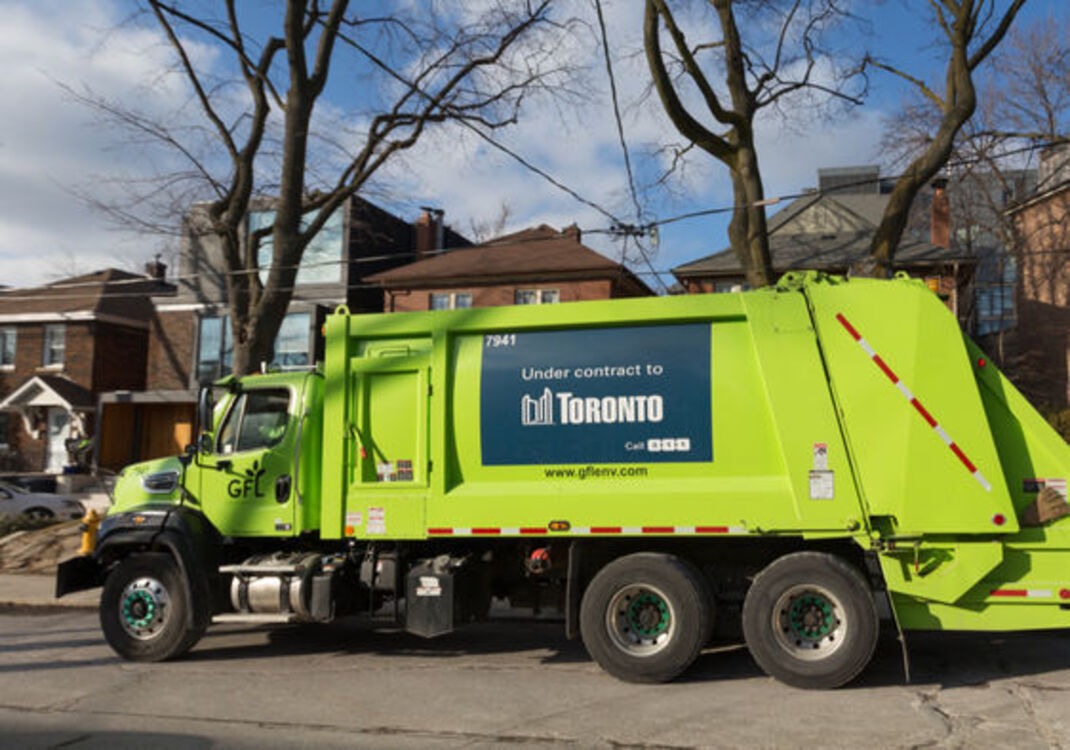
Hybrid Tech and the Green Freight Program
A key milestone in this modernization was Toronto’s participation in the federally supported Green Freight program. The city began systematically converting its fleet to a hybrid “natural gas-electric” model.
Technological Advantages of Hybrids:
- Stop-Start System. When the truck stops to load a bin, the main engine shuts down. All auxiliary equipment—hydraulic presses, lifts, and onboard computers—runs on electric power from batteries.
- Energy Recovery. During constant braking in city traffic, energy is fed back into the battery, resulting in significant fuel savings.
- Sustainability. Combining compressed natural gas (CNG) with electric power reduces nitrogen oxide and greenhouse gas emissions by 15–20%.
The Silence Effect
A surprising aspect of this rollout is the social impact. New hybrid trucks are so quiet that Toronto residents often don’t hear them approaching. City fleet engineers have shared stories of residents stopping workers to ask if the truck was broken because it was operating almost silently. For a megacity where garbage collection often begins in the early morning, this is a huge step in improving the quality of life.
Electrification and a Data-Driven Approach
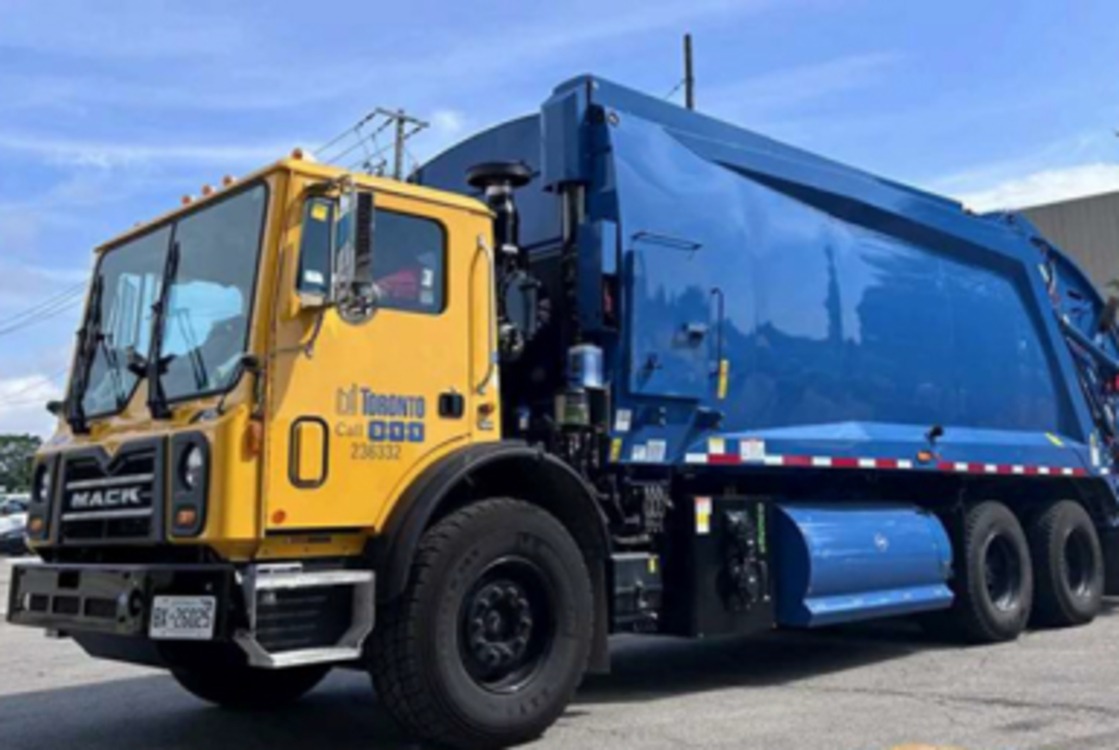
Alongside hybridization, the Greater Toronto Area (GTA) is testing fully electric models. Companies like Lion Electric and Mack Trucks are supplying vehicles specifically adapted for Canada’s harsh climate.
The Smart Freight Centre, a research network including the University of Toronto, York University, and others, plays a vital role here. Scientists analyze sensor data from the trucks to optimize charging schedules and understand how batteries behave at -20°C. This allows the city to make informed decisions about expanding its electric fleet.
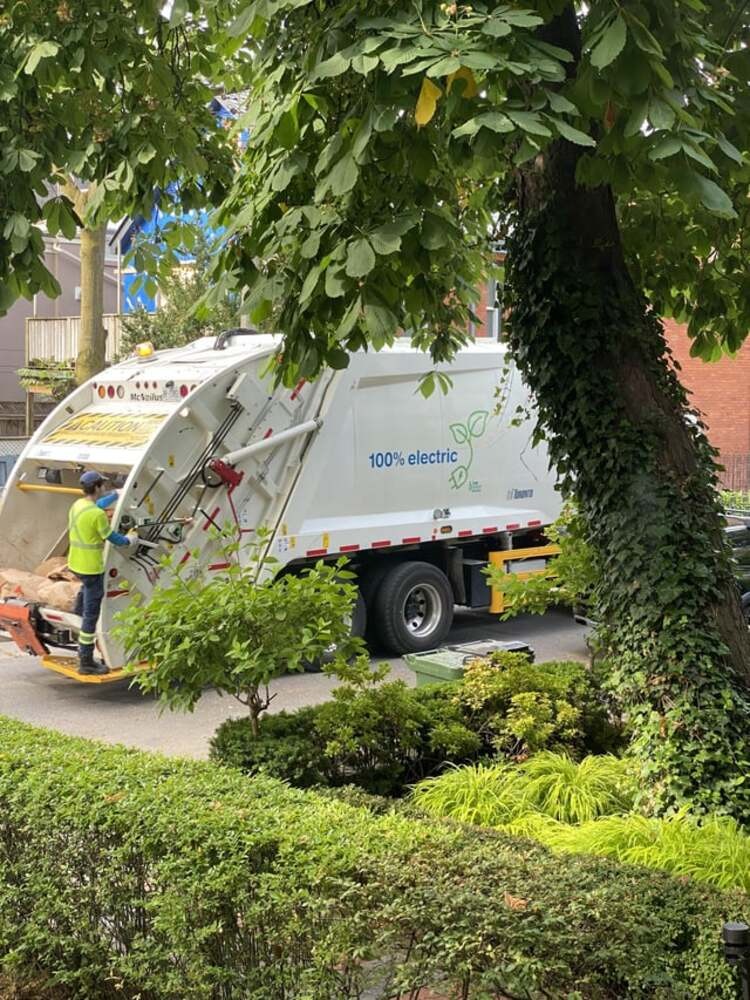
Artificial Intelligence and the “Brains” of the System
Today’s Toronto garbage truck is essentially a mobile computer center. The digital transformation of the industry is based on several intelligent layers:
- IoT Monitoring and Fill Sensors. Instead of fixed routes, the city is shifting toward dynamic planning. Ultrasonic sensors in bins transmit waste levels in real-time, allowing the system to route trucks only where they are actually needed, avoiding “empty” trips.
- AI Optimization. Artificial Intelligence algorithms analyze massive datasets, ranging from bin fill levels to traffic patterns and weather forecasts. Optimizing logistics saves thousands of kilometers in travel, reducing operating costs and vehicle wear.
- RFID Identification and Analytics. Every container is equipped with an RFID tag. When the bin is lifted, the system automatically logs the weight and type of waste. This data builds a picture of waste generation in various neighborhoods, helping city officials refine their environmental policies.
Cloud Solutions and the Future of the Industry
The smart waste management market in Canada is showing steady growth, evolving into a multi-billion dollar industry. The focus is shifting toward Software-as-a-Service (SaaS). Cloud platforms unify data from vehicles, bin sensors, and citizen reports into a single, cohesive interface, enabling cities to proactively manage overflow and automate sorting using computer vision.
The Economics: Is It Too Expensive for Taxpayers?
Implementing these technologies costs millions. However, analysts at Dynathrone predict that Canada’s smart waste management market will grow to $3.4 billion by 2035. Why is it worth it?
- Reduced Maintenance: Electric motors have far fewer moving parts than diesel ones.
- Fuel Savings: Even at current electricity prices, charging a truck is significantly cheaper than a tank of diesel.
- Public Health: Reducing noise and smog in densely populated areas eases the burden on the healthcare system.
Fleet Generations Comparison:
| Parameter | Traditional Diesel Truck | New Hybrid/Electric Truck |
| Noise Level | 85–100 dB (like a rock concert) | 60-70 dB (like a conversation) |
| CO2 Emissions | 100% (baseline) | 25% reduction (hybrid) to 100% (electric) |
| Fuel Efficiency | Low (engine runs constantly) | High (stop-start & regenerative braking) |
| Maintenance | Frequent (brake/engine wear) | 30% less frequent (fewer moving parts) |
| Intelligence | Analog gauges | Full IoT & AI analytics |
A City Breathing Easier
“Smart” garbage trucks are a symbol of Toronto’s transformation into a modern megacity. We used to think of waste collection as something dirty, loud, and outdated. Today, it’s a high-tech sector employing top-tier engineers and developers.
The next time you see a garbage truck on your street, listen closely. If you hear only the quiet hum of tires instead of a roaring engine, congratulations—you’ve just witnessed the future of Toronto in action. The city is becoming not just cleaner, but quieter, letting us enjoy the morning silence while “smart” machines do their invisible, yet vital, work.