

Park · Toronto · ⭐ 9.5/10 · 9268 reviews · updated: 2026-08-03 23:54:21
Address: 755 Lawrence Ave E, North York, ON M3C 1P2, Canada
Edwards Gardens — a millwright’s ravine turned into Toronto’s show garden
Most city parks are land that was left over. Edwards Gardens is land that somebody loved into shape. A Scottish miller dammed the creek here in the 1820s; a Toronto businessman bought the exhausted homestead in 1944 and spent a decade turning it into a private estate garden with 425 tons of imported stone in the rockery alone; and since 1956 the whole thing has belonged to the public. Today it comes in two halves — the sculpted valley and uplands of Edwards Gardens itself, and the Toronto Botanical Garden’s tight, experimental display gardens in the northeast corner — with a ravine trail running out the bottom end into nine kilometres of Don valley.
Highlights
- The rockery — Rupert Edwards had 425 tons of stone brought in to build it, terracing the valley wall above the creek. It is still the garden’s signature feature and the reason the slope reads as designed rather than natural.
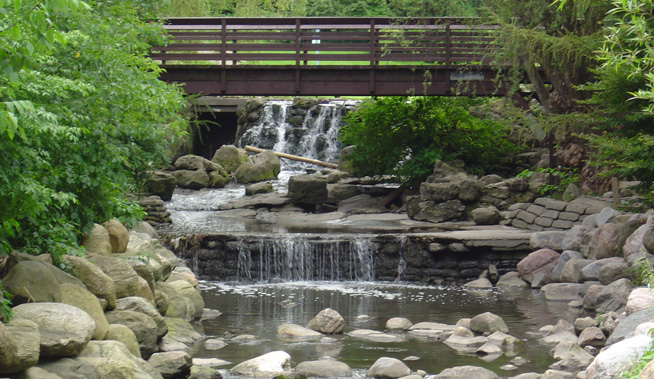
- The waterfall and the old mill site — Edwards dammed Wilket Creek at the spot where Alexander Milne’s mill once stood and installed an electricity-generating waterwheel to pump irrigation to his flowerbeds. The falling water and the arched wooden footbridges over the creek remain the most photographed corner of the park.
- Toronto Botanical Garden — seventeen themed “city-sized” gardens packed into just under four acres, deliberately built at the scale of a real Toronto backyard so that visitors can copy what they see. The Water-Wise Garden, the Woodland Walk, the Kitchen Garden and the Indigenous Garden are among them, and admission is free.
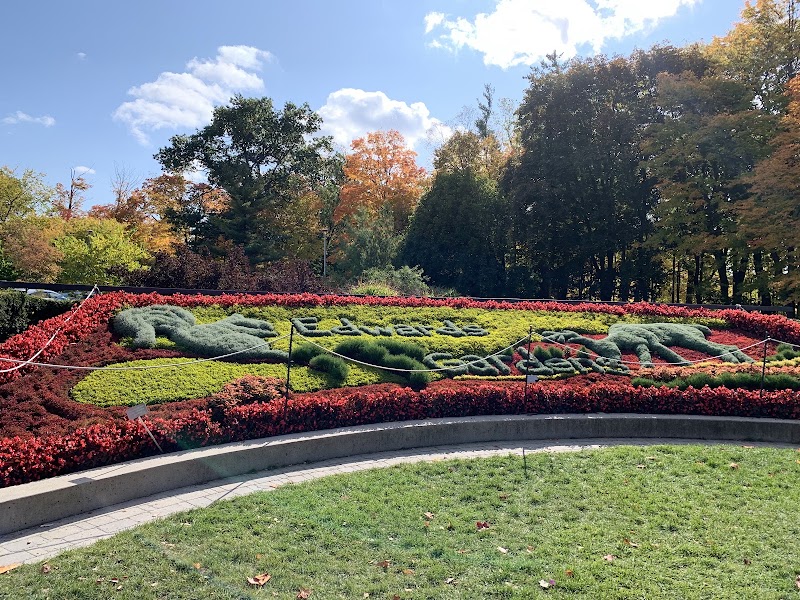
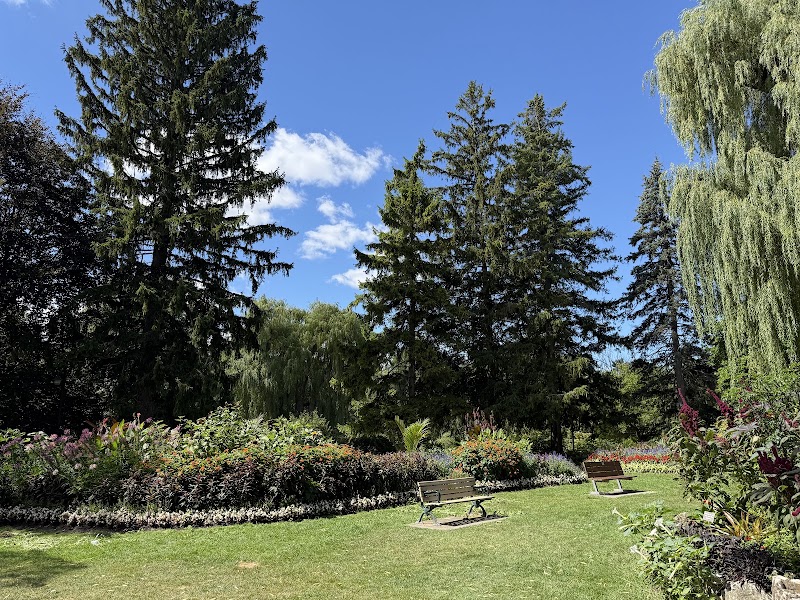
- The upland beds — perennial borders and roses on the level ground above the ravine, changed out seasonally, backed by an arboretum of specimen trees. This is the formal, colour-saturated half of the park.
- The valley planting — wildflowers, rhododendrons and shade species down where the creek runs, several degrees cooler than the top on a July afternoon and a completely different garden in character.
- The children’s Teaching Garden — a working outdoor classroom on the upper level, used for school and family programs, where the point is that children dig rather than look.
What you’ll find
The layout is easy to read: arrive at the top, work the formal beds, drop into the ravine on paved switchbacks, cross the creek on the bridges, and either climb back or keep going south into the valley trail system. The two institutions share a site and a parking lot but keep distinct characters — one is an estate garden, the other a botanical garden that behaves like a laboratory.
- Milne House — the historic house on the site that the Civic Garden Centre moved into in 1959, the beginning of what is now the Toronto Botanical Garden.
- The Visitor Centre — home to a substantial horticultural library, a garden shop, program rooms and washrooms; the building was designed to green-building standards and anchors the botanical garden’s side of the site.
- The Wilket Creek trail — a paved path that starts here and runs roughly nine kilometres through the Don valley, linking Wilket Creek Park, Serena Gundy Park, Sunnybrook Park and Ernest Thompson Seton Park before joining the Lower Don system.
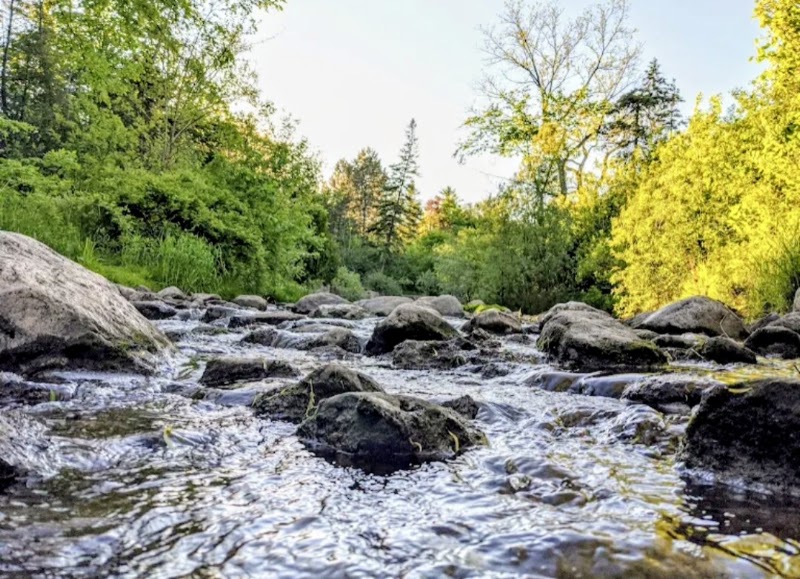
- The creek itself — Milne Creek on the old maps, Wilket Creek now. Severe storms in the mid-2000s shifted its course inside the park and forced substantial erosion-control work along the banks.
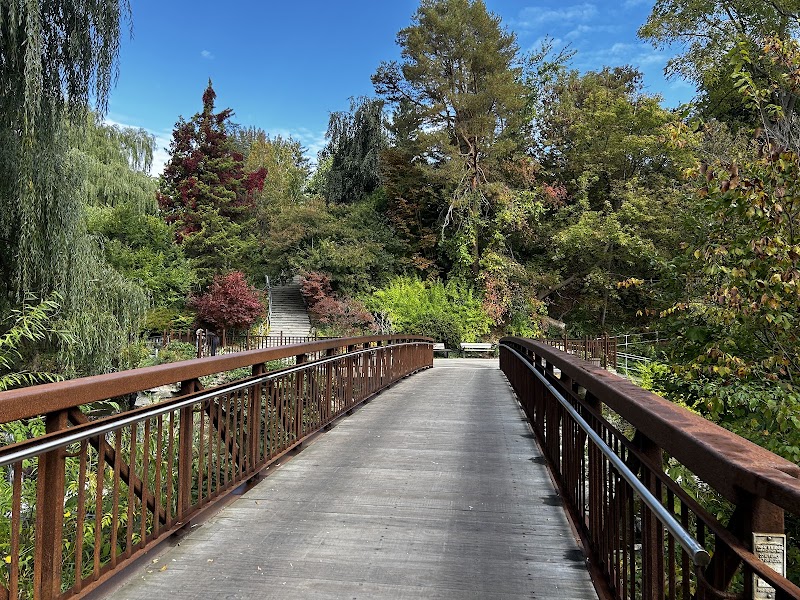
- Bridges and ponds — the wooden bridges and small water features Edwards installed in the 1940s survive as the connective tissue of the valley walk.
- Event lawns and the summer concert series — the site hosts a free outdoor music series in summer and is one of Toronto’s busiest permitted locations for wedding and portrait photography.
Things to do — and who it’s for
- Gardeners looking for ideas — the botanical garden exists to be copied: everything is labelled, the beds are backyard-sized, and the water-wise and kitchen gardens answer questions most Toronto homeowners actually have.
- Photographers and wedding parties — the bridges, the waterfall and the rockery are the reason this is one of the most-photographed parks in the city; organized shoots require a permit from the City.
- Walkers and runners with distance in mind — the ravine trail turns a garden visit into a nine-kilometre valley walk, entirely off-road, with connections to the wider Don network.
- Families with school-age children — the Teaching Garden, the creek, the bridges and the open upper lawns work well for a first-nature outing that doesn’t require hiking boots.
- Older visitors and anyone with limited mobility — the upper gardens are level and paved, so a rewarding visit is possible without descending into the ravine at all.
- Quiet-seekers — early on a weekday morning the valley belongs to birds and the creek, and the contrast with the surrounding suburb is total.
Getting there & practical
The gardens sit in the Banbury–Don Mills area of North York, at the head of the Wilket Creek ravine where the tableland drops into the Don valley. Line 5 Eglinton, which opened to riders on 8 February 2026, is the fastest rail approach: ride to Laird station and take the 51 bus north to the garden entrance. From Line 1 Yonge–University, Eglinton station connects to the 54 bus, and the 162 bus also serves the corner by the entrance. Entry to both Edwards Gardens and the Toronto Botanical Garden is free and always has been, with donations invited; parking on site is paid, and the lot won a regional design citation in 2013 for its sustainable stormwater handling. The grounds are open daily from dawn to dusk; the Visitor Centre, shop and library keep their own posted hours. Allow ninety minutes to two hours for the gardens alone, and three hours or more if you walk any real distance down the ravine trail. One practical note for the next few years: the City approved a master plan for the site in April 2018, and Phase 1 — a net-zero maintenance yard with a greenhouse, wash bays and an underground water cistern at the southwest corner — moved from detailed design in the winter of 2025–2026 toward contractor hiring in the autumn of 2026, construction from spring 2027 and completion in autumn 2029. Expect fenced work areas and shifting paths as that progresses.
When to visit
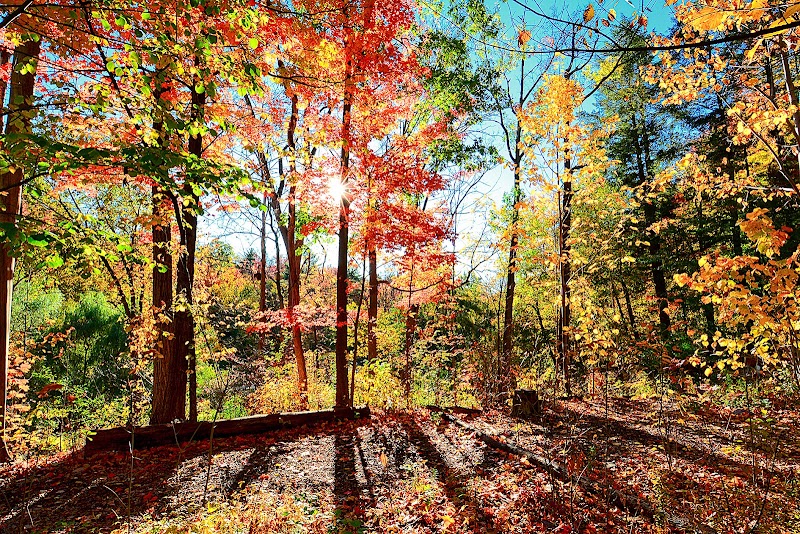
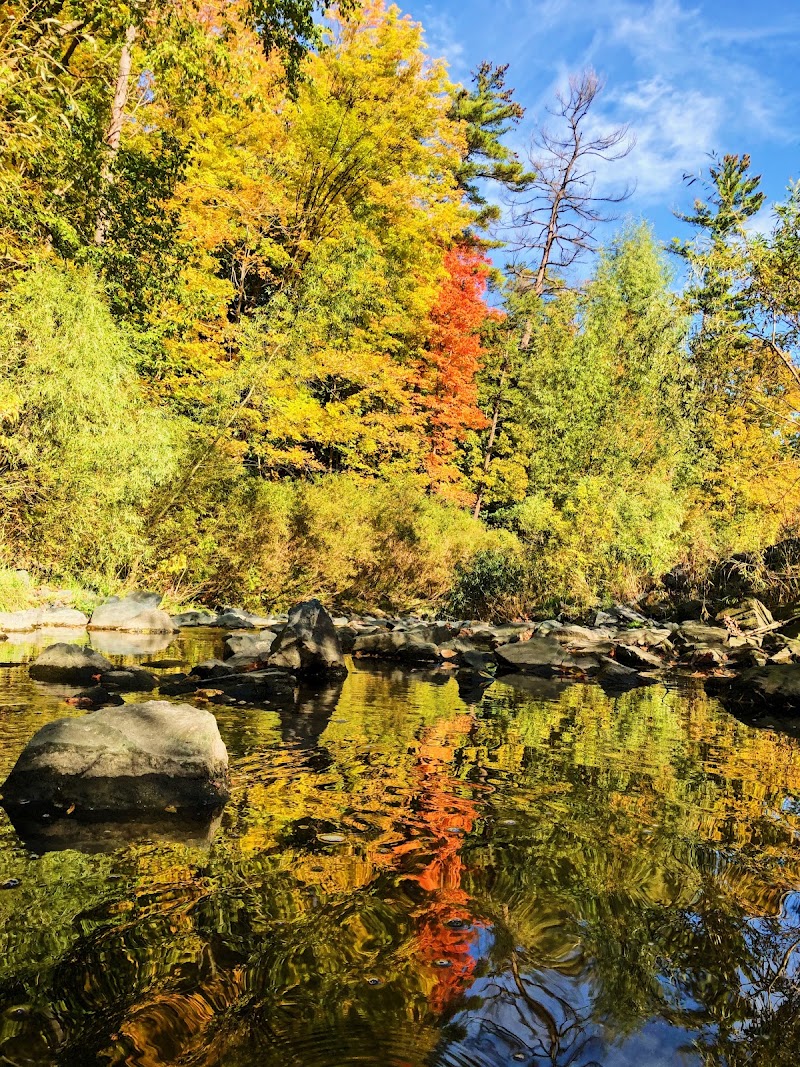
Spring arrives here in stages and is worth catching twice: bulbs and flowering trees on the upper level first, then the rhododendrons and woodland species in the cooler valley a couple of weeks later, when the creek is running full from snowmelt. Summer is the garden at maximum saturation — roses and perennial borders at their peak, the botanical garden’s themed beds all working at once, the free evening music series on the lawns, and a steady procession of wedding photographers around the bridges on Saturdays. Weekday mornings are dramatically quieter than weekend afternoons. Autumn is the ravine’s season: the valley maples and the specimen trees in the arboretum turn, ornamental grasses go to seed and hold their shape, and late perennials keep the upper beds going well into October. Winter is underrated and almost empty. With the leaves down you can finally see how the rockery was engineered, the bridges and the waterfall look their best under snow, the paved trail stays walkable, and the botanical garden shifts its programming indoors. There is no season in which the site closes.
Good to know
The valley’s first industry belonged to Alexander Milne, a Scottish weaver and miller who settled in the area in the years after the War of 1812 and acquired ravine land here in 1827, running a woollen mill and a sawmill on the stream that appears on old maps as Milne Creek and is now Wilket Creek. A dwindling water supply pushed his milling operation east to the banks of the Don in 1832, but the family holding — eventually around 240 hectares — stayed in Milne hands for more than a century. In 1944 a Toronto businessman, Rupert E. Edwards, bought the neglected eleven-hectare homestead to build himself, in his own words, a place in the country with room to move and breathe. What he actually built was an estate garden: flowerbeds, ponds, wooden bridges, a private nine-hole golf course, and the rockery of 425 tons of stone. On the site of Milne’s old mill he dammed the creek and installed a waterwheel that generated electricity to irrigate the gardens. When the growing city began to close in, Edwards chose to sell rather than subdivide: in 1955 the estate went to the Municipality of Metropolitan Toronto on the condition that it be kept as a park, and it opened to the public as Edwards Gardens in 1956. Three years later the Civic Garden Centre moved into the Milne house on the property, sharing quarters with the Federation of Ontario Naturalists; that organization was renamed the Toronto Botanical Garden in 2006 and now runs the seventeen themed gardens on just under four acres in the northeast corner of the park. The two names are used interchangeably by visitors, but they are different bodies on one shared site — which is why the rules differ slightly from one half to the other.
Visitor tips
- Dogs are not permitted in the Toronto Botanical Garden’s display gardens, service animals excepted, and the display beds throughout the site are not the place for off-leash walking — check the posted signage at the entrance before you bring a dog.
- If you are shooting a wedding, an engagement or any organized session with equipment, get the City photography permit in advance. This is one of Toronto’s most-used photography locations and enforcement is routine on summer weekends.
- Wear shoes you can descend in. The upper gardens are level and paved, but the valley involves real slope and the creek-side paths can stay damp and slick for a day or two after rain.
Questions & answers
Is there an admission charge? No. Both Edwards Gardens and the Toronto Botanical Garden are free to enter, every day, with donations welcome. Parking on site is paid, and some workshops, guided tours and registered programs run by the botanical garden carry their own fees.
What is the difference between Edwards Gardens and the Toronto Botanical Garden? They share one site. Edwards Gardens is the City park — the estate landscape with the rockery, the upland perennial and rose beds, the arboretum and the ravine. The Toronto Botanical Garden is an independent organization occupying just under four acres in the northeast corner, with seventeen themed demonstration gardens, a visitor centre, a horticultural library and a teaching program.
How do I get there by transit? The quickest rail route is Line 5 Eglinton, which opened in February 2026, to Laird station, then the 51 bus north to the entrance. Alternatively, take Line 1 Yonge–University to Eglinton station and transfer to the 54 bus; the 162 bus also stops at the corner by the garden entrance.
Can I bring a dog? Not into the Toronto Botanical Garden’s display gardens, where only service animals are allowed. Elsewhere on the site, follow the posted signage and keep any dog leashed and out of the planted beds — this is a horticultural collection, not an off-leash park.
How long does a visit take? Ninety minutes to two hours covers both the formal gardens and a loop down to the creek. Add another hour or two if you follow the ravine trail south — it runs roughly nine kilometres through the Don valley, so you can make the walk as long as you like and turn back at any point.
Is it accessible? The upper level, where the botanical garden and most of the formal beds are, is level and paved and works for wheelchairs and strollers. The valley is a genuine ravine with grade changes; some routes down are paved switchbacks, but not all of the creek-side network is easy going.
Can I picnic or cycle in the gardens? The display gardens are for walking, not for spreading out a blanket among the beds or riding through; cycling belongs on the ravine trail below. If you want a picnic, use the open lawn areas and take everything out with you.
Is anything closed for construction? The City’s master plan for the site is moving into its first construction phase, a net-zero maintenance facility at the southwest corner, with work scheduled to begin in the spring of 2027 and finish in the autumn of 2029. The gardens stay open, but expect fenced compounds and rerouted paths in the affected corner.
When is the garden at its best? For sheer colour, late June through August. For the ravine, October. For photography without crowds, an early weekday morning in any month — and, if you want to understand how the place was built, a clear day in winter when the structure of the rockery is fully visible.
Photos
Show 1 more photos
Visitor reviews
Reviews last updated: 2026-08-03 23:54:21
Data is refreshed monthly. Sources: toronto.name and editorial picks based on reviews.
Edwards Gardens is a beautiful and peaceful place where you can escape the city without going too far. It's only a 15-minute drive from my home, which makes it a perfect spot for a quiet walk.
The gardens are very well…
⭐⭐⭐⭐⭐
I really enjoyed my visit to Edwards Gardens! We arrived there on a July morning, and the weather was just wonderful. Everything around was so fresh and peaceful, and it was a perfect start to the day. The ga…
Edwards Gardens is one of the most beautiful and peaceful green spaces in Toronto. The gardens are impeccably maintained, with vibrant seasonal flowers, scenic walking paths, waterfalls and picturesque bridges. It's a pe…
Okay, so we swung by Edwards Gardens when Toronto decided to fake spring for five minutes, on a holiday Monday.
Vibe: Pretty trails that literally beg you to stroll and imagine you're in a Jane Austen photo montage.
The…
A lovely spot to relax with the family on a warm day