

In modern Toronto, dairy farms are plentiful, but at the start of the 20th century, they were a rarity. One of the most successful early dairy farms was Dentonia Park Farm, a pioneer in providing high-quality milk to Toronto residents. This article delves into the history of the farm, its operations, and its transformation into an iconic institution. Learn more on toronto.name.
Founding of the Farm
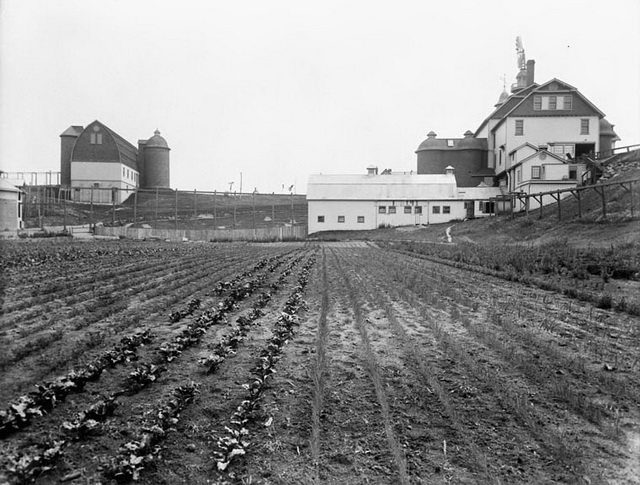
Dentonia Park Farm was founded in 1897 by Walter Massey, who introduced Toronto to high-quality pasteurized milk. At the time, Canada’s dairy industry was stringently regulated, with certified milk production adhering to standards set by the Canadian Sanitary Commission.
The farm occupied 250 acres of land just east of Toronto, encompassing plowed fields for growing corn, ravines, hills for grazing cattle, and two ponds. Initially, the farm produced milk solely for the Massey family. By 1900, it was producing 250 quarts of certified milk daily, which was soon sold to the public.
Unique Features of Dentonia Park Farm
Thanks to his dedication, Walter began raising Jersey cattle on the farm, with a herd of 100 head, along with Ayrshire cattle, which also numbered 100. One barn could accommodate 80 cows. It was designed to provide maximum air ventilation and excellent natural lighting.
In the building, pigs were housed on the first floor, while cattle occupied the second floor. The milking of cows was carried out on the second floor, where a laboratory was also located. The laboratory had walls and floors lined with tiles and was used to test the quality and cleanliness of the milk.
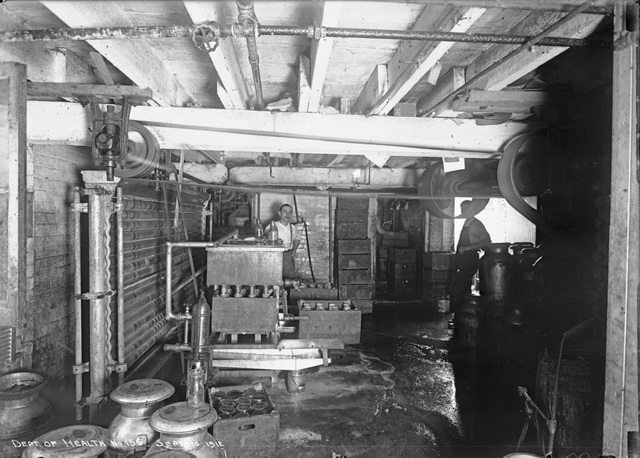
On the third and fourth floors, hay and feed were stored. Additionally, the farm featured two separate facilities. In one, milk was received and cooled, while the other housed specialized equipment for sterilization, bottling, and packaging.
The dairy facility, like the rest of the farm, was equipped with new, modern equipment for its time. As a result, daily tours of the farm were arranged for the townspeople.
From Farm to Dairy Plant
In 1900, Massey recognized the great potential of his farm, which had earned an excellent reputation for producing high-quality milk. That same year, he brought investors into his business and founded the City Dairy Company Limited. Massey successfully expanded his family business, doubling the annual production value to $1.6 million.
In 1901, the City Dairy urban milk company established its dairy plant and headquarters between Russell Street and Bancroft Avenue.
The project for the plant was designed by the renowned architect George Miller. The factory occupied nearly an entire city block.
The building housed the main offices and dairy processing facilities. In 1910, the plant underwent reconstruction, adding a building for ice cream production. Additionally, separate structures for stables and a wagon workshop to service delivery carts were constructed on the premises.
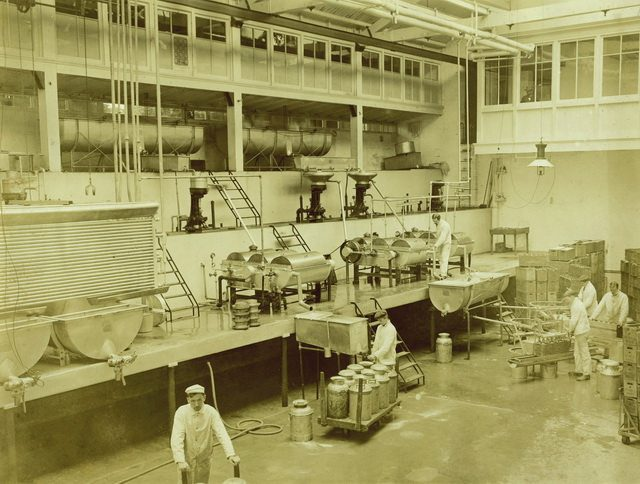
From a scientific standpoint, this dairy plant was the most advanced in all of North America. Milk cans arriving from the company’s dairy farms were received at the plant’s north wing, lifted to the upper floor, poured into specialized vats, and sampled for testing. Following initial testing, the milk was processed for cleaning and filtration. Once bottled, the milk was sent to the delivery department, where it was loaded onto up to five horse-drawn wagons simultaneously.
The plant adhered to strict standards: each cow was inspected by veterinarians three times a month, milk samples were regularly tested, and dairy plant employees underwent medical checkups twice a week.
City Dairy soon became one of the first dairy plants in Toronto to assign its own milk inspectors to the farms.
Starting in 1903, City Dairy introduced new equipment in its facilities to perform mandatory pasteurization—heating milk to just below the boiling point and then rapidly cooling it to meet the standards set by the Canadian Sanitary Commission.
This process allowed city residents to enjoy pasteurized, high-quality, clean, and safe dairy products.
By 1929, City Dairy had become the third-largest dairy plant in Toronto. However, in 1930, most of City Dairy Company Limited’s assets were sold to the American Borden Company, marking the end of the dairy plant’s operations.