

You may be familiar with stories about large industrial companies emitting toxic chemicals into the air, but what about the dry cleaner that cleans your shirts or the auto repair shop down the street that uses toxic paint? Some chemicals released by Toronto-based businesses are harmful to health, difficult to trace, and even harder to reduce. This is why the City of Toronto launched the ChemTRAC Program under the Environmental Reporting and Disclosure Bylaw, which requires certain businesses in Toronto to annually report their use and emissions of priority chemicals. Learn more on toronto.name.
TPH Initiatives and Harmful Chemical Emissions
With a grant from TAF (Toronto Atmospheric Fund), Toronto Public Health (TPH) partnered with the City’s Economic Development and Culture Division and small businesses in Toronto to explore ways to improve the city’s air quality. TPH convened a stakeholder group of business representatives and hired technical consultants to provide guidance on the economic feasibility of reducing eight substances of significant concern in Toronto due to their toxicity:
- Volatile Organic Compounds (VOCs)
- Nitrogen Oxides
- Fine Particulate Matter (PM2.5)
- Polycyclic Aromatic Hydrocarbons (PAHs)
- Hexavalent Chromium
- Cadmium
- Lead
- Mercury
TPH conducted pilot projects on Pollution Prevention (P2) approaches with business partners to develop sector-specific programs. The experiences of pilot participants highlighted the potential of P2 initiatives. For instance:
- Upgrading crematorium equipment reduced mercury emissions from the funeral sector in Toronto by 25% between 2012 and 2014.
- A chemical manufacturing company reduced VOC emissions by 23% and cut water consumption by 1,500 litres per hour through simple process modifications.
- A food and beverage company reduced VOC emissions by more than 50% by installing high-efficiency equipment.
Based on initial work and a range of criteria, TPH identified five sectors with significant potential for citywide P2 initiatives:
- Auto Body Painting and Repairs: Switching to safer paints and equipment.
- Dry Cleaning: Transitioning to water-based cleaning, which is more environmentally friendly.
- Manufactured Metal Products: Chemical recovery and reuse, such as using alternative solvents for cleaning parts and upgrading equipment.
- Food Manufacturing: Closed-system ingredient mixing and energy-efficient processes.
- Wood Products Manufacturing: Recycling solvents and transitioning to safer adhesives, stains, and coatings.
From 2012 to 2014, the total recorded emissions of harmful chemicals in Toronto decreased by 15%. However, only 17% of facilities reporting emissions demonstrated continuous reductions over this period.
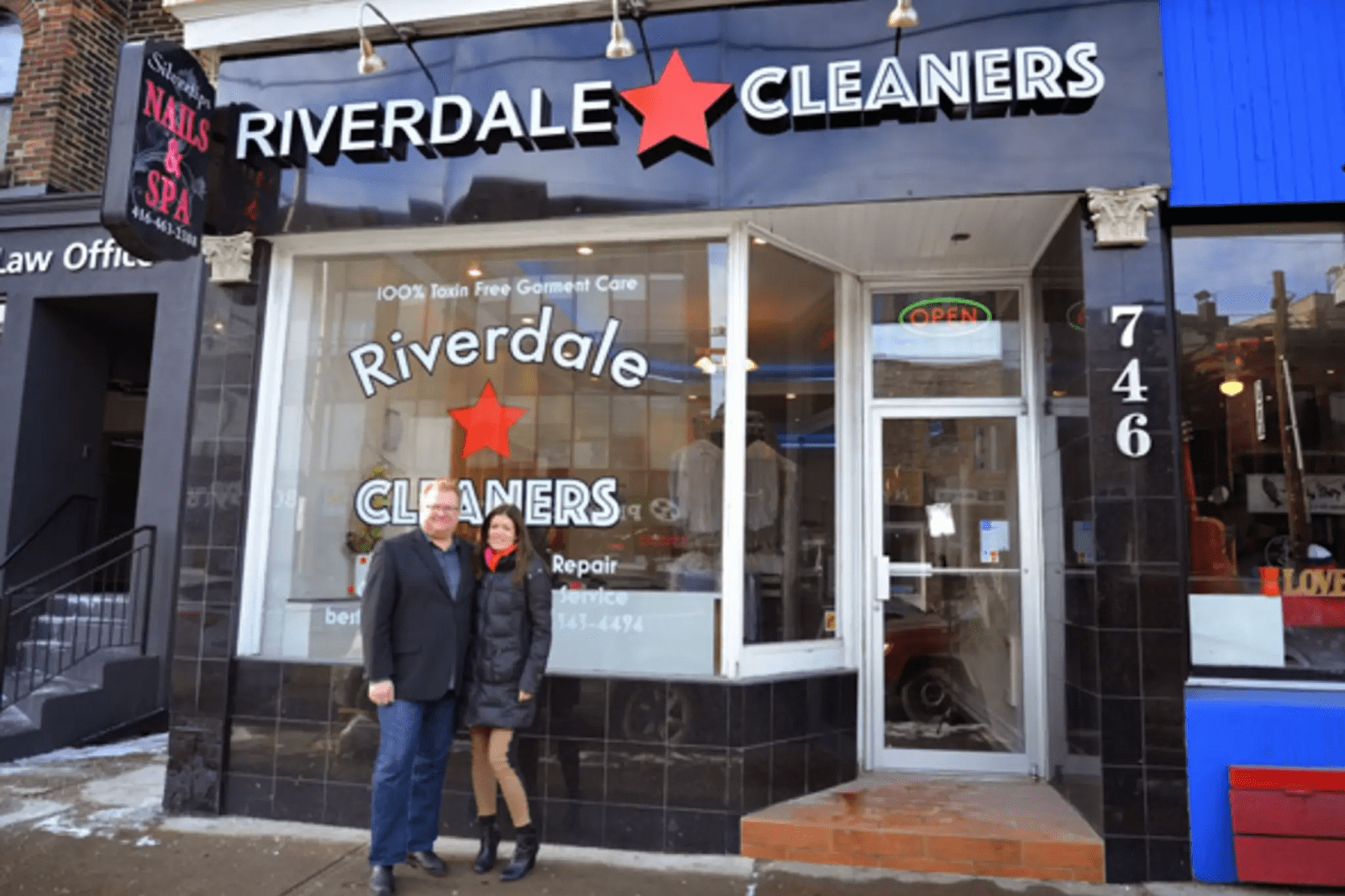
The ChemTRAC Program
Currently, ChemTRAC focuses on expanding proven approaches sector by sector, starting with dry cleaning. Tetrachloroethylene (commonly known as perchloroethylene or perc) is a toxic solvent widely used in Canadian dry cleaning for over 60 years. Environment and Climate Change Canada (ECCC) has fined Toronto dry cleaners amounts ranging from $10,000 to $60,000 for improper waste storage and disposal.
According to a review by the Massachusetts Toxics Use Reduction Institute, professional water-based cleaning is the most economically viable and environmentally superior alternative to perc-based cleaners. This method offers multiple benefits, including reduced pollution, user safety, water and energy conservation, cost competitiveness, and improved garment longevity.
Toronto Public Health collaborates with select dry cleaning businesses to overcome barriers to P2 adoption and encourage a sector-wide transition to water-based cleaning solvents.
Requirements for Dry Cleaners in Toronto
On May 30, 2016, the Board of Health requested that TPH develop an in-store demonstration program requiring all dry cleaners to disclose to customers the types of solvents used for garment cleaning and any known public health risks they may pose.

TPH regularly invites business associations, community organizations, and unions to apply for ChemTRAC grants aimed at reducing emissions of toxic substances, including 25 priority chemicals listed under the bylaw. TPH is also exploring pollution prevention opportunities with business associations and other stakeholders in the auto body painting and repair sector, followed by three other targeted sectors.
Sources: