

Canada, and particularly Toronto, has been home to many distinguished scientists whose discoveries have significantly improved lives. One such figure is John Tuzo Wilson, a pioneering geophysicist whose groundbreaking work earned him the title of one of Canada’s most innovative earth scientists and the father of Canadian geophysics. Read about the life and achievements of John Tuzo Wilson at toronto.name.
Early Life and Education
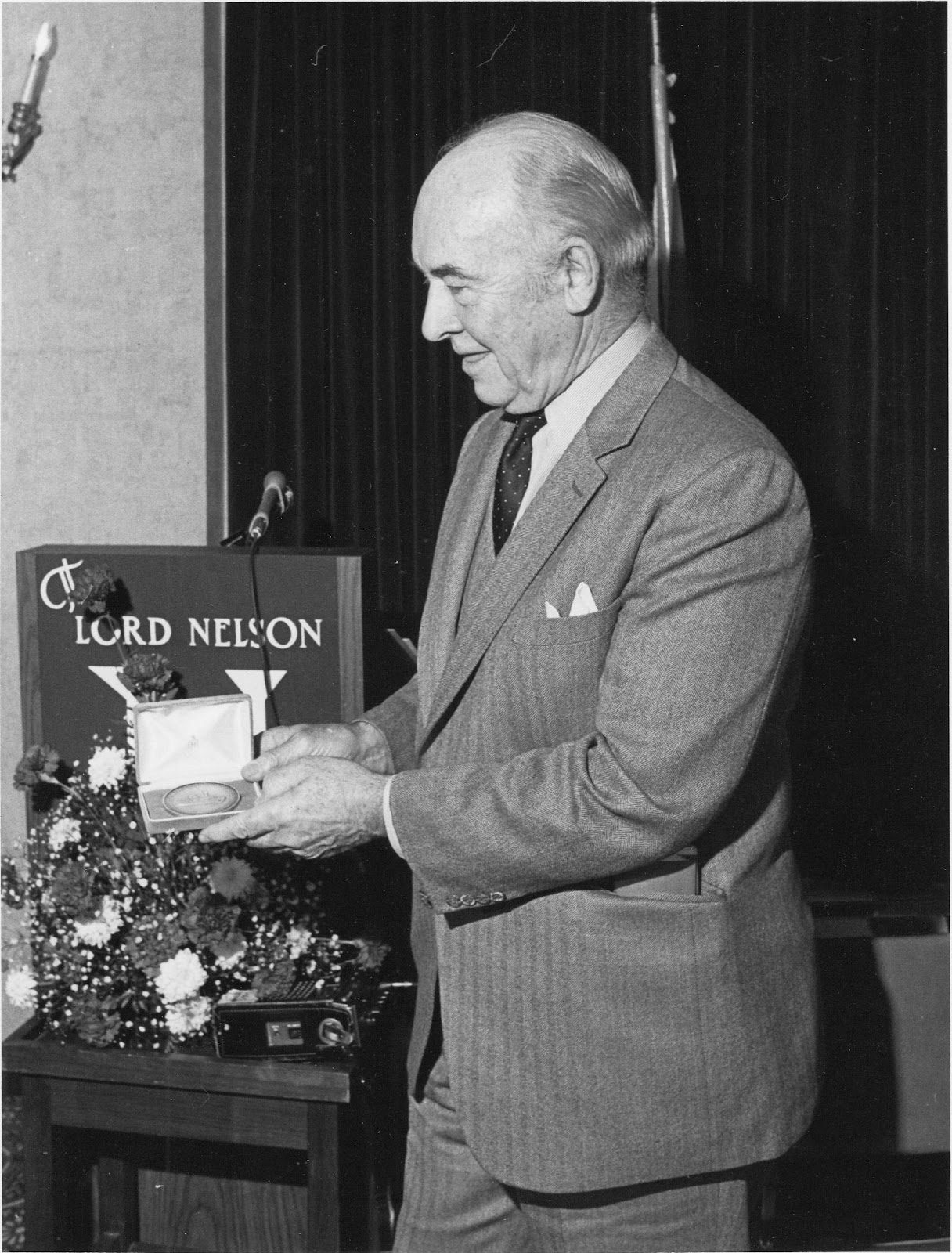
John Tuzo Wilson was born on October 24, 1908, in Ottawa. His father, a notable engineer, had extensive experience in India and Western Canada. He met his future wife, Henrietta Tuzo, during a vacation in Banff, Alberta. The couple married in 1907 and moved to Ottawa, where they had their son, John.
As a child, Wilson was curious and observant, with a natural inclination toward nature. While in high school, he gained his first professional experience by working with the Geological Survey of Canada.
After completing high school, Wilson enrolled at the University of Toronto, where he earned a Bachelor’s degree in Physics and Geology in 1930. He continued his studies at Princeton University, earning a PhD in Geology in 1936.
After his academic pursuits, Tuzo served in the Canadian Army during World War II. In 1946, he became a professor of Geophysics at the University of Toronto, and in 1967, he was appointed director of Erindale College at the same university. In 1974, Wilson took on the role of General Director of the Ontario Science Centre.
Major Scientific Achievements
In the 1960s, Wilson dedicated considerable time to studying the North Atlantic Ocean, providing compelling evidence for the existence of a previous Atlantic Ocean that had closed due to continental drift and later reopened along a slightly different axis to form the modern Atlantic. His meticulous work led to the classification of ocean development into stages, now known as the Wilson Cycle.
Wilson also pioneered the use of aerial photography for geological mapping and was responsible for producing Canada’s first glacial map.
For his significant contributions to geology and geophysics, several geographic features were named in his honor, including mountains in Antarctica and near Canada’s western coast.
Wilson had a keen interest in Chinese culture and famously constructed and brought a Chinese junk boat to Toronto, which was later used in the documentary film Planet Earth.
Initially skeptical of plate tectonics theory, Wilson eventually became one of its most prominent proponents, contributing two key ideas that advanced the field.
While mounting evidence supported continental drift, the theory could not explain why active volcanoes were located thousands of kilometers from plate boundaries. In 1963, Wilson proposed that tectonic plates could move over stationary “hot spots” in the mantle, creating chains of volcanic islands, such as the Hawaiian Islands.
In 1965, he expanded this idea by introducing the concept of transform faults, a third type of plate boundary. These faults, also known as conservative plate margins, slide horizontally, linking oceanic ridges to deep-sea trenches. Transform faults filled a critical gap in plate tectonics theory, allowing plates to slide past one another without creating or destroying oceanic crust.
Wilson’s contributions became foundational to plate tectonics, revolutionizing geophysics in the 1970s.
John Tuzo Wilson passed away in 1993, leaving behind an enduring legacy of groundbreaking discoveries that transformed our understanding of Earth. His contributions to science remain invaluable, and his theories continue to shape the study of our planet.