

Engineering projects often amaze with their ingenuity and incredible value, writes toronto.name. These feats of human innovation often form the backbone of entire communities, making life more manageable and sustainable.
Engineers, in collaboration with experts from other fields, have historically played a vital role in providing access to water, electricity, and other essentials. This involved constructing dedicated facilities that became sources of light, water, and more.
Many of these structures have stood the test of time, becoming architectural and historical landmarks. Regardless of their practical function, their style and decorative elements classify them as cultural heritage sites of their respective regions.
In this article, referencing toronto.ca, we explore Toronto’s RC Harris Water Treatment Plant. While it serves a purely infrastructural purpose, it is undeniably one of the city’s most beautiful buildings.
A Vital Infrastructure Project
The RC Harris Water Treatment Plant is a crucial part of Toronto’s infrastructure and an architectural and historical gem.
The facility is named after Roland Caldwell Harris, Toronto’s Commissioner of Public Works.
Collaborative Efforts
Before the construction of the treatment plant, the site hosted a park with various attractions, active between 1878 and 1906.
In the early 20th century, Toronto faced a severe water shortage. Health advocate George Naismith and physician Charles Hastings championed the development of a modern water treatment system. They enlisted some of the most talented engineers and architects to bring their vision to life.
Construction of the plant began in 1932 on the former park grounds. Engineers were tasked with designing equipment capable of efficient water purification, while architects focused on the building’s aesthetic and functional details.
Thanks to the collaborative efforts of these experts, the facility officially began operations on November 1, 1941.
A Unique Structure
Compared to other engineering structures of its time, the RC Harris Water Treatment Plant stands out for its distinctive architectural style and design.
The building is constructed in the Art Deco style, giving it a cathedral-like appearance. Locals consider it one of the most beautiful landmarks in Toronto, though it remains relatively unknown to tourists.
The interior is equally impressive, featuring marble entrances, spacious halls, and stunning filtration pools. This level of grandeur has earned the plant the nickname “Palace of Purification.”
Official Recognition
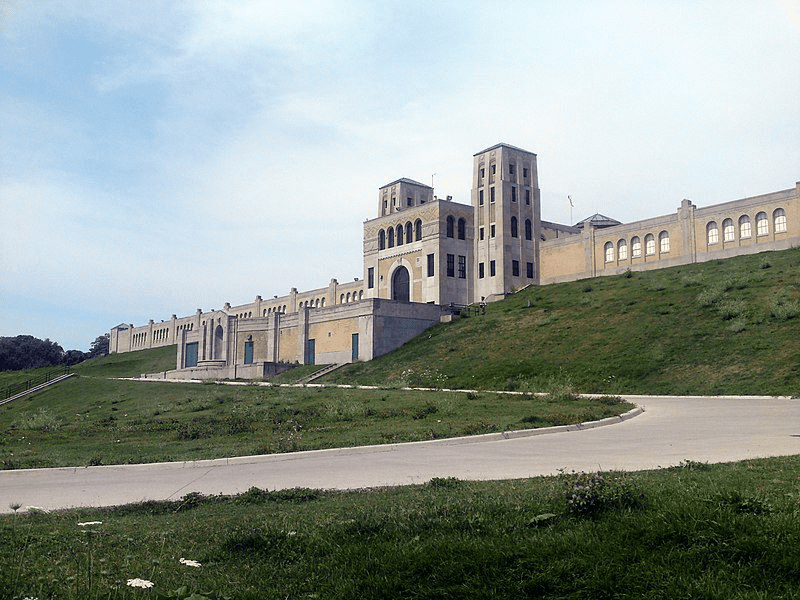
In 1992, the Canadian Society for Civil Engineering designated the RC Harris Water Treatment Plant a National Historic Site.
Continued Functionality
Despite its age, the RC Harris plant remains fully operational, a testament to the exceptional craftsmanship of the engineers who built it.
Today, the facility supplies approximately 30% of Toronto’s water.
Water is collected from intake pipes located 15 metres below Lake Ontario. It undergoes additional chlorination before being pumped into reservoirs across Toronto and York Region.
Photo: wikipedia